

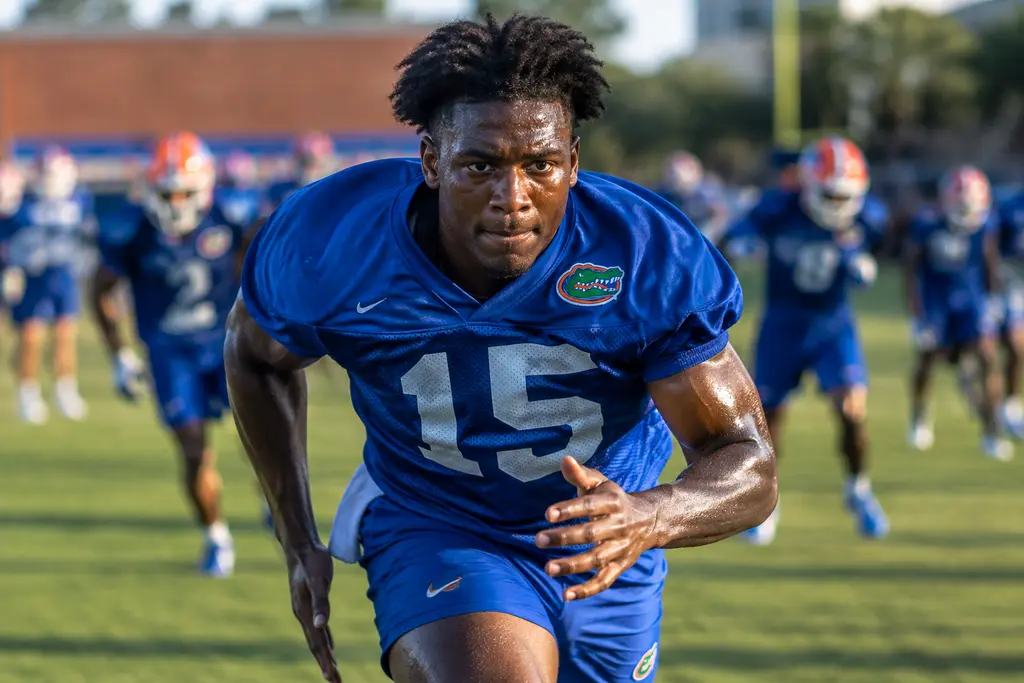
Ty Jackson Growth has become one of the more useful Florida defensive stories because it is not built on a sudden coronation. It is built on snaps, special teams value, and a sophomore linebacker turning a small role into real rotation pressure. As of October 26, 2026, Jackson is still not being framed as Florida’s finished answer at inside linebacker. He is better understood as a depth piece who has forced a different conversation than the one attached to him after a quiet freshman year.
That matters in Gainesville because Florida’s defense has needed reliable second-level bodies who can survive SEC pace, cover space, and contribute before they become every-down players. Jackson’s profile is especially relevant to local fans because he arrived from South Florida with a major recruiting reputation, then had to wait behind older options before his defensive work began to show on Saturdays.
How Ty Jackson Growth Shows Up In Florida’s Depth
Ty Jackson Growth Starts With A Bigger Role
Florida’s official roster lists Jackson as a sophomore inside linebacker from Fort Lauderdale, measuring 6 feet 2 inches and 228 pounds, with Seminole Ridge High School in his background official Ty Jackson roster. That physical profile explains why the staff and fan base had reason to watch his development closely, but the more important part is how slowly the production arrived.
In 2025, Jackson appeared in eight games, largely through special teams usage. His defensive work was limited, with seven snaps in the opener against LIU and one total defensive tackle across the season. For a former blue-chip linebacker, that kind of freshman year can feel quiet from the outside. Inside a program, though, it often reflects the normal adjustment from high school dominance to college checks, fits, communication, and special teams accountability.
Through Florida’s first seven games of 2026, Jackson’s usage changed. He played in six of those seven games and had defensive time in five. His early 2026 line included seven total tackles, four solo tackles, 1.5 tackles for loss, 0.5 sacks, one blocked punt, and roughly 67 total snaps. Those are not starter-volume numbers, but they are enough to shift his name from roster projection to active defensive planning.
From Fort Lauderdale Profile To Gainesville Trust
Why The South Florida Pipeline Matters
Jackson’s path carries weight beyond the stat sheet because Florida’s recruiting identity has always been tied to keeping top in-state defenders close to home. He was a consensus four-star recruit, rated by ESPN as the No. 1 inside linebacker in the Class of 2025 and No. 54 overall. His high school production was heavy: 391 tackles, 162 solo tackles, 15 tackles for loss, six sacks, and four interceptions across 32 games. He committed to Florida on November 25, 2024.
Those numbers created a clear expectation, but Gainesville is not Seminole Ridge. The adjustment for a linebacker is not just speed. It is angles, eye discipline, protection recognition, and knowing where the ball is supposed to go before the runner makes it obvious. Ty Jackson Growth is meaningful because his second season shows the first public signs that the high school traits are beginning to translate into useful college downs.
For fans in Fort Lauderdale, Palm Beach County, and the wider South Florida football community, that development carries a familiar local thread. The region produces defensive athletes who arrive with range and contact confidence. The challenge at Florida is turning that athletic base into reliable SEC play. Jackson’s early 2026 step gives the Gators another example of why the in-state pipeline is not only about signing-day wins. It is about the second and third seasons, when depth becomes real.
Texas Game Reframed The Rotation Question
A Loss Still Produced A Linebacker Signal
The clearest moment came on October 17, 2026, when Florida lost to No. 7 Texas. Jackson played 14 defensive snaps along with special teams work, and his production stood out: three tackles, 1.5 tackles for loss, and a half-sack. Sports Illustrated reported that he earned the highest PFF grade among Gators in that game Jackson playing time analysis.
That performance did not erase the context of the loss, and it should not be stretched into a claim that Jackson had seized a starting job. What it did was give Florida a game-specific reason to revisit how many meaningful defensive snaps he should receive. Linebacker depth is not theoretical once a backup produces tackles for loss against a top-10 opponent. It becomes part of the weekly personnel conversation.
The Texas game also showed why limited snap counts can still be revealing. Fourteen defensive snaps do not offer a full scouting sample, but they can show burst, play strength, and whether a player is arriving on time. Jackson’s tackles for loss and half-sack showed that he was not simply occupying space. He affected the line of scrimmage, and for a second-level defender trying to earn more responsibility, that is the type of tape that travels into the next staff meeting.
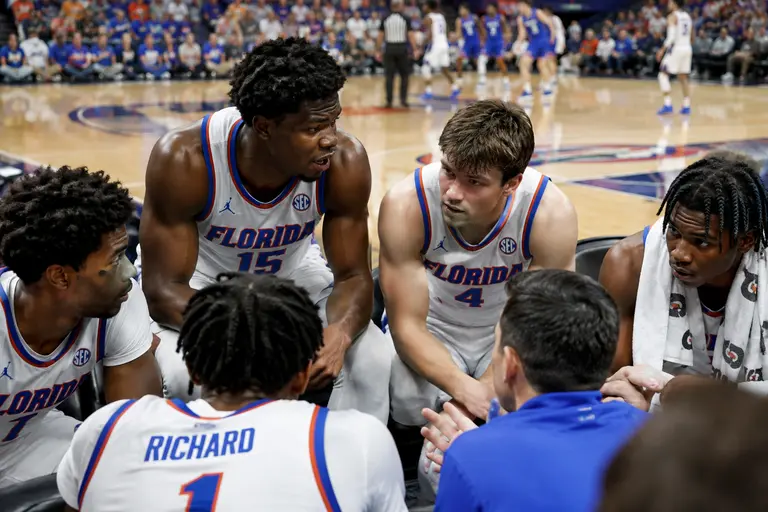
Roster Depth Is More Than A Two-Deep
Special Teams Still Shape Defensive Opportunity
One reason Ty Jackson Growth has been steady rather than sudden is his special teams value. His blocked punt against South Carolina in late September 2026 mattered because special teams work is often how young defensive players prove they can handle game speed before receiving larger defensive assignments. For Florida, that kind of play also creates practical roster value. A linebacker who can cover kicks, pressure punts, and still give defensive snaps is easier to carry into tight SEC games.
Fans often talk about depth charts as if every role is a ladder with one player directly replacing another. Defensive staffs view it with more texture. A reserve linebacker may be used by formation, down, field zone, or special teams need. Jackson’s role through seven games fits that pattern. He has not been used as a full-time player, but he has shown enough in short windows to make the defensive room deeper than it looked after his freshman season.
That fits a wider Florida roster theme. The Gators have had competition across position groups, and our earlier look at Gators roster battles tracked how those internal fights set the tone around the program. Jackson’s case is a linebacker-specific version of the same idea: development is not only about who starts. It is about who can be trusted if injuries, fatigue, opponent tempo, or matchup demands force a wider rotation.
- In 2025, Jackson’s defensive role was limited to a small freshman sample.
- Through seven games in 2026, he had defensive action in five games.
- His October 17 production at Texas gave Florida its strongest public case for more defensive snaps.
Why Ty Jackson Growth Matters For Florida
What His Development Says About The Defense
Ty Jackson Growth matters because Florida needs more than headline starters to build a dependable defense. SEC offenses stress linebacker rooms with tempo, motion, option looks, running backs in space, and tight ends who force coverage decisions. A defense that only trusts two or three linebackers can wear down. A defense with a developing sophomore who can contribute on special teams and create negative plays has more answers.
Jackson’s development also gives Florida fans a grounded story to follow. It is not based on a guarantee. It is based on a freshman who barely played defense, then entered 2026 and produced seven tackles, tackles for loss, a half-sack, and a blocked punt through the early part of the schedule. That is progress with evidence, not hype without a box score.
The next step is consistency. One productive game at Texas and a special teams splash against South Carolina are strong signs, but linebacker trust is earned weekly. Florida’s staff will need to see the same fit discipline, communication, and finishing ability in different game scripts. If Jackson keeps turning limited chances into clean production, his role can keep widening without forcing the defense to rush him into a responsibility he has not yet held.
For Gainesville, this is the kind of roster depth story that shapes how fans understand a season. The loudest defensive moments may belong to starters, but the health of a unit often shows up in the second wave. Jackson’s 2026 growth has given Florida a more interesting linebacker room, a stronger South Florida development thread, and a player whose role now deserves weekly attention.