

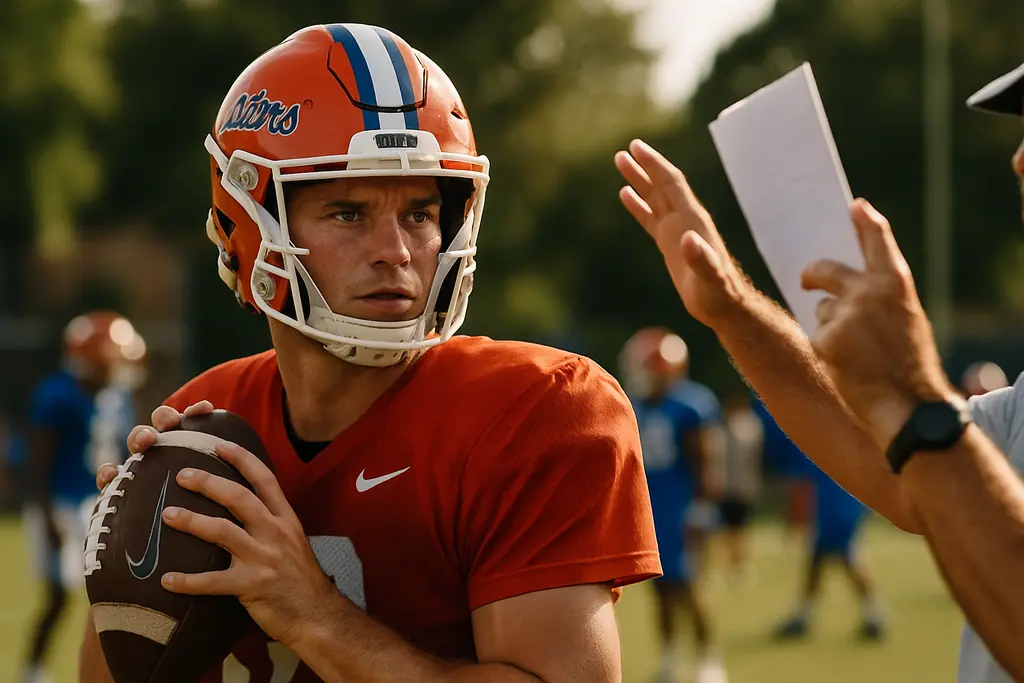
Gators Roster Battles have moved from camp talk to game-week reality, and the timing matters in Gainesville. Florida opens against Florida Atlantic on September 5, 2026, one day after this analysis, with Jon Sumrall’s first team already giving fans a clearer view of who has earned trust and where competition remains active. Florida announced that Aaron Philo had moved to the top of the quarterback depth chart in its team announcement, but the broader roster story is not settled by one QB1 label.
The first official two-deep depth chart, released ahead of the Florida Atlantic opener, gave structure to the conversation while leaving several positions open to movement, as noted in Yahoo Sports observations. That balance is the key for local fans: the chart tells us where Florida starts, not necessarily where this roster will be by late September.
Gators Roster Battles Start With Quarterback
Why Gators Roster Battles Begin With QB1
Philo’s move to QB1 is the headline because quarterback decisions set the rhythm for practice reps, play-calling, and fan patience. The research notes show Philo entered the season with experience from eight games and one start at Georgia Tech, completing 59 of 102 passes for 939 yards, two touchdowns, and three interceptions, while adding 95 rushing yards and a rushing score. Tramell Jones Jr. entered with a smaller sample: two games, 12 completions on 18 attempts, 191 passing yards, two touchdowns, no interceptions, and 10 rushing yards.
For Gainesville readers, Gators Roster Battles at quarterback should be viewed through game management as much as arm talent. Philo has the larger college sample, but Jones remaining in the mix keeps practice pressure alive. Sumrall’s staff can treat the Florida Atlantic game as a first public check on cadence, protection calls, third-down decisions, and red-zone composure without pretending the entire quarterback room has already been settled for the full SEC schedule.
The fan angle is direct. A new head coach and a new QB1 create a different game-day feel. Early incompletions will sound louder. A first scripted scoring drive would calm the building. A backup with real practice reps can also keep the staff from shrinking the plan if the opener gets uneven. That is why the quarterback competition still matters even after Philo earned the first spot.
For deeper background on how this position battle reached game week, our earlier breakdown of the Florida quarterback competition fits the current depth-chart moment.
Trench Decisions Will Shape The Opener
Tackle Competition Meets Local Expectations
The offensive line may decide how comfortable the quarterback story feels by halftime on September 5. Florida returns Knijeah Harris at left guard and Caden Jones at right tackle, while Harrison Moore, who came from Georgia Tech, is pegged for the center spot in the research notes. Penn State transfers TJ Shanahan Jr. and Eagan Boyer are pushing for starting roles, with Boyer’s 6-foot-8, 308-pound frame making him a notable tackle challenger.
This is where Gators Roster Battles become less about names and more about function. Florida lost its three highest-graded linemen from 2025, so the issue is not only replacing players. It is building a five-man unit that communicates well enough to protect a new QB1 and open lanes for a strong running back room. Tackle play has added weight because edge pressure can ruin a young passing plan before receivers finish routes.
Interior Defense Has More Than One Rotation Question
On the other side, Florida’s interior defensive line carries both opportunity and urgency. The research notes list Brendan Bett, true freshmen Joseph Mbatchou and Jeramiah McCloud, returners Jamari Lyons and DK Kalu, and Jacksonville State transfer Emmanuel Oyebadejo among the important interior pieces. Kalu started six games in 2025 after arriving from Baylor, while Oyebadejo brings 4.5 sacks from his previous school and a listed size near 6-foot-6 and 299 pounds.
The reason those names matter is simple: Florida’s 2025 defensive numbers left no room for comfort. The Gators ranked 11th in the SEC in sacks with 26 and allowed 153.92 rushing yards per game, which ranked 14th in the league. The 2026 defensive line returns 13 of 21 edge, JACK, and interior linemen, accounting for 57 percent of last season’s defensive-line snaps, but returning snaps do not automatically create better disruption. Gerald Chatman and defensive coordinator Brad White need a rotation that can hold up on early downs and still generate pressure in passing situations.
Back Seven Roles Are Less Settled Than They Look
Linebacker Continuity Gives Brad White Options
Linebacker is the position group with the clearest continuity. Florida returns nearly 98 percent of its linebacker snaps from 2025, led by Myles Graham, Jaden Robinson, and Aaron Chiles. Graham led the team with 76 tackles last season and also produced eight quarterback hurries, seven tackles for loss, and two sacks. Robinson added 50 tackles.
That experience should let White vary his calls without teaching every adjustment from scratch. The real competition may be less about who starts and more about who earns the most situational work. Third-and-medium, hurry-up possessions, and goal-line packages often reveal what a staff truly trusts. If Graham is the tone-setter, the question becomes which partner best fits each defensive call.
Corner And STAR Roles Define Passing Downs
The defensive back group has a clearer top line but still invites scrutiny. The September 3, 2026, two-deep had Cormani McClain and Ben Hanks III projected as starting cornerbacks. Thornton returned after leading the team in pass breakups in 2025, while Kentucky transfer Cam Dooley was slotted as a backup. At STAR, Kanye Clark led the position with Alfonzo Allen Jr. behind him.
That setup matters because Florida’s pass defense will be judged through matchups, not just starts. The STAR spot is often stressed by motions, slot releases, run fits, and quick perimeter throws. The corner rotation also has to handle fatigue, penalties, and special teams overlap. If the front seven improves pressure, the defensive backs benefit. If the pass rush stalls, the corners and STAR will be asked to cover longer than the call sheet prefers.
How Skill Talent Changes The Staff’s Margin
Running Back Strength Helps The Quarterback Room
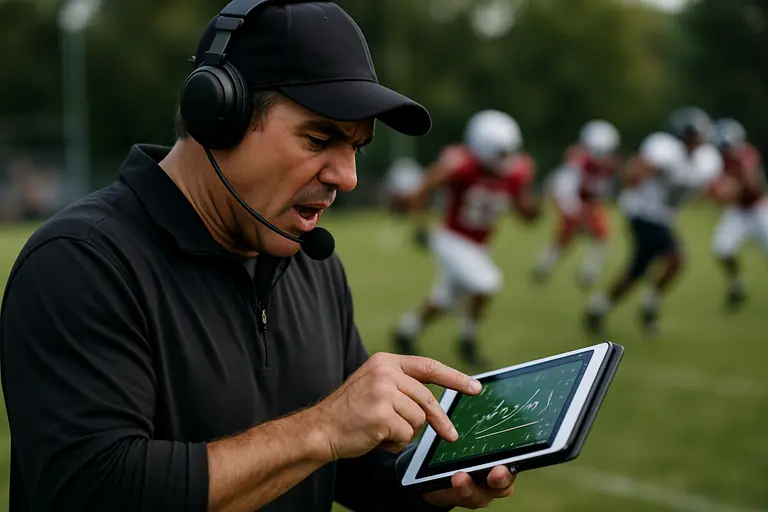
Florida’s skill group gives Sumrall a way to reduce pressure on the quarterback position. Jadan Baugh leads a running back room identified in the research as one of the nation’s stronger units, and he has been projected as first-round material. That type of backfield can help a staff avoid asking Philo or Jones to carry every early-game answer through the air.
A dependable run game also changes fan patience. If Florida can stay ahead of schedule, the offense can create manageable third downs and let the crowd see a cleaner identity. If the run game is bottled up, every quarterback read becomes louder, and the tackle competition gets pulled into the spotlight.
Receiver Roles Could Change The Fan Read
The receiving corps also gives Florida options, with Vernell Brown III, Dallas Wilson, Eric Singleton Jr., and Bailey Stockton named in the research notes as part of the skill-position strength. The main question is how those targets are layered. A new QB1 needs defined answers: a first-down target, a vertical threat, a quick-game outlet, and receivers who block well enough to keep run-pass balance alive.
That is where practice battles become stadium evidence. A receiver who looks like a rotation player on paper can become essential if he wins on third down or handles motion assignments cleanly. A highly regarded newcomer can force his way up the pecking order if he gives Philo easy completions. Florida does not need every role solved before kickoff, but it needs enough clarity to avoid wasting possessions while sorting it out.
Why Gators Roster Battles Matter In Gainesville
For the local fan base, these battles are not abstract camp notes. They shape the first impression of the Sumrall era, the mood around campus on September 5, and the way Florida supporters read every substitution. The opener against Florida Atlantic gives the staff a public measuring point, but it should not be treated as the final word on the depth chart.
The most useful read is to separate stable positions from active competitions. Linebacker has continuity. Running back has clear strength. Quarterback has a named starter with the competition still alive. Offensive tackle and defensive line rotation carry real proof-of-concept questions. Cornerback and STAR have listed leaders, but passing-down roles will keep being tested.
Gators Roster Battles are the first tactical story of Florida’s 2026 season because they show how Sumrall wants to build trust. The depth chart gives fans a starting map. The opener will show which names handle pressure, which rotations fit the staff’s plan, and which competitions stay active once the lights come on in Gainesville.