

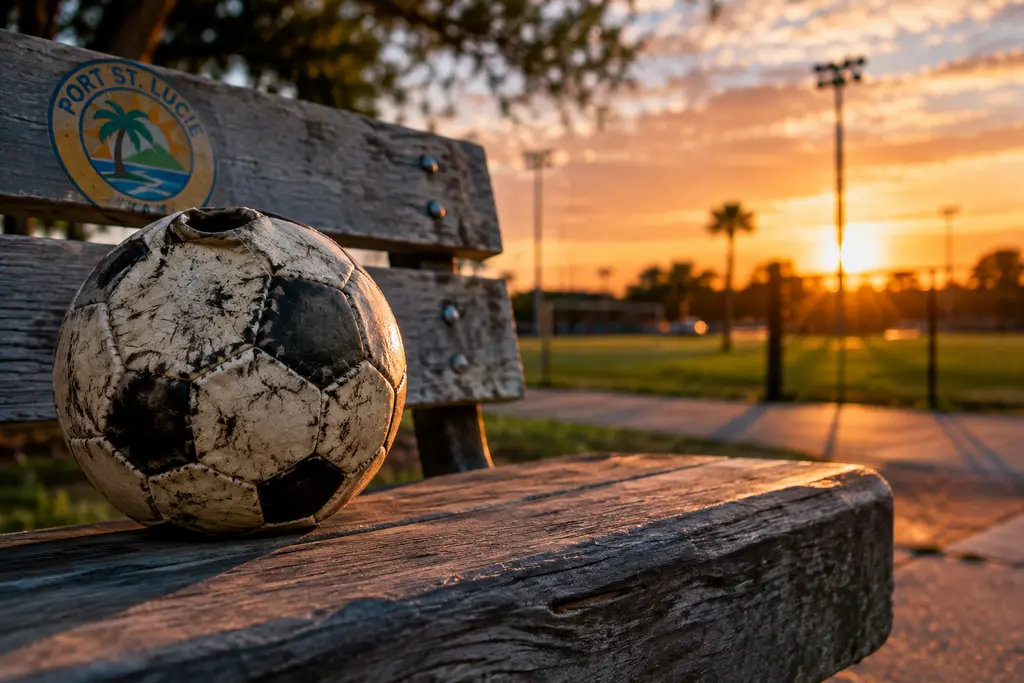
The Port St. Lucie stadium plan sits at a rare crossroads for Treasure Coast sports: a proposed professional soccer home, a civic development test, and a matchday experiment for families who have often had to look south, north, or across the state for higher-level soccer.
As of October 30, 2026, the project had moved beyond talk but had not yet opened. The City Council unanimously approved a zoning amendment on October 12, 2026, clearing a needed land-use step for the stadium within the City Center Planned Unit Development. The proposed venue is planned for 6,000 fixed seats at the Walton & One complex near U.S. 1 and Walton Road, a scale reported in local coverage of the project and the public debate around it stadium site report.
For a city better known in sports circles for spring baseball rhythms and youth participation, the plan asks a bigger question. Can Port St. Lucie support a year-round pro soccer identity without overwhelming the neighborhoods around the site? That is where the stadium story becomes more than a construction file. It becomes a local sports-history moment in progress.
Why The Port St. Lucie stadium Plan Matters
Port St. Lucie stadium As A Local Milestone
Port St. Lucie Sports Club is tied to a proposed United Soccer League presence that includes a men’s USL League One team and a women’s USL Super League Division 1 team. The men’s debut is expected in 2027, with the stadium scheduled to open in spring 2027. If that schedule holds, the Treasure Coast would gain something it has not traditionally had: a purpose-built home for professional soccer tied to both men’s and women’s competition.
That matters because local sports memory is built in routines. Baseball fans know the cadence of March in St. Lucie County. High school football families know Friday-night travel, bands, and rivalry routes. Soccer families know weekend tournaments, early drives, and field complexes scattered across the region. A professional club changes those habits. It gives youth players a nearby first-team reference point. It gives coaches a scouting and inspiration point. It gives local families a matchday destination that does not require treating professional soccer as an out-of-market experience.
A Different Kind Of Treasure Coast Sports Anchor
If the Port St. Lucie stadium opens as scheduled, it would not simply add seats. It would add a calendar. USL League One and women’s top-division soccer bring league schedules, visiting teams, training demands, staffing needs, and supporter culture. A 6,000-seat venue is not designed to compete with Florida’s largest stadiums. Its strength would be intimacy: shorter sightlines, local crowd energy, and a matchday setting where young players can connect the game they play on Saturday mornings with athletes playing it professionally.
Florida has seen several communities weigh stadium projects through soccer’s growth and civic cost. Port St. Lucie’s discussion shares some DNA with other regional venue debates, including Brevard’s push for a pro-club target around a Melbourne venue in the Space Coast soccer stadium plan. The common thread is not just whether a stadium can be built. It is whether the building fits the sports culture around it.
Financing, Safeguards, And The Public Trust Question
What The Cost Structure Signals
The plan has been framed around private funding up front, with public reimbursement connected to tax-increment financing after the stadium is operating and meeting required conditions. Reported estimates place the project between $50 million and $80 million, with up to $27.5 million eligible for reimbursement through tax-increment financing over 20 years, roughly $1.3 million annually stadium financing report.
Those numbers matter to fans because trust often determines whether a venue becomes part of a community or remains a political argument with a scoreboard attached. A stadium can offer youth clinics, local jobs, and weekend traffic for nearby businesses, but residents tend to ask a sharper question first: who pays if the plan falls short?
The research record for the project includes safeguards: a performance bond at 120% of the estimated cost, a $500,000 developer deposit to the city within three days of the agreement, and requirements for the stadium operator to cover taxes, assessments, licenses, parking, security, and traffic management. The land lease is structured for 50 years, with an option to extend by 25 years. Those provisions do not erase risk, but they show that the public discussion has moved into the details that matter after the ceremonial renderings fade.
Why Fans Should Care About Civic Terms
Sports fans sometimes treat financing language as separate from the game. In practice, it shapes the matchday experience. Parking obligations affect arrival times. Security requirements affect entry gates and family comfort. Traffic management affects whether nearby residents tolerate the venue or resent it. Lease terms affect whether the club is seen as a long-term neighbor or a short-term tenant.
The proposed economic impact projections in the research notes are sizable: about 557 construction jobs, $79.2 million in output, and $25.4 million in labor income during construction, plus an estimated 232 recurring jobs and about $38.7 million in annual output during operations. Those projections should be read as estimates, not guarantees. Still, they explain why city leaders and sports advocates view the project as more than a soccer field with stands.
Matchday Benefits And Neighborhood Pressure

What Local Soccer Families Could Gain
For soccer parents, the Port St. Lucie stadium could shorten the emotional distance between youth development and professional ambition. A child in a local academy or recreation program could see pro players in the same city, not only through a television broadcast or a long drive to a larger metro area. That matters in player development because proximity makes elite sport feel less abstract.
Local coaches could use the club as a teaching reference. Supporters’ groups could form around a Port St. Lucie identity rather than borrowing one from Miami, Orlando, Tampa Bay, or Jacksonville. Restaurants and small businesses near the corridor could see steadier matchday patterns if traffic and access are handled properly. The venue could also give the city another sports-tourism tool if it hosts exhibitions, youth events, community clinics, or women’s and men’s doubleheaders, though those uses depend on future scheduling and operating decisions.
The Concerns Cannot Be Waved Away
The neighborhood concerns are just as real as the opportunity. Residents raised issues tied to congestion, noise, parking, emergency access, and whether nearby infrastructure can support a stadium crowd. Reported petition activity ranged from about 700 signatures to more than 2,000, showing that opposition was not limited to a few isolated complaints.
That tension is familiar in Florida sports development. A stadium can look right on a regional map and still feel heavy to the people who live closest to it. A 6,000-seat soccer venue is modest compared with major college and NFL stadiums, but it is still a major event space for a specific corridor. The practical questions now are plain: Where do cars go? How are post-match exits controlled? What happens when a match overlaps with retail traffic? How does emergency access work on a crowded night? What noise rules apply after late finishes?
Supporters of the project should take those questions seriously, not as obstacles to soccer, but as conditions for soccer’s success. A club that wins over the neighborhoods around its home gains a stronger foundation than one that treats local concerns as background noise.
What The Port St. Lucie stadium Means For Local Fans
The Evaluation Is Not Only About Opening Night
The fairest evaluation of the Port St. Lucie stadium plan will not come from a ribbon-cutting or a first sellout. It will come from the first full cycle of use: league matches, women’s fixtures, weeknight traffic, youth events, rain delays, parking stress, local-business response, and the club’s ability to build loyalty beyond curiosity.
Port St. Lucie has a chance to turn a stadium proposal into a lasting soccer address. The ingredients are significant: professional teams, a dedicated site, a spring 2027 target, financing safeguards, and a city large enough to create its own fan culture. The risks are also clear: infrastructure strain, public skepticism, traffic, noise, and the danger of promising more civic benefit than the venue can produce.
For local soccer fans, the best stance is hopeful but demanding. Support the chance to bring pro soccer closer to home. Ask for clear traffic plans, transparent reimbursement reporting, neighborhood protections, and schedules that respect families and residents. If those pieces hold, Port St. Lucie Sports Club could give the Treasure Coast a new weekly sports ritual. If they do not, the stadium could become another Florida venue argument where the sport itself gets trapped between ambition and access.
That is why this project belongs in the region’s sports-history conversation before the first whistle. Stadiums do not become meaningful because concrete is poured. They become meaningful when a community can see itself in the walk to the gate, the sound in the stands, and the way the building fits everyday life around it.