

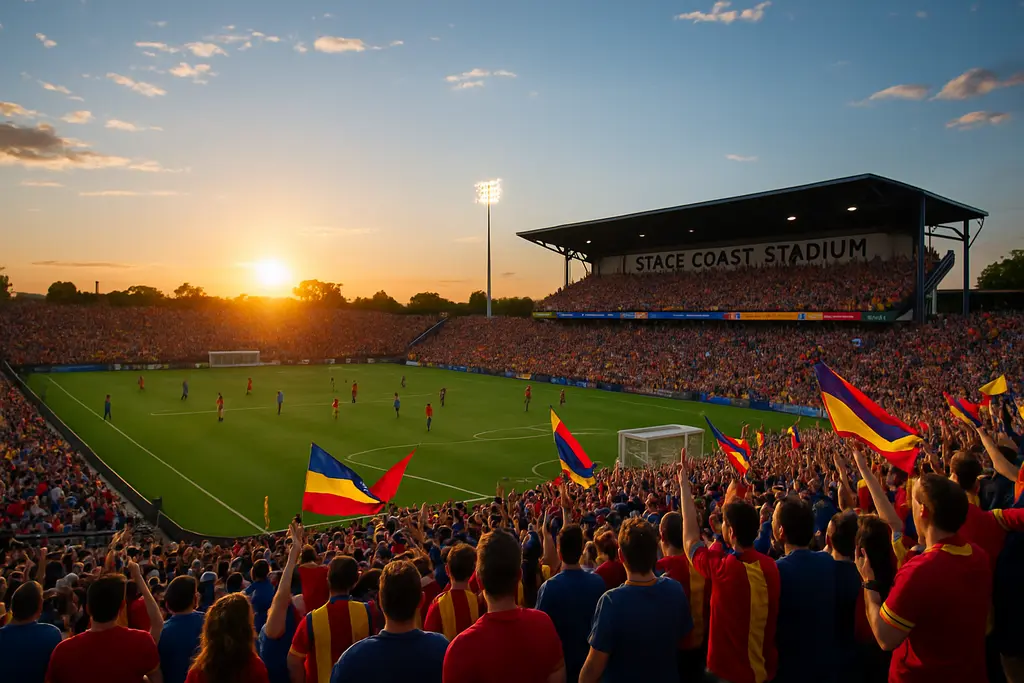
The Space Coast soccer stadium plan has moved Brevard County soccer from a long-running grassroots conversation into a defined professional project. In October 2025, the United Soccer League and Space Coast Pro Soccer announced an intent to bring professional men’s soccer to Brevard County, with plans for a women’s team later and a stadium tied to both pro matches and youth programming USL announcement. For a county with a large youth soccer base, aerospace workers, airport traffic, and families spread from Titusville to Palm Bay, the story is not just that a team is planned. It is that Brevard may be getting a new sports home built around the rhythms of local life.
The franchise has targeted March 2028 for its inaugural season, according to local reporting, and the planned venue in Melbourne is described as an 8,000-seat soccer-specific, multi-purpose stadium expandable to 10,000 seats. The site is tied to a 53.8-acre mixed-use district off NASA Boulevard and Hibiscus Boulevard, across from Orlando Melbourne International Airport Melbourne stadium site details. Those details matter because they place the project near one of the region’s busiest employment and travel corridors, not on the edge of the local sports map.
Why The Space Coast soccer stadium Fits Brevard’s Moment
Space Coast soccer stadium Plans In Plain Terms
The clearest way to understand the project is to separate what has been announced from what still needs confirmation. The public plan is for professional men’s soccer first, a women’s team later, a soccer-specific stadium that can also serve wider community programming, and a development district meant to operate beyond match nights. The stadium capacity target of 8,000 seats, with room to expand to 10,000, gives the club a scale that feels local rather than oversized.
That size could be important in Brevard County. A stadium does not need NFL-level capacity to become the place a community gathers. Soccer is especially suited for a tighter building where supporter groups, youth teams, families, and casual fans can feel close to the field. If the club gets the matchday habits right, an 8,000-seat venue can feel like a full local event rather than a half-used large facility.
Why The Melbourne Site Changes Matchday Habits
The Melbourne location may be the most interesting part of the plan for everyday fans. A site off NASA Boulevard and Hibiscus Boulevard puts the venue near Orlando Melbourne International Airport and close to the region’s aerospace and defense employment base. The research notes specifically identify the corridor’s daytime population, including workers connected to companies such as L3Harris Technologies and Collins Aerospace, as part of the strategic thinking.
That means the club will not be selling only to weekend soccer families. It will have a chance to reach office workers after shifts, traveling families near the airport, local students, and residents who already use that corridor for daily errands. The planned district includes roughly 60,000 square feet of retail and food-and-beverage space, which could make the stadium area part of a routine rather than a place people visit only when gates open.
A Club Identity Built Around Brevard Players
Youth Soccer Gives The Project A Starting Point
Brevard’s strongest soccer argument is already on the fields. The research notes cite more than 8,000 registered players in local leagues across the region. That number does not guarantee professional attendance, but it does show that the sport has a real base before the first pro roster is built. Parents already drive to practices. Coaches already manage weekend tournament schedules. Players already wear club kits and track the sport beyond school teams.
For those families, a professional club in Melbourne could create a more visible player pathway. Not every youth player is chasing a pro contract, and no club should sell that dream carelessly. The more grounded value is simpler: young players could see high-level training habits, match preparation, positional discipline, and local examples of what the next level requires. That visibility can raise standards at the youth level even for players who never sign professionally.
Men’s Team First, Women’s Team Later
The announcement structure also matters. The USL and Space Coast Pro Soccer described a men’s professional team with plans for a women’s team later. For Brevard families, that sequence gives the project a broader identity if the women’s side reaches the field as planned. A true local soccer culture cannot be built for only one group of players. Girls in youth programs need local examples too, and the women’s team plan is one of the most important long-range parts of the project.
The club also plans a dedicated training facility for its men’s and women’s teams. That detail should not get lost behind the stadium renderings. Training sites shape player development, recovery, academy relationships, coaching workflow, and daily club standards. A team can market itself on match nights, but its real identity is built during the week.
Venue Design And Fan Routine
Size Matters For Local Atmosphere
The Space Coast soccer stadium concept works best if it creates a setting that feels reachable for Brevard residents. An 8,000-seat building can put fans near the action, shorten the emotional distance between players and supporters, and give youth teams a realistic place to gather. If expanded to 10,000 seats later, the venue would still remain within a local scale.
For matchday planning, capacity affects everything: parking arrival times, concession demand, supporter-section organization, post-match traffic, and how early families need to plan group outings. A smaller soccer-specific stadium can make those details easier to manage than a larger multi-sport building, but only if operations match the needs of parents, youth teams, and workers coming from the airport corridor.
Mixed-Use Space Makes Non-Match Days Relevant
The mixed-use district may decide how often Brevard residents think about the club when no match is scheduled. Retail and food-and-beverage space can give the area weekday life, especially near a corridor with airport movement and aerospace employment. That does not mean every day will feel like a sports festival. It means the club has a chance to become part of local habits before and after the schedule fills in.
Florida fans have seen stadium debates become about far more than seats. They affect traffic, neighborhood identity, local spending patterns, and family routines. That is why comparisons to broader venue planning, such as the way a Tampa Bay Rays stadium proposal can shape fan culture and access, are useful. Brevard’s soccer project is smaller, but the same questions apply: how easy is it to get there, who benefits on non-match days, and does the venue feel like it belongs to local fans?
What This Means For Brevard Sports Planning

Travel, Parking, And Family Timing
The Space Coast soccer stadium will not succeed on soccer alone. It will need practical planning that respects how Brevard families move. A Friday night match feels different for a family coming from Merritt Island than for a worker leaving an office near the airport. A Saturday match may compete with youth tournaments, beach traffic, school events, and other local sports schedules. Those details can shape attendance as much as the opponent.
The airport-adjacent site could help with visibility and access, but it also raises operational questions that will need answers before opening. Fans will want to know parking patterns, rideshare zones, pedestrian access, entry timing, and how the surrounding food-and-beverage district works on matchdays. None of those details should be assumed before official information is released.
Economic Promise Still Needs Dates
The March 2028 target gives fans a date to circle, but the research notes also say construction timelines have not yet been officially announced. That is an important distinction. A target season creates momentum, while construction milestones create confidence. Until more dates are released, the most responsible way to talk about the project is as a major planned addition with key scheduling details still pending.
For local businesses, the possible upside is easy to understand. A professional club can bring recurring traffic to restaurants, retail, hotels, youth soccer events, and nearby services. Still, the size and timing of that impact will depend on final schedules, construction progress, tenant mix, and how consistently the district attracts people outside pro match windows.
Why Space Coast Pro Soccer Matters To Local Fans
The Next Local Sports Habit
Space Coast Pro Soccer has the chance to give Brevard something it has not had at this scale: a professional soccer identity rooted in Melbourne and connected to youth players across the county. The Space Coast soccer stadium plan is the physical piece of that identity, but the emotional piece will be built by the people who show up first: youth teams, parents, coaches, aerospace workers, airport travelers, and residents looking for a local club to claim.
The project still has unanswered questions. Construction timing, final operations, full club structure, and the path to a women’s team all need continued confirmation. That uncertainty should not be ignored. It also should not erase what has already changed. Brevard now has a defined professional soccer target, a proposed Melbourne home, and a plan that ties the sport to a district near one of the region’s most active corridors.
If the club follows through on the stadium, training facility, and local programming, the biggest win may be cultural rather than architectural. Brevard soccer families could stop treating the professional game as something they drive to Orlando or watch from a distance. They could have a club close enough to become part of school-week conversations, weekend routines, and player dreams formed on local fields.