

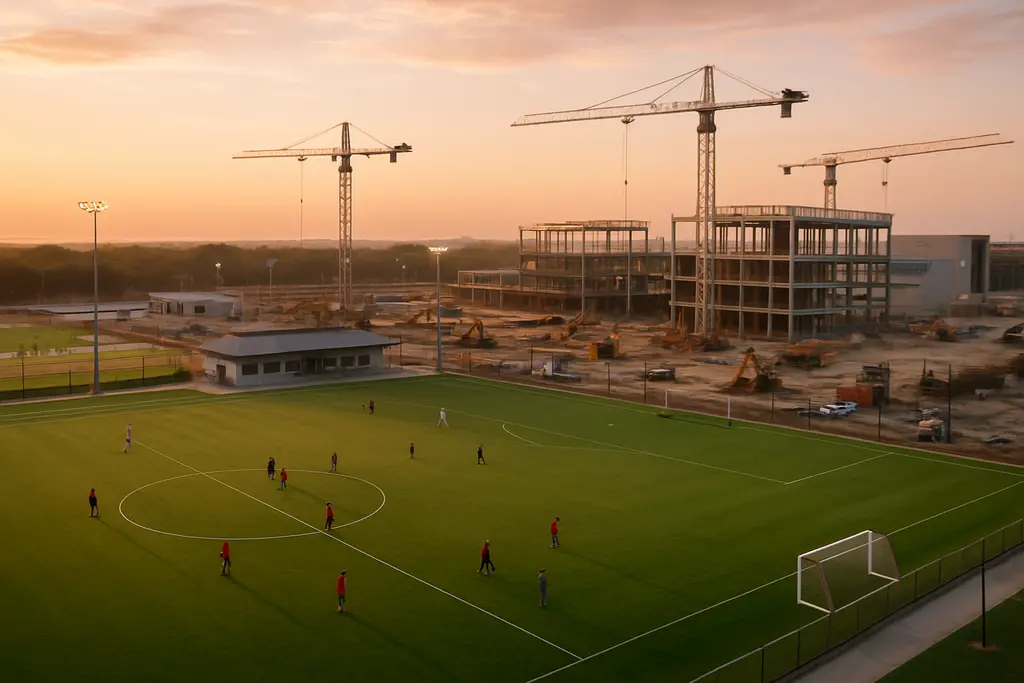
Orlando Soccer Hub is no longer just a convenient phrase for a city with MLS and NWSL flags flying near downtown. It now describes a wider Central Florida soccer buildout that stretches from Inter&Co Stadium to Osceola Heritage Park, where public officials and club ownership have tied training, tourism, youth development, and long-term team operations into one of the region’s most important sports infrastructure stories.
The latest marker came on April 20, 2026, when Osceola County commissioners approved a $50 million public-private redevelopment project for Osceola Heritage Park under an agreement with Orlando Sports Enterprises LLC, the ownership group behind Orlando City and Orlando Pride. Osceola County’s plan calls for $25 million from Tourist Development Tax funds, paired with at least $25 million in private investment from the club, with construction and long-term operations assigned to the club side of the agreement, according to the county’s official partnership announcement.
For sports historians, this is the kind of local pivot that tends to matter years later. Stadiums announce a sport’s arrival. Training campuses tell you whether the sport can stay rooted, produce players, support coaches, draw events, and serve families beyond first-team matchdays. Orlando’s soccer rise has already included a privately financed downtown stadium and a professional women’s club with its own identity. The Osceola plan adds a county-level chapter with regional reach.
How Orlando Soccer Hub Took Shape At OHP
From A 2020 Training Base To A Larger Soccer Campus
Orlando City’s training complex at Osceola Heritage Park opened on January 17, 2020. The facility was built for Orlando City, Orlando City B, and the club’s academy, with four practice fields, fitness and recovery spaces, and office space. That 2020 opening matters because it moved key daily soccer work away from the glare of matchday and into a performance setting. In American soccer history, that shift is often where clubs start separating themselves: not through one signing or one season, but through the everyday geography of training.
The phrase Orlando Soccer Hub makes more sense when OHP is viewed as a continuation rather than a one-off project. Inter&Co Stadium, with an approximate capacity of 25,000 and an all-natural grass surface, gave the first team a downtown home that was privately financed at a reported cost of $155 million. OHP gave the club a training base. The 2026 agreement attempts to expand that base into a broader soccer campus for multiple teams and public use.
Why Orlando Soccer Hub Centers On Training
Training facilities rarely carry the romance of a packed supporters’ section, yet they shape the week-to-week life of a club. They affect recovery, academy instruction, goalkeeper work, sports medicine access, staff communication, and the ability to keep men’s, women’s, reserve, and youth programs aligned. In Orlando’s case, that alignment is central to the Osceola plan.
The redevelopment plan, often referred to as Project Next, includes upgrades to Osceola County Stadium, a training center intended to serve Orlando City SC, Orlando Pride, Orlando City B, and the Academy, plus public-use fields, a hotel, a medical facility, and a restaurant. Those pieces matter because they combine elite-team needs with community access. A training center that sits next to public-use fields can become more than a private workplace; it can become a visible soccer address for young players and families across Osceola County and the larger Orlando area.
The Public-Private Deal Behind Project Next
Fields, Leases, And Team Operations
The soccer details inside the agreement are not small. The plan includes 10 new grass practice fields, with four reserved specifically for goalkeeper training. It also includes a 25-year lease for the training complex and stadium between Orlando City and Osceola County, with an option to purchase the land at the end of that term, and it accounts for relocating the Orlando Pride’s training facility from Seminole County’s Sylvan Lake Park after that lease expires at the end of 2028, with an option through 2029, as reported by WESH on the county vote.
That goalkeeper detail is especially telling. In many local soccer systems, goalkeeper development is squeezed around field availability and general team sessions. Four goalkeeper-specific fields signal a more specialized approach. For Orlando’s academy and professional teams, it can mean more dedicated technical work. For the county’s soccer identity, it signals that the project is not simply about building more fields, but about building fields with specific player-development purposes.
- Osceola County committed $25 million in Tourist Development Tax funds.
- Orlando City Soccer Club committed at least $25 million in private investment.
- The club is responsible for construction and long-term operations.
- The project goal includes completing improvements by the end of 2028.
The timing is also part of the story. After the April 20, 2026 approval, commissioners entered a due-diligence period of up to 120 days. As of October 17, 2026, the broader project remains pending or ongoing, with final design and construction anticipated after that review process. That gives the region a clear window to judge whether the promises of soccer development, tourism impact, and community use become visible in the built environment.
Why Osceola County Matters To Player Development
A Shared Campus For MLS, NWSL, Reserve, And Academy Teams
For the Orlando Soccer Hub story, Osceola County is not a side note. It is becoming the daily-work county for much of the club system. Bringing Orlando City SC, Orlando Pride, Orlando City B, and the Academy closer together at OHP would place different levels of the sport in one operating orbit. That does not guarantee success on the field, but it can create a clearer pathway for staff, scouting, recovery, and player observation.
Florida’s soccer growth has often been measured by attendance, expansion fees, big events, and international matches. Those markers are real, yet the quieter measure is the pipeline. Can an academy player train in a setting connected to reserve-team staff? Can a young professional see the standards of the first team? Can the women’s program receive training resources that match its stature? Can local families see a route from youth soccer fields to professional environments without leaving Central Florida?
The OHP plan answers those questions with infrastructure rather than slogans. It links fields, headquarters-style functions, medical support, and team operations. In historical terms, that is how a market moves from hosting soccer to living with soccer as a year-round institution.
Economic Meaning Beyond Matchday
Tourism, Jobs, And A County Sports Identity
Osceola County’s use of Tourist Development Tax funds reflects the economic argument behind the project. The county has framed the redevelopment as a way to diversify the local economy, boost tourism, and strengthen its standing as a sports-and-entertainment destination. The plan is expected to generate about 855 permanent jobs, according to the project materials in the research record.
For fans, the most visible effects may eventually be practical. More fields can mean more activity at OHP. A hotel and restaurant component can change how teams, visiting families, and tournament organizers experience the site. A medical facility can support the broader campus concept. None of those pieces replaces the drama of an Orlando City or Orlando Pride match, but they shape the day-to-day sports economy around those clubs.
There is also a historical symmetry here. Orlando’s downtown soccer stadium gave the city a matchday landmark. Osceola Heritage Park is becoming the training and development counterweight. One site hosts the public noise. The other is positioned to handle the preparation, the youth pipeline, the women’s and men’s training needs, and the county-level tourism case.
What Orlando Soccer Hub Means For Central Florida
The deeper meaning of Orlando Soccer Hub rests in how Central Florida defines itself as a soccer region. The area is not relying on one venue or one club brand. It now has a downtown professional stadium, an established training presence at OHP, a county-backed redevelopment plan, a path for Orlando Pride training consolidation, and a facility concept that includes public-use fields alongside elite-team operations.
That mix matters because soccer growth in Florida has never belonged to one age group or one league. It touches youth clubs, academy players, pro teams, visiting supporters, local workers, county tourism offices, and families deciding where their children can train. If the OHP project reaches its end-of-2028 improvement goal, Orlando’s soccer footprint will be measured not only by crowds at Inter&Co Stadium, but by the daily repetition of practices, goalkeeper sessions, academy work, recovery routines, and community field use.
As a historical chapter, this is the kind that may look obvious later. A city becomes a soccer center by stacking decisions: a stadium, a training base, women’s team investment, academy structure, public fields, and county partnerships. Orlando has already made several of those decisions. The Osceola Heritage Park redevelopment is the next major test of whether Central Florida can turn its soccer momentum into a durable sports identity shared by the club, the county, and the fans who have watched the game take deeper root across the region.