

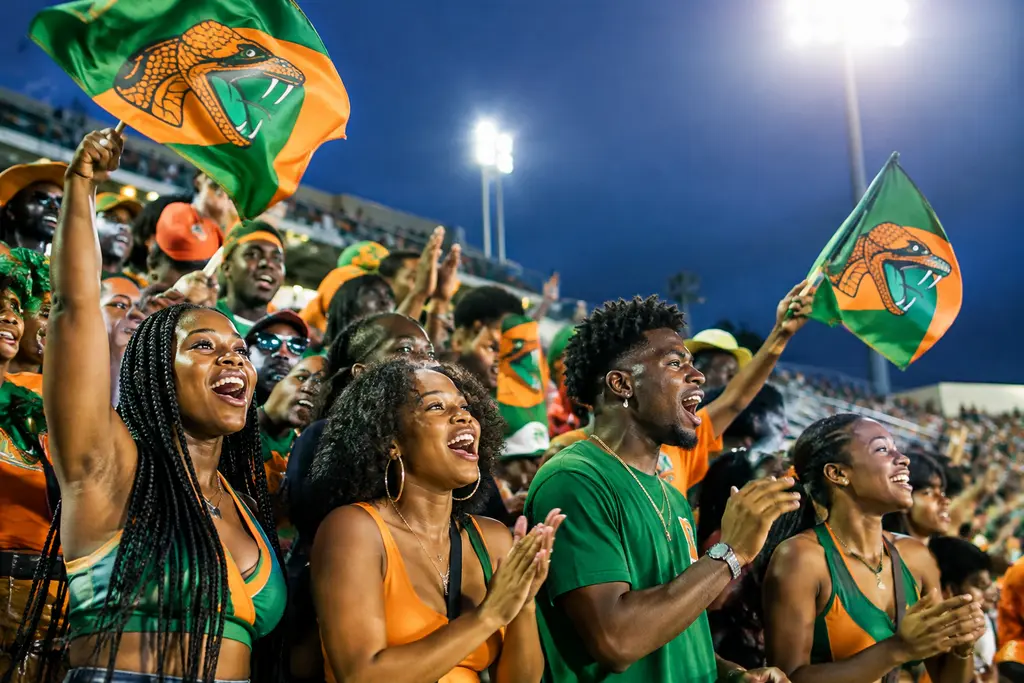
The FAMU Miami Money Game on September 10, 2026, gave Tallahassee a clear example of why guarantee games remain one of college football’s most debated financial tools. Florida A&M, an FCS and HBCU program, went to Miami and received a reported $760,000 package: $720,000 for athletics and $40,000 tied to Marching 100 band travel. Miami won 77-7, and the fourth quarter was shortened from 15 minutes to 10 after both coaches agreed to the change.
That combination is why the game deserves more than a score recap. The result was severe, but the payment was meaningful for a smaller athletic department. For FAMU, the question is not only whether the game was worth playing. It is how that kind of payday fits into a year-round budget, what it signals to players and recruits, and how Tallahassee’s football culture weighs financial gain against competitive cost.
What The FAMU Miami Money Game Paid
FAMU Miami Money Game Numbers
The reported $760,000 guarantee for the 2026 trip to Miami represented a slight increase from the same two-game contract structure in 2024, when FAMU received $700,000 for playing at Miami. In a college football economy where revenue gaps shape scheduling, facilities, staffing, and travel, that $60,000 increase matters. It may not close the gap between FCS and Power-conference programs, but it can support a budget line that would be much harder to cover through ticket sales alone.
The context is stark. The U.S. Government Accountability Office reported that, in the 2023-24 academic year, the median Power-conference school generated about $28.0 million in game-day revenue, a figure 6 to 40 times greater than medians for Non-Power, Championship Subdivision, or Basketball subdivisions GAO college athletics report. That gap helps explain why guarantee games stay on the schedule. Smaller programs are not just chasing exposure. They are managing a financial model where one road date can help fund operations far beyond one Saturday.
Where The Money Can Matter
Guarantee-game revenue is often discussed in broad terms, but the practical uses are local and direct. The research file for this game identified scholarships, athletic facilities, coaching salaries, and operating costs as common areas supported by these payments. For a program like FAMU, that can touch multiple teams, not just football. The football team absorbs the competitive risk, while the athletic department can apply the payout across a wider set of needs.
That is the hard tradeoff inside the FAMU Miami Money Game. The game supplied a large check by HBCU standards, but the scoreboard became part of the public record. A 77-7 loss can affect outside perception, fan mood, and the way a coaching staff has to reset the locker room. FAMU’s value is not measured by one September afternoon in Miami, but a lopsided defeat can still put emotional pressure on players and supporters who care deeply about the Rattlers’ identity.
How Money Games Fit HBCU Football Budgets
Guarantees As Scheduling Strategy
Across the 2026 season, HBCU versus FBS guarantee games were expected to produce more than $6.9 million for HBCU programs. FAMU’s Miami payout was among the largest single-game guarantees in that group. That matters because HBCU athletic departments often operate with fewer built-in revenue advantages than major FBS peers. A single guarantee can create breathing room for travel, equipment, staffing, and player support.
The challenge is that the game itself can look uneven before kickoff. Critics of buy games point to competitive imbalance, morale, recruiting optics, and brand damage when the final score gets out of hand. Supporters counter that refusing these games does not make the budget gap disappear. For FAMU, the real question is whether the department can schedule these games selectively, protect the team’s long-term confidence, and use the revenue in ways supporters can see over time.
- Financial gain: the 2026 Miami trip brought a reported $760,000 package to FAMU.
- Competitive cost: Miami’s 77-7 win created a difficult postgame narrative.
- Community value: Marching 100 travel funding kept a key part of FAMU culture attached to the event.
- Longer-term test: the payout has more meaning if it supports visible athletic department needs.
The Marching 100 Factor
The $40,000 band-travel portion of the package should not be treated as a footnote. FAMU football is tied to a larger cultural presentation, and the Marching 100 is part of how the university shows up on a major stage. For alumni, students, and South Florida families with FAMU ties, the band’s presence can make a road game feel less like a one-sided transaction and more like a full university event.
That point matters in a state where college football is not just a schedule. It is family travel, alumni connection, recruiting visibility, and school pride. FAMU’s fan base does not read a guarantee game only through an athletics ledger. It reads the trip through what it says about the university’s place in Florida football.
Local Sports Economy Beyond The Score
Why Tallahassee Still Feels The Effect
The game was played in Miami, so the most immediate venue-area spending was not in Tallahassee. Still, the local sports economy in FAMU’s home city is connected to the decision. A guarantee payment can help stabilize an athletic budget, and that stability affects staffing, facilities, team travel, and the quality of game-day experiences back at Bragg Memorial Stadium. The link is not always visible in one weekend, but it can show up across a season.
Tallahassee also has a useful comparison nearby. Florida State says its home football games generate roughly $106.5 million in economic impact per season in Leon County, including lodging, meals, and other visitor spending FSU economic impact. FAMU operates on a different scale, but the same basic relationship between football, visitors, vendors, hotels, restaurants, and civic identity is part of the city’s sports rhythm.
That is why FAMU facility investments and home-game experience matter alongside road guarantees. The local story is not only about leaving town for a payday; it is also about bringing value back home. Stadium work, event operations, and fan routines around Bragg Memorial Stadium connect directly with Tallahassee’s sports identity, a theme that also shows up in coverage of FAMU stadium repairs and local sports jobs.
Fan Trust And Public Perception
The FAMU Miami Money Game also tested fan trust. Supporters understand that HBCU athletic departments need revenue, but they also want to see competitive ambition. The best way to manage that tension is transparency around how these games fit the department’s plan. If fans can connect a guarantee check to better travel support, improved facilities, athlete services, or stronger home-event operations, the loss is easier to place in context.
If the money feels disconnected from progress, the same game can feel like a painful exchange. That is where leadership, messaging, and visible reinvestment matter. FAMU’s brand is built on more than wins and losses. It includes culture, alumni pride, the Marching 100, Tallahassee roots, and the pride of HBCU competition. A guarantee game should support that identity, not reduce it to a payout.
What The Numbers Say About Competitive Balance

Revenue Gaps Shape The Schedule
The GAO revenue data helps explain why these games keep happening. If a Power-conference median can produce about $28.0 million in game-day revenue, while other Division I subdivisions sit far below that mark, the scheduling market will reflect those differences. Power programs can buy home games. Smaller programs can accept guarantees that cover costs they cannot easily replace.
That does not mean every guarantee game is wise. Athletic departments still have to weigh opponent strength, travel strain, injury risk, recovery time, fan reaction, and the rest of the conference schedule. A 77-7 loss makes those tradeoffs sharper. It also raises a fair question: should smaller programs seek fewer extreme mismatches, even if that means accepting smaller payments?
There is no single answer. A payday that looks too costly after a blowout may look different if it funds athlete support or prevents cuts elsewhere. A competitive game for less money may serve the team’s confidence but leave the department short in another area. FAMU’s challenge is to judge each opportunity by both the balance sheet and the locker room.
The Local Standard For Success
For Tallahassee, success should be measured by what happens after the check clears. Does the athletic department communicate the value of the game? Does the football team recover competitively? Do fans see improvements tied to resources? Does the Marching 100’s participation strengthen the university’s statewide profile? Those questions matter more than a single national reaction to a lopsided score.
The FAMU Miami Money Game showed the pressure points clearly. It was financially significant, competitively rough, and culturally visible. That mix is exactly why money games remain part of the FCS and HBCU conversation.
Why The FAMU Miami Money Game Matters In Tallahassee
The lasting meaning of the FAMU Miami Money Game sits in the space between budget reality and community pride. FAMU accepted a major guarantee, took a difficult loss, and still carried its band, alumni presence, and football identity into one of the state’s biggest college football settings. That is not a simple win-or-loss story.
For local fans, the key is accountability after the trip. A $760,000 package should help the athletic department in ways that strengthen the program’s future. The scoreboard cannot be erased, but the revenue can still have value if it supports athletes, improves operations, and feeds back into the game-day culture that makes FAMU football distinct in Tallahassee.
Money games will keep drawing debate because they reveal the financial distance inside Division I athletics. FAMU’s 2026 visit to Miami put that distance on display. The next step is making sure the benefit is felt where it matters most: by the athletes, the band, the campus, and the local supporters who carry Rattler football beyond one hard night on the road.