

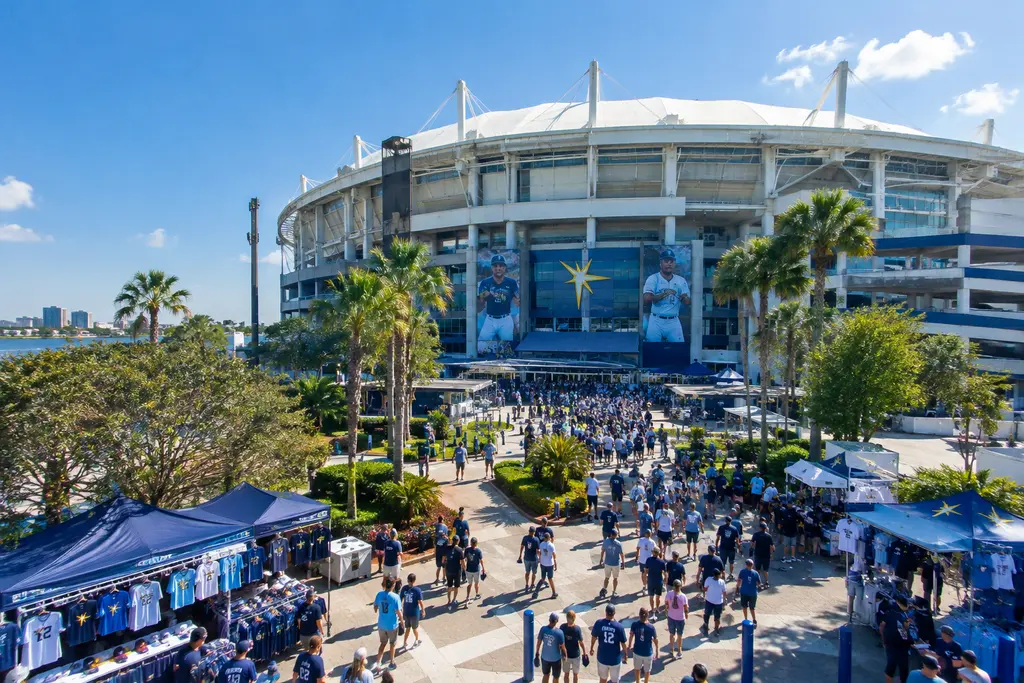
For Tampa Bay baseball supporters, the Rays stadium deal is less about a distant construction headline and more about what match day could feel like once the club shifts into a new ballpark era. The key question is not only how much the project costs, but how the stadium district could redirect pregame meals, postgame traffic, hotel demand, part-time work, and family routines around Rays baseball.
The verified figures already show why the deal has become one of the biggest local sports business stories in Florida. The project cost is estimated at $2.36 billion, with public funding capped at $876 million, a planned 30,000-seat domed stadium, and a 21.5-acre site at Hillsborough Community College’s Dale Mabry campus, according to ENR’s stadium development report. That scale makes the ballpark more than a venue decision. It is a test of whether Tampa can turn Rays game days into a more predictable sports-and-entertainment pattern for fans, workers, nearby businesses, and public agencies.
Rays stadium deal And The Match Day Math
Rays stadium deal Cost Signals A New Fan Hub
The Rays stadium deal starts with a price tag that frames every local debate: $2.36 billion for the stadium and mixed-use district. In sports terms, that number represents the cost of trying to keep Major League Baseball tied to a local routine rather than treating the club as a stand-alone team that plays 81 home dates away from a larger civic plan. The research also states that the Rays and StadCo would cover the remainder beyond the public cap, including cost overruns. That detail matters because cost risk is a core issue for taxpayers and fans who want the team anchored without seeing the project turn into an open-ended public bill.
For match day, the 30,000-seat design is just as important as the full development cost. A smaller, domed MLB facility can concentrate demand in a way that changes the feel around arrival windows, concessions, nearby restaurants, and postgame gathering spots. The number does not guarantee sellouts or spending by itself. It does, however, set the size of the crowd that local planners, transit operators, security teams, and small businesses must prepare around on baseball dates.
Why 30,000 Seats Changes The Routine
A domed stadium in Tampa also speaks directly to Florida weather. The research supports that the planned facility is domed, but it does not provide operating policies, roof technology details, transit schedules, parking plans, or ticket pricing. That means fans should separate confirmed stadium structure from assumptions about the final day-to-day experience. The roof concept reduces one major uncertainty for baseball operations and fans: weather exposure. It does not, by itself, answer how early families should arrive, where rideshare zones will sit, or how surrounding streets will handle peak departures.
The match day math will become clearer only when team, city, county, and campus access plans are released in more detail. Until then, the safest reading is that the project creates a framework for a concentrated fan district, not a finished playbook for every inning-to-inning movement around the stadium.
What The Public Funding Mix Says About Risk
City And County Roles Are Different
Public funding is capped at $876 million, with the City of Tampa contributing $80 million and Hillsborough County contributing about $796 million. The research also states that Hillsborough County’s contribution includes Tourist Development Tax bonds, a reserve, and a four-year series of Community Investment Tax payments. Those categories matter because sports infrastructure is not judged only by ribbon cuttings. It is judged by whether match day activity, district use, and long-term tax generation can support the public case for the deal.
For the Rays stadium deal, the county share is the larger public-side commitment. That raises a practical local sports question: will the district create enough regular activity around baseball to make the area feel alive beyond first pitch and the final out? A ballpark district works best when fans do not treat it as a drive-in, drive-out stop. Pregame dining, postgame foot traffic, hotel stays, and family-friendly gathering spaces are the behaviors that can turn attendance into wider spending.
Why Cost Overruns Matter To Fans
Cost overruns may sound like a construction issue, but they influence fan trust. If private partners cover overruns as described in the research, the public conversation can focus more cleanly on access, scheduling, and economic return instead of asking whether taxpayers will be asked to fill budget gaps. That distinction matters in Tampa Bay, where stadium debates have long intersected with questions of geography, local identity, and whether fans on both sides of the bay can build a steady game-day habit.
There is still uncertainty. The research does not provide final parking costs, vendor agreements, transit frequency, concession pricing, neighborhood traffic controls, or fan-zone programming. Those missing details are not minor. They will affect whether a family from Brandon, a student near Dale Mabry, or a supporter crossing from Pinellas sees the new ballpark as convenient or costly.
How The District Could Shift Tampa Sports Habits
Jobs, Dining, And Off-Day Use
Economic projections tied to the plan estimate a $55.5 billion total economic impact over 30 years, including $34 billion in direct impact from the ballpark and surrounding district, along with about 11,900 permanent jobs in the stadium district, according to WUSF’s report on the Rays memorandum. Those are projection figures, not final results. They should be read as the economic case made for the project, not proof of what will happen after Opening Day 2029.
For local sports culture, the jobs estimate points toward a larger shift. Stadium workers, restaurant staff, security teams, maintenance crews, hotel employees, and event operations staff can become part of the Rays ecosystem if the district functions beyond isolated game windows. Match day is the anchor, but a mixed-use district depends on repeat habits. Fans may come for baseball, then return for food, youth events, watch parties, or non-baseball programming if those options are actually built into the area’s routine.
Connecting Baseball To Tampa’s Local Calendar
The scheduled substantial completion date is March 31, 2029, in time for 2029 MLB Opening Day, with the Rays’ Tropicana Field lease ending after the 2028 season. That date gives Tampa sports leaders a long runway to plan operations, but it also gives fans time to judge whether the project is communicating clearly. A stadium district succeeds locally when supporters know where to park, where to meet, how long the trip will take, and whether the area feels welcoming before and after the game.
The Rays stadium deal also sits beside a broader fan discussion about public dollars and voice. That concern connects with our earlier coverage of Rays mixed-use development concerns, especially the question of how residents measure trust when a sports venue is tied to surrounding development.
Match Day Planning For Fans And Local Businesses

What Supporters Can Watch Before 2029
Fans do not need final blueprints to start asking the right questions. The confirmed facts point toward several planning areas that will shape the match day experience. The answers should come through official project updates before the 2029 opening target, not through rumor or assumption.
- Access: how cars, rideshare, pedestrians, and public transportation are routed around the Dale Mabry campus site.
- Capacity: how a 30,000-seat ballpark affects ticket demand, premium seating, family sections, and group sales.
- District use: whether restaurants, shops, and gathering spaces are ready for both game days and non-game days.
- Weather protection: how the domed design shapes summer attendance habits and family planning.
- Public return: how city and county leaders track jobs, tax activity, and neighborhood effects after opening.
For local businesses, the most important word is timing. Baseball crowds arrive in waves. Some fans come straight from work. Others build a full evening around the game. A district that can hold fans before and after first pitch gives restaurants and retailers a better chance to benefit. A district that empties quickly after the final out leaves money on the table and weakens the public argument for a large infrastructure commitment.
Why The College Site Adds A Local Twist
The planned site at Hillsborough Community College’s Dale Mabry campus adds another local layer. The research confirms the site but does not provide final agreements about student access, campus circulation, or shared infrastructure. That uncertainty is worth stating clearly. A college-area stadium can bring regular baseball traffic into a part of Tampa already shaped by commuters, students, and neighborhood travel patterns. Done well, that can create energy and opportunity. Done poorly, it can create friction on weeknights and high-demand dates.
This is where team dynamics meet fan engagement. The Rays need a venue that supports the players, but the broader Tampa Bay fan base needs a district that respects time, cost, and access. Winning baseball helps attendance, but clear operations help loyalty. Families are more likely to return when the trip is repeatable and the area feels organized.
Why Rays Match Day Economics Matter In Tampa
The Rays stadium deal is now a sports identity story as much as an economic development story. The verified figures show a massive investment, a capped public funding plan, a 30,000-seat domed ballpark, and long-range projections for jobs and economic impact. Those facts explain why the debate has moved beyond whether a stadium can host baseball. The real issue is whether the stadium district can support a weekly rhythm that feels natural to Tampa Bay fans.
By March 31, 2029, the project is scheduled to be substantially complete. Between November 1, 2026, and that date, the most meaningful updates for supporters will be practical ones: access plans, district phasing, food and retail commitments, transit coordination, and how public agencies measure returns. If those pieces line up, match day can become more than a commute to a ballpark. It can become a shared Tampa sports routine built around the Rays, local workers, nearby businesses, and fans who want the team’s home to feel connected to their week.