

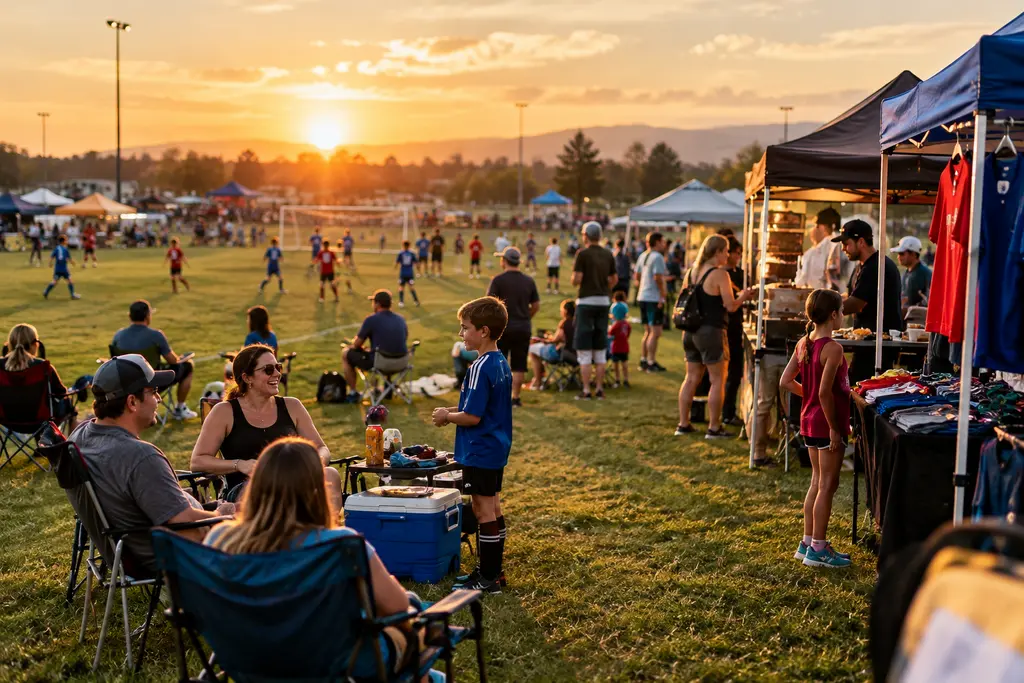
Hillsborough Youth Soccer is more than a weekend scoreboard story. Across the county, youth tournaments turn fields into travel hubs, hotels into team bases, and restaurants into post-match gathering spots for players, parents, coaches, and siblings. The numbers attached to that activity show why youth soccer has become a serious piece of the local sports economy, especially around tournament weekends that bring teams from outside the county.
The best way to read the data is through a sports-first lens. These tournaments matter because they give young players meaningful competition, create routine for clubs, and give families a reason to move around the county in predictable waves. The economic effect follows the match schedule: hotel stays, team meals, fuel stops, field rentals, concessions, equipment, training, and sponsorship spending. That makes youth soccer a practical case study in how local athletics can shape daily commerce without losing sight of the athletes at the center of it.
How Tournament Travel Moves Local Dollars
Hillsborough Youth Soccer Visitor Spending
The strongest Hillsborough Youth Soccer spending trend comes from non-local visitors. A reported county youth soccer estimate places total annual activity at about $66 million, based on roughly $43 million in direct spending and a 1.53 multiplier; about $16.5 million of that direct spending is tied to non-local visitor spending by traveling teams and spectators TBBW Magazine estimate. That distinction matters because visitor dollars behave differently from local family spending. A family from outside the county usually needs lodging, more restaurant meals, and transportation during a short stay. A local family may spend steadily across a season, but a visiting tournament family compresses spending into a few days.
That compressed spending is why tournament structure matters. A multi-day soccer event does not only fill fields. It can fill hotel blocks, create breakfast traffic before early kickoffs, and send families to nearby restaurants after pool play. For the county, the sports value begins with player development and competition. The economic value builds around the parents, grandparents, siblings, and coaches who move with those teams.
Local families still carry a large share of the soccer ecosystem. The same estimate puts resident spending on equipment, meals, and transport at about $7.4 million inside the county. That is not a one-weekend number. It reflects the routine rhythm of practices, league matches, camps, training, and club commitments that keep youth soccer connected to neighborhood life. In that sense, the economic effect is both seasonal and weekly: tournaments create spikes, while local participation creates a base.
What The SportsPlex Numbers Say
Room Nights As A Fan Travel Signal
The lodging data gives the clearest signal that soccer tournaments are tied to the county’s visitor economy. In fiscal year 2025, which ended on September 30, 2025, Hillsborough County’s Tournament SportsPlex hosted events that generated more than 88,000 hotel room nights SportsPlex fiscal report. That figure covers SportsPlex event activity rather than only one sport, but it helps show how tournament venues can move real travel volume through the area.
Youth soccer-specific estimates point to about 42,000 hotel room nights annually from tournaments. At an estimated nightly rate of about $152, that equals roughly $6.4 million in room revenue. Those are estimates, but they match what tournament parents already understand from experience: once a team enters a travel event, the match schedule starts driving lodging decisions. Families often choose hotels based on field distance, early kickoff times, parking access, and the need to keep players rested between matches.
The county’s 6% tourist development tax applies to some lodging revenue, with youth soccer-related stays estimated at about $386,000 annually in proceeds, subject to the caveat that some events may qualify for exemptions. That caveat is worth keeping in the analysis because tournament finance is rarely a single clean line. Some stays are booked through room blocks, some families stay with relatives, and some event categories may not fit the same tax treatment. Even with those limits, lodging remains the most visible part of the sports tourism effect.
For teams and families, the hotel-room figure also reflects fan experience. Tournament travel can become stressful when lodging is far from fields or when match times force early departures. Counties that understand this connection can support better event planning by thinking about traffic flow, hotel clusters, field access, and food options near tournament sites. That is where sports operations and local business planning meet.
Player Spending And The County Soccer Base

The Baseline Cost Around Each Player
Hillsborough County’s youth soccer economy is estimated to include 10,000 to 15,000 players, with a midpoint of about 12,500. Those players are spread across roughly 650 to 1,000 teams, with clubs submitting about 1,500 to 2,500 tournament entries over a year. Those ranges show why the county’s soccer activity cannot be judged only by championship weekends. The broader player base creates the demand for training, uniforms, club administration, coaching, fields, and referee support.
Per-player spending adds another layer. Registrations, dues, camps, and training average about $1,120 per youth soccer player annually in Hillsborough County. Equipment, meals, and local transport add another $592, bringing baseline spending to around $1,712 per player before lodging or tournament entry fees. For a family with more than one player, that becomes a meaningful household sports expense. For the county, multiplied across thousands of players, it becomes a steady part of the local sports economy.
That spending also affects team dynamics. Clubs with strong organization can help families manage costs through predictable schedules, clear tournament calendars, and efficient travel planning. Coaches benefit when families know expectations early, because rushed logistics can affect player rest and team focus. A youth soccer weekend is not only about tactics and substitutions; it is also about whether players arrive on time, eat well, recover between games, and avoid the stress that comes from poor planning.
The county’s soccer base also supports local identity. Youth players grow up wearing club colors, learning fields by name, and building rivalries that feel local long before college recruiting or elite showcases enter the picture. Parents become repeat customers at the same restaurants and fuel stations. Younger siblings become future players. In a region where outdoor sports can run across much of the year, that repeat cycle gives soccer a durable place in Hillsborough’s athletic culture.
Why Hillsborough Youth Soccer Spending Matters
A Sports Economy Built Around Families
The value of Hillsborough Youth Soccer is not captured by one tournament weekend or one hotel block. It is built through the connection between player development, family travel, and local business activity. A county with thousands of players and hundreds of teams has a sports system that touches households every week. Tournament weekends then bring in outside families who spend money in a shorter window and help extend the reach of local venues.
For county leaders, Hillsborough Youth Soccer offers a measurable way to think about sports infrastructure. Fields are not passive public spaces when they host organized competition at scale. They become event platforms that support athletes, visiting families, and nearby businesses. The SportsPlex room-night figure from fiscal year 2025 shows the power of a well-used tournament venue, while the youth soccer estimates show how one sport can generate direct spending, lodging demand, and tax activity.
The most useful reading of these numbers is not hype. It is planning. Tournament organizers need reliable fields and realistic schedules. Families need lodging and travel information early enough to control costs. Coaches need players who are rested and prepared. Local businesses need to understand when teams are likely to arrive, eat, and leave. When those pieces line up, the county gets better events and players get better competitive environments.
Hillsborough Youth Soccer works as an economic engine because it remains rooted in the basics of sport: teams, fields, families, coaches, and match weekends. The money follows the movement, but the movement starts with young athletes chasing development and competition close to home and across the region.