

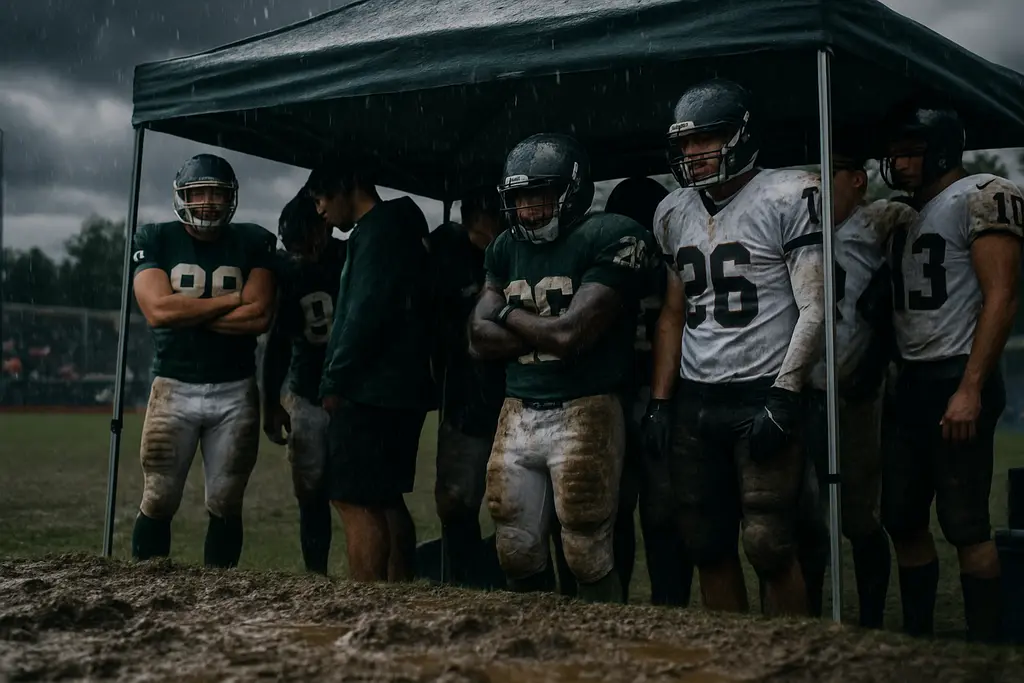
Weather Delays turned Nease vs. Mainland on September 4, 2026, into more than a tight Florida high school football finish. The 1-hour, 30-minute lightning pause before kickoff changed the rhythm of the night before either team ran a play, and the effects carried deep into the stands as much as onto the field.
By the third quarter, Nease led 32-19 and many fans had already left. Mainland still made the game uncomfortable late, pushing toward a possible overtime scenario before Nease held on 35-33. That final score matters because it shows what was lost for some of the crowd: the best part of the game happened after a long weather wait had worn down the game-day experience. Our earlier Mainland-Nease weather analysis covered how wet conditions, field position, and late scoring shaped the night.
How Weather Delays Changed Nease-Mainland Night
Weather Delays And The Third-Quarter Exit
Weather Delays do not just move a kickoff time. They reset the entire evening for families, students, bands, volunteers, concession workers, and visiting supporters. At Nease, the delay meant fans had to decide whether to wait out a late start, stay through a full game, or leave once the score appeared to tilt toward the home side.
That choice is understandable. High school football crowds are not built only from diehard supporters. They include parents with younger children, students with rides arranged for a certain time, grandparents, youth players, and community members who may have work early the next morning. A 90-minute delay pushes all of those decisions later into the night.
The football irony was sharp. Mainland’s comeback made the closing stretch the most compelling part of the matchup. A crowd that thinned during the third quarter missed the tension of a two-point finish. From a local sports angle, that is the central lesson: weather can drain attention before the game reaches its most meaningful snaps.
The Sideline And Stadium Rhythm
For players and coaches, a long lightning pause before kickoff creates a different kind of test. Warmups lose their normal order. Pregame energy has to be restarted. Coaches must keep players physically ready without burning them out before the opening series. In a matchup that finished 35-33, any small break in concentration mattered.
For the stadium operation, the disruption touched nearly every moving part. Concession timing changed. Gate flow slowed or shifted. Parking lots emptied in waves instead of after the final whistle. The student atmosphere likely lost volume as the night ran later. None of those details show up in a box score, but they shape how a rivalry-style high school football night feels.
The Wider Cost Of Weather Delays
Why Schools Feel The Strain
Weather Delays can create direct expenses for school athletic departments. A September 23, 2026 report on Upstate South Carolina high school football described added costs tied to weather-related postponements and delays, including security, officials, and transportation when personnel may need to be paid again for a moved contest Yahoo Sports reported. Florida schools face their own local conditions, but the operational pressure is familiar across Friday night football.
Those costs matter because high school athletics run on narrow margins. A strong football gate can support more than one team on campus. Concession revenue often helps booster groups. A delay that sends people home early can reduce the food and drink sales that normally help pay for travel, equipment, and student activities.
The Nease-Mainland night showed the softer side of the cost as well. Perceived value changes when fans spend much of the evening waiting. Even if safety decisions are correct, a long delay can make a family less likely to attend the next game when clouds are in the forecast. That is not a criticism of safety policy. It is a planning issue schools have to respect.
Attendance Habits Are Hard To Rebuild
Research on fan behavior supports what local athletic directors already know from experience: bad weather can change attendance patterns. The working paper Are Fair Weather Fans Affected by Weather? found that rainfall and even poor-weather forecasts can reduce attendance, with casual or less attached fans especially likely to stay away, and prior bad-weather experiences can affect future attendance habits WVU research found.
That point lands clearly in Northeast Florida. Early September football sits inside a period when heat, humidity, and thunderstorms can be part of the weekly routine. Fans may love their school, but they also remember long waits, late endings, wet bleachers, and traffic after a delayed finish. Schools that want strong home crowds need to plan not only for player safety, but also for trust with spectators.
What Florida Schools Can Improve Before Kickoff
Communication Has To Start Earlier
The easiest improvement is not a new scoreboard or a bigger press box. It is clearer communication. Fans should know before they arrive how lightning decisions are made, where updates will appear, and what the school expects people to do during a delay. A public-address announcement inside the stadium is helpful, but it does not reach families still in parking lots or supporters deciding whether to drive across the county.
Schools can use official social channels, athletic websites, ticketing emails, and in-stadium announcements to keep one message moving. The message should be short: game status, safety instruction, estimated next update, and whether concessions or seating areas remain available. If there is no firm restart time, saying so plainly is better than letting rumors carry the night.
Game-Day Staff Need A Delay Plan
Good operations show up when the weather turns. Staff members need assigned roles for gates, shelters, concessions, parking, teams, officials, and visiting fans. The visiting side matters in a game like Mainland at Nease because those supporters have already committed more travel time. If communication is unclear, the away crowd often feels the delay more sharply.
A strong plan does not remove frustration, but it reduces confusion. Fans are more patient when they understand the reason for the wait and the next step. Students are easier to manage when there is a clear instruction. Concession groups can make better choices about food preparation if they know when updates are coming.
How The Game Itself Changed The Lesson

If Nease had cruised after the delay, the night might have been remembered mostly as an inconvenience. Mainland’s late push changed that. The final 35-33 score made the delay part of the competitive story because crowd energy, stamina, and patience all became part of the fourth-quarter environment.
For Mainland, the comeback showed resilience after a difficult start to the night. For Nease, holding on after the long wait and late pressure protected a home result in a game that could have slipped away. For fans, the ending was a reminder that leaving early during a delayed game can mean missing the part everyone talks about on Monday.
That does not mean families made the wrong call by heading out. Safety, school-night routines, transportation, and fatigue are real. The lesson is for event planners: if the best product is the game itself, schools need to make it easier for people to stay connected until the final whistle.
What Nease-Mainland Teaches Florida Prep Football
Nease vs. Mainland was a local example of a statewide reality. Lightning delays, heat concerns, and fast-changing forecasts are part of Florida high school football, especially in the early part of the schedule. Programs cannot control the weather, but they can control preparation, communication, and the way fans are treated during long waits.
The strongest takeaway is simple: Weather Delays should be planned for as a normal game-day scenario, not treated as a rare interruption. Schools that build delay plans into staffing, ticket communication, concessions, and transportation will protect more of the Friday night experience.
For teams, the lesson is competitive. A delayed kickoff can test focus before the first snap. A late night can change crowd noise and sideline energy. A wet field or interrupted warmup can shift play-calling and field position. For fans, the lesson is practical: check official school updates, prepare for a longer night, and understand that a game that looks decided in the third quarter may still have its best chapter ahead.
Nease’s 35-33 win over Mainland on September 4, 2026, will be remembered for the score, but the broader story was the way weather reshaped the entire event. The schools that learn from nights like that will give athletes a safer stage and give local fans a better reason to stay through the final whistle.