

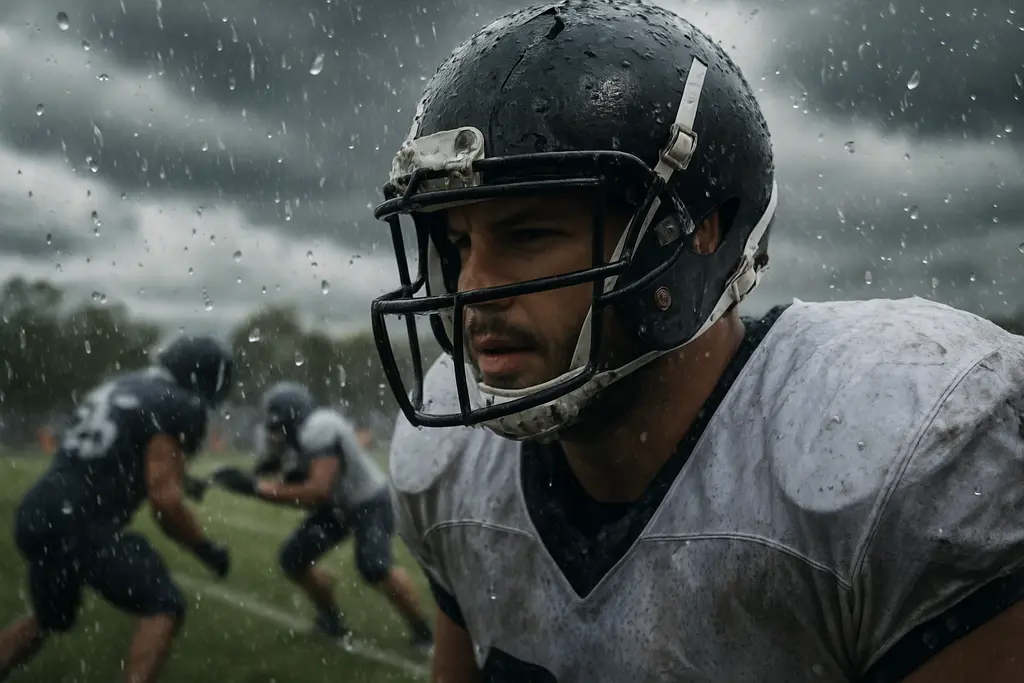
Mainland Nease Weather was not a side note on Friday, September 4, 2026. It shaped the rhythm of Mainland High’s 35-33 loss at Nease from the delayed kickoff through the final onside kick. The game began 1 hour and 30 minutes late because of lightning, and rain continued to affect footing, ball security, and decision-making through the night in Ponte Vedra, according to Observer Local News.
For Mainland fans in Daytona Beach, the result was frustrating because the Buccaneers nearly erased a difficult script. The final score told one story: Nease won 35-33. The conditions told another: both teams had to restart their warmup routine, reset mentally after the lightning delay, and play through a slick surface that made clean execution harder than usual. Nease handled the early part of that challenge better. Mainland adjusted late and nearly forced a different ending.
How Mainland Nease Weather Changed The First Half
Mainland Nease Weather And The Delayed Kickoff
A 90-minute delay can drain a visiting sideline before the first snap. Players warm up, shut down, wait, and warm up again. Coaches have to keep the locker room calm without letting the group go flat. For a road team such as Mainland, that is a real test because the routine is already less familiar than a home game in Daytona Beach.
Nease appeared to settle into the post-delay start faster. Mainland had several first-half drives stall, with penalties and limited ground-game efficiency cited in the local account of the game. Wet conditions do not create every penalty, but they can make timing more fragile. A lineman who is a half-step late, a ballcarrier who cuts with less confidence, or a quarterback who has to secure a damp football before throwing can all put an offense behind schedule.
The early edge mattered because Nease did not need to play perfect football to gain control. It needed to avoid the drive-killing errors that the weather often invites. The Panthers did that well enough to make Mainland press as the game moved deeper into the second half.
Why The New Turf Still Mattered
The field itself deserves attention. Nease played the game on a new turf field, and a ribbon cutting ceremony for the surface was held before the matchup, per the local report. That did not make the night dry or easy. It did mean the game was played on a newer artificial surface rather than a rain-soaked natural grass field that might have broken down more severely.
That distinction is important for film review. A wet turf field can still be slick, especially for sudden cuts and ball-handling exchanges. Yet a newer turf surface can remain more even under steady rain than a grass field that turns muddy in high-traffic areas. That helped keep the game playable, but it did not remove the core problem: players still had to control a wet football, plant through contact, and judge angles at full speed.
Where The Conditions Hit Mainland’s Offense
Inside Runs Lost Value
Mainland Nease Weather showed up most clearly in how hard it was to build a steady rushing rhythm. The research notes from the game point to rush-dependent plays being less successful than outside runs and quick passes. That matches what usually happens when footing becomes uncertain: interior runs require clean steps, sharp entry points, and secure handoffs in traffic. If the running back slips or the line loses its first step, the play can die before it has a chance.
Outside runs and quick throws gave Mainland a cleaner way to create space. Those calls reduced the time the ball had to be handled in tight quarters and allowed athletes to work toward the edge. They also helped Mainland avoid asking the offense to win every snap through muddy traffic, even though the field was turf rather than grass.
PJ Miller Adjusted The Passing Plan
Quarterback PJ Miller still produced in difficult conditions. He threw three touchdown passes and ran for another score, a sign that Mainland did not abandon its playmakers just because the night was wet. The adjustment was not simply throwing more. It was finding throws and run-pass decisions that fit the surface.
In a slick game, aggressive vertical passing carries extra risk. Receivers can lose footing at the top of routes. Quarterbacks can struggle with release. Defensive backs can recover if the ball hangs. Mainland’s better moments came when Miller worked with more controlled choices and used his legs when the defense gave him room. That adaptation gave the Buccaneers a path back into the game after Nease had built separation.
Special Teams Became A Pressure Point
Field Goals In Bad Conditions Added Weight
Special teams were not a side plot. Nease kicker Aric Davis-Baer made two field goals, and the second came after Mainland had scored in the fourth quarter, stretching Nease’s lead to 35-25. In rain, those kicks carry more than the usual pressure. The snap, hold, plant foot, and strike all have less room for error.
Those points changed Mainland’s late-game math. Instead of chasing only one score, the Buccaneers had to manage possessions, clock, and conversion decisions with less margin. Nease’s ability to get points from the kicking game became one of the cleaner separators in a game where both offenses had to work around the weather.
The Two-Point Attempts And The Final Onside Kick
Mainland’s fourth-quarter push included touchdowns by Tamaj Woodard and Dennis King V, and the Buccaneers converted one two-point try. A prior failed two-point attempt kept them short, which made every late possession feel tighter. In dry conditions, a two-point play is already a condensed-space test. In wet conditions, it becomes even more demanding because every cut, throw, and exchange happens with defenders compressed near the goal line.
The final onside kick also fit the night’s theme. Mainland attempted it after its last touchdown, and Nease recovered to seal the 35-33 win. Rain can make an onside kick harder for both sides. The kicking team wants an unpredictable bounce. The receiving team wants clean hands and body control. On that snap, Nease’s coverage and handling held up, and Mainland’s comeback stopped just short.
What The 35-33 Result Says About Both Teams
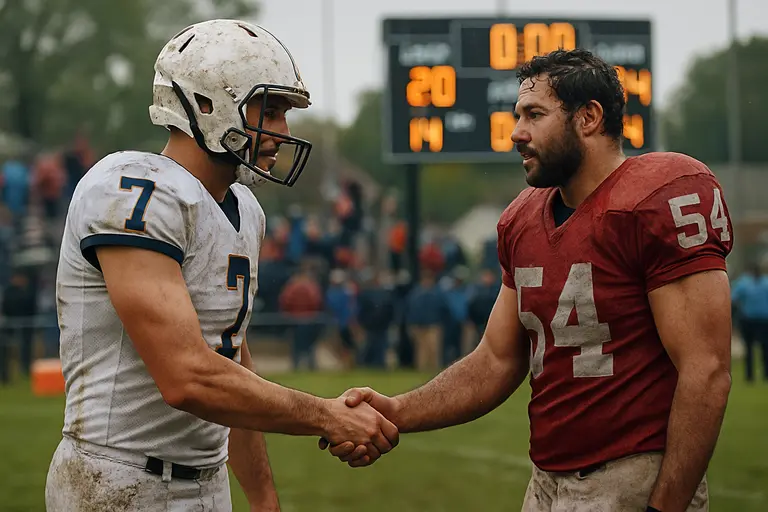
The official recap listed Nease’s 35-33 win over Mainland as a home-field redemption result for the Panthers, with the game already completed on September 4, 2026, according to MaxPreps. For Nease, the biggest takeaway was composure. The Panthers handled the delayed start, used their home setting, took advantage of early Mainland mistakes, and protected the ball well enough late to close the game.
For Mainland, the loss still offered useful evidence. The Buccaneers did not solve the conditions immediately, but they found answers as the game wore on. Miller’s four total touchdowns showed leadership and adjustment. The late scores by Woodard and King showed that Mainland’s skill group could still create production on a difficult night. The failed conversion and final onside recovery showed how thin the margin became.
That is the lesson for Mainland’s staff and fans: the Buccaneers were not overwhelmed for four quarters. They were put in an early hole by a combination of delay, weather, penalties, and inefficient ground-game moments. Once they adjusted, they had enough offense to threaten overtime or a late steal. The issue was that Nease had already built just enough cushion.
Local Fan Takeaways From A Wet Road Game
For families and supporters who made the trip from Daytona Beach to Ponte Vedra, this was the kind of night that tests patience. A lightning delay changes arrival plans, concession timing, postgame travel, and how long younger fans can stay engaged. Rain changes seating comfort and sideline energy. Those factors do not show up in a box score, but they shape the way a local high school football community experiences a road game.
- Lightning delays can disrupt player routines and fan travel plans at the same time.
- Wet turf can keep a game playable while still making footing and ball handling difficult.
- Special teams execution becomes more valuable when offensive possessions are harder to finish.
- Late-game conversion choices carry added risk when the surface and ball are slick.
Mainland Nease Weather also gave future opponents a scouting note. Mainland’s offense can adjust when the early run game is not clean. Nease can win a difficult home game without needing ideal conditions. Both points matter for regional football conversations because Northeast and Central Florida programs often play through storms, delays, humidity, and wet fields in the early part of the schedule.
What Mainland Nease Weather Says About Local Football Preparation
Mainland Nease Weather was the defining context of a 35-33 game that came down to execution under stress. Nease gained the early advantage by managing the delay and wet surface better. Mainland nearly answered by shifting toward more effective offensive choices and trusting Miller to create. The difference was not one snap. It was a collection of weather-influenced moments: stalled drives, field goals, two-point tries, footing issues, and a final onside kick.
For Mainland, the most useful takeaway is not disappointment alone. It is preparation. Road-game routines have to account for lightning delays. Offensive calls need wet-field answers ready before the second half. Special teams periods matter because a kicker, holder, return unit, or hands team can decide a game when the weather compresses the margin.
For local fans, the game was a reminder that Florida high school football is played against more than the opponent. On September 4, 2026, Mainland had to play Nease, the delay, the rain, and the math created by missed chances. The Buccaneers came close, but Nease handled the conditions just well enough to protect its home field.