

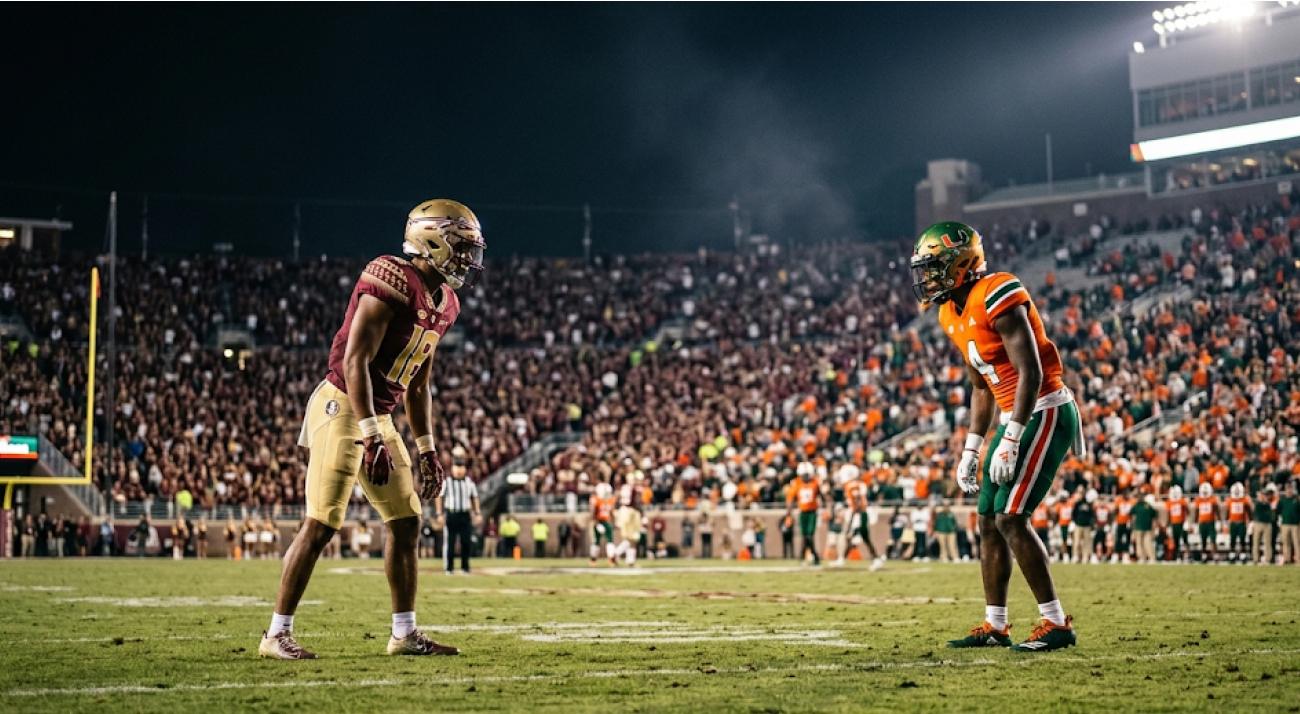
Florida State and Miami are heading toward one of the most anticipated games on Florida’s college football calendar, but the two programs arrive with very different levels of momentum. The Florida State Seminoles will visit the No. 3 Miami Hurricanes on Saturday, October 17, looking to recover from a damaging loss to Louisville and end a prolonged stretch of road defeats.
Kickoff is scheduled for 7 p.m. Eastern at Hard Rock Stadium in Miami Gardens, Florida, with ESPN carrying the broadcast. Florida State enters the contest at 3-3 overall and 1-2 in Atlantic Coast Conference play, while Miami is undefeated at 5-0 and has established itself as one of the nation’s strongest teams early in the 2026 season.
For the Seminoles, the challenge extends beyond the rivalry itself. They must demonstrate that their offense can sustain production, their defense can contain explosive plays, and their coaching staff can make adjustments against an opponent that has consistently capitalized on mistakes. Miami, meanwhile, has an opportunity to extend its winning streak against its in-state rival and strengthen its position in the ACC race.
Florida State Needs a Response After Its Collapse Against Louisville
Florida State’s 44-20 loss to Louisville on October 9 exposed the problems the Seminoles must address before traveling to Miami. The defeat was particularly damaging because Florida State began the game with a 14-0 advantage before losing control of the contest.
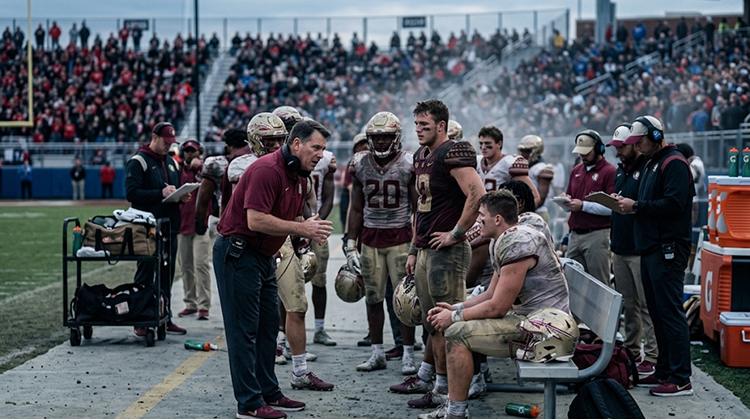
Head coach Mike Norvell acknowledged the team’s shortcomings after the loss. As reported by Tomahawk Nation, Norvell accepted responsibility for the performance and emphasized the need for the team to learn from its mistakes.
Florida State was outscored 44-6 after establishing its early lead. Louisville generated 537 total yards, including 397 rushing yards, putting enormous pressure on the Seminoles’ defense. Running back Isaac Brown delivered one of the game’s defining performances with 235 rushing yards, highlighted by a 97-yard touchdown run.
The sequence illustrated how quickly a promising start can unravel when a defense struggles to make adjustments. Florida State also missed an opportunity to extend its lead after failing to convert on fourth down at Louisville’s 1-yard line. Louisville responded with Brown’s long touchdown run, shifting the momentum decisively.
The loss extended Florida State’s road losing streak to 11 games, according to Tomahawk Nation. That statistic makes the Miami matchup an important test of the program’s ability to compete away from home.
Florida State cannot afford another prolonged defensive breakdown. Miami’s offense has demonstrated the ability to turn scoring opportunities into substantial leads, and allowing the Hurricanes to dictate the pace could make a comeback extremely difficult.
Miami’s Unbeaten Start Makes the Hurricanes a Formidable Opponent
Miami enters the rivalry game with a 5-0 record and the No. 3 ranking in the Associated Press poll. Head coach Mario Cristobal’s team has combined consistent scoring with an effective defense, giving the Hurricanes a substantial statistical advantage over Florida State entering the matchup.
Miami has scored 248 points across its first five games, an average of 49.6 points per contest. The Hurricanes have allowed only 49 points, or 9.8 per game, according to their 2026 season schedule and results.
The team’s opening results help explain its national standing. Miami defeated Stanford 45-6 on September 4, Florida A&M 77-7 on September 10, Wake Forest 33-20 on September 18, Central Michigan 52-3 on September 26, and Clemson 41-13 on October 3.
The victory over Clemson was particularly relevant because it came on the road against an established ACC opponent. Miami’s 28-point margin demonstrated that the Hurricanes could maintain control against conference competition outside their home stadium.
Quarterback Darian Mensah has also attracted attention ahead of the rivalry. Norvell praised Mensah’s performance during his October 15 media availability, according to Tomahawk Nation. Florida State’s defensive preparation will therefore need to account for a quarterback operating within an offense that has consistently generated points.
The contrast between the teams is clear. Florida State has averaged 31 points per game through its first six contests, while Miami has averaged 49.6 through five. Those figures do not determine the outcome of a rivalry game, but they underline the scale of the challenge awaiting the Seminoles.
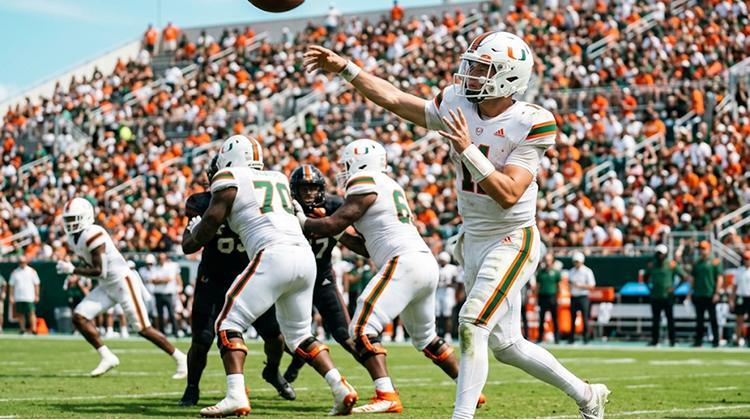
The Florida State Defense Must Limit Explosive Plays
Florida State’s most urgent priority is preventing Miami from producing the kind of explosive plays that decided the Louisville game.
Allowing 397 rushing yards against Louisville exposed weaknesses in tackling, gap discipline, and the ability to stop an opponent after the first level of the defense has been breached. Miami will have studied those problems closely when preparing its offensive game plan.
The Seminoles must improve their pursuit angles and maintain their assignments, particularly when Miami uses formations or motion to create space. A defense that loses contain or misses tackles in the open field can quickly give up touchdowns against a high-scoring opponent.
Defensive coordinator Tony White also faces a difficult balance. Aggressive pressure can disrupt the quarterback, but excessive blitzing can leave receivers with favorable matchups and create running lanes if the defense fails to finish plays.
Florida State needs to make Miami work for its yards. Forcing third-and-long situations, limiting successful first-down runs, and preventing deep completions would give the Seminoles a better chance to control possession and keep the score manageable.
The Hurricanes have averaged fewer than 10 points allowed per game, so Florida State’s defense cannot expect its offense to win a shootout without substantial improvement on the other side of the ball. A competitive performance will require both units to execute consistently.
Florida State’s Offense Must Sustain Drives and Finish Scoring Opportunities
The Seminoles showed that they could begin strongly against Louisville, but the 44-20 defeat demonstrated that an early advantage means little without sustained production.
One of the most important moments came when Florida State failed to convert on fourth down at the Louisville 1-yard line. Scoring a touchdown in that situation would have strengthened the Seminoles’ lead and placed additional pressure on the Cardinals.
Instead, the missed opportunity preceded a dramatic change in momentum. Florida State subsequently struggled to maintain offensive rhythm, recording five consecutive punts during a critical stretch of the game, according to Tomahawk Nation.
Against Miami, the Seminoles must improve their situational execution. Red-zone possessions need to produce touchdowns whenever possible, while third-down conversions can help keep the Hurricanes’ offense on the sideline.
Florida State also needs to avoid turnovers and unnecessary penalties. Against a team scoring nearly 50 points per game, giving away possessions or extending Miami’s drives would make an upset significantly less likely.
Norvell’s challenge is to establish an offensive rhythm early without becoming predictable. A balanced approach that combines efficient passing, productive rushing, and well-timed play-action opportunities could help Florida State sustain longer drives.
The objective should be to reduce the number of possessions available to Miami while making each Seminoles possession more productive. Florida State may not need to match Miami’s scoring average, but it will need to convert opportunities at a much higher rate than it did against Louisville.
Miami’s Defensive Availability Could Influence the Matchup
Miami’s preparation has included encouraging injury updates involving several defensive players. According to State of the U, Cristobal discussed the expected availability of Marquise Lightfoot, Xavier Lucas, Ezekiel Marcelin, and Damari Brown ahead of the rivalry.
Their precise game-day status and roles should be confirmed through official team updates before kickoff. Still, the possibility of additional defensive depth could be significant for a Miami team that has allowed only 9.8 points per game through its opening five contests.
Depth becomes particularly important when facing an offense seeking to establish a more balanced approach. Fresh defensive linemen and linebackers can help maintain pressure, while additional defensive backs can provide flexibility against different passing formations.
Florida State will need to identify favorable matchups and avoid allowing Miami to dictate every situation. Quick passes, effective blocking, and disciplined protection could help the Seminoles counter an aggressive defensive front.
However, Miami’s defensive statistics should be considered alongside the quality of its opponents and the different circumstances of each game. The numbers indicate strong early-season performance, but the rivalry provides another opportunity for the Hurricanes to demonstrate that their defense can withstand pressure in a high-profile ACC contest.
The Rivalry History Adds Another Layer to Saturday’s Game
The Florida State-Miami rivalry has been a defining fixture of college football in the state for decades. The teams first met on October 5, 1951, when Miami won 35-13.
According to Florida State’s official series history, the programs had played 70 times through their October 4, 2025, meeting. Miami held a 37-33 advantage, and the Hurricanes had won the previous two games.
Miami defeated Florida State 36-14 in Miami Gardens in 2024 before securing a 28-22 victory in Tallahassee on October 4, 2025. That most recent result came after the Seminoles entered the fourth quarter trailing by a substantial margin and scored 19 points in the final period, falling six points short.
The narrow finish in 2025 gives Florida State a recent example of how a late push can make the matchup competitive. However, the Seminoles will need a more complete performance this time, particularly because Miami has continued its strong start into October.
Florida State’s historical success in the series also shows that the balance of power can change. The Seminoles won seven consecutive meetings during two separate stretches, including a run from 2010 through 2016. Rivalries often turn on execution, preparation, and the ability to respond to pressure rather than records alone.
Nevertheless, history offers context, not a guarantee. Miami’s current form and home-field advantage make the Hurricanes the stronger team on paper entering the October 17 game.
What Florida State Must Do to Pull Off the Upset
Florida State’s path to victory begins with three priorities: protect the football, limit explosive plays, and convert scoring opportunities.
First, the Seminoles must avoid repeating the defensive collapse against Louisville. Miami’s scoring output suggests that allowing long touchdowns or surrendering easy first downs could quickly put Florida State in a difficult position.
Second, the offense must avoid extended stretches without production. The Seminoles do not necessarily need to score on every drive, but they must sustain possession and capitalize when they reach the red zone.
Third, Florida State must respond to adversity without allowing one mistake to determine the rest of the game. The Louisville loss showed how quickly the momentum can shift when missed opportunities are followed by defensive breakdowns. Against Miami, composure and execution will be essential.
Special teams could also play an important role. A long return, a missed field goal, or a costly penalty can change field position in a rivalry game. Florida State needs clean execution across all three phases rather than relying exclusively on its offense to produce a breakthrough.
Miami’s own priorities are more straightforward: maintain its offensive efficiency, prevent Florida State from establishing a rhythm, and avoid giving the Seminoles easy opportunities to stay in the game.
Florida State vs. Miami Prediction: Can the Seminoles End Their Road Losing Streak?
Florida State has the talent and rivalry history to make Saturday’s game competitive, but the available evidence favors Miami.
The Hurricanes enter at 5-0, are ranked No. 3 nationally, and have averaged nearly 50 points per game while allowing fewer than 10. Florida State, by contrast, has struggled on the road and is coming off a defeat in which Louisville scored 44 points after falling behind early.
Miami’s home-field advantage and defensive consistency create a difficult matchup for a Seminoles team still searching for sustained execution away from Tallahassee. The most important question is whether Florida State can prevent Miami from building an early lead and force the Hurricanes into uncomfortable third-down situations.
An upset remains possible if the Seminoles protect the football, finish drives, and make substantial defensive improvements. But those changes must appear throughout the game rather than in isolated stretches.
Prediction: Miami wins, with Florida State needing a near-complete performance to end its road struggles. The Seminoles’ most realistic route to an upset is to keep the score close into the second half, limit explosive plays, and make the most of every scoring opportunity.
The October 17 rivalry showdown will test whether Florida State can turn the disappointment against Louisville into a meaningful response. For Miami, it is an opportunity to extend its winning streak against the Seminoles and reinforce its status as one of the ACC’s leading contenders.
For more Florida college football news, game previews, and team analysis, follow Florida Football Live.