

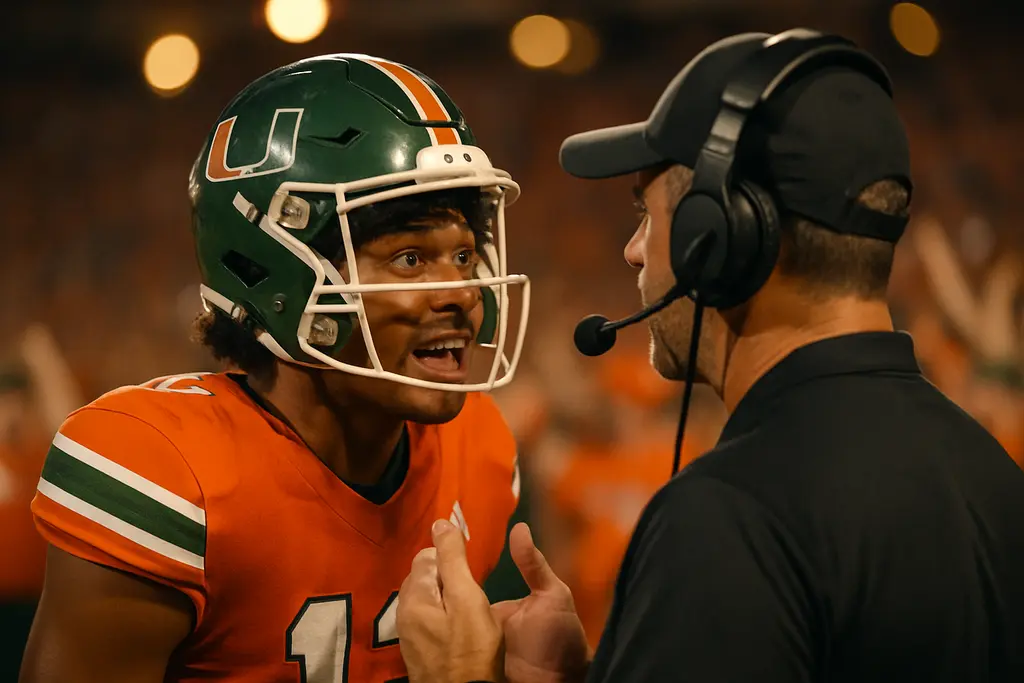
Miami Recruiting Dynamics start long before signing day. In South Florida, a high school football performance can move through a neighborhood by midnight, reach college staffs by morning, and become part of a larger conversation about who Miami keeps home, who leaves the region, and how local families measure opportunity through the sport.
The verified data available for this analysis points less to one single game and more to the recruiting results that follow repeated Friday-night proof. As of September 21, 2026, Miami’s 2026 class showed major national pull, but it also raised a local question: how much of the Hurricanes’ roster-building identity still runs directly through Miami-Dade, Broward, and Palm Beach counties?
Miami Recruiting Dynamics Begin Under Friday Lights
Miami Recruiting Dynamics And Game-Night Proof
Miami Recruiting Dynamics are not built on camp measurements alone. In this region, the live game still matters because it shows how a player responds to speed, pressure, crowd noise, coaching demands, and neighborhood expectation. A running back who finishes runs in the fourth quarter, an edge rusher who changes protection calls, or a defensive back who survives repeated targets against top receivers gives college staffs a different kind of evidence than a timed drill.
The research provided for this piece does not include a verified game-by-game database linking specific performances to offers or commitments. That limits how far any direct cause-and-effect claim can go. What can be said with confidence is that Miami’s recruiting outcomes show how valuable elite high school production remains. The University of Miami landed 20 blue-chip recruits in the 2026 class, tying for the second-most blue-chip signees nationally, according to On3’s recruiting report.
How Local Performances Travel
South Florida high school football has a fast information loop. Coaches, trainers, families, alumni, college contacts, and former players all pay attention when a prospect performs against credible competition. A strong performance does not guarantee a scholarship, and one quiet game should not define a teenager. Still, repeat production against strong local opponents can create a shared scouting language across the region.
That local language matters for Miami because the Hurricanes are not recruiting in a vacuum. Florida, Florida State, FIU, UCF, USF, SEC programs, Big Ten programs, and national powers all scout South Florida. Every high school game becomes part of a wider competition for trust. The family wants to know who has been present. The high school coach wants to know who values the player beyond a ranking. The college staff wants proof that talent will hold up on Saturdays.
What The 2026 Class Says About The Local Pipeline
Blue-Chip Volume Is Not The Whole Story
Miami’s 2026 signing class gave Mario Cristobal’s program a strong national recruiting profile. The larger trend is also notable: through Cristobal’s first five recruiting classes from 2022 through 2026, 66.1% of Miami signees were blue-chip recruits, with 80 blue-chip players among 121 total signees, according to the Miami Herald’s class review. That shows a program consistently chasing high-end high school talent rather than relying only on quick roster fixes.
For game analysis, that matters because blue-chip recruiting changes practice competition. A roster with more high-end high school signees can build depth through internal battles. It can also raise the standard for player development. The local connection, though, is where the conversation becomes more pointed. A nationally strong class does not automatically mean the Hurricanes dominated their immediate backyard.
The Tri-County Gap Needs Context
The Miami Herald reported that Miami’s 2026 class had only two players from Miami-Dade, Broward, or Palm Beach counties: edge rusher Jordan Campbell of Miami-Northwestern and running back Javian Mallory of West Boca Raton. That fact does not erase the value of the class. It does, however, sharpen the local question around high school performances and college access.
If the Hurricanes are winning blue-chip battles nationally while signing only a small number from the tri-county area in that class, the community conversation changes. Some local players may fit other programs better. Some may leave because another staff recruited earlier or more consistently. Some may be affected by positional needs, roster numbers, academic fit, or timing. Without verified player-by-player reporting, those reasons should not be guessed. The result itself is still important because South Florida fans track whether Miami is turning local high school excellence into orange-and-green commitments.
This is where Miami’s October 17, 2026 rivalry meeting with Florida State carries more than scoreboard meaning. Regional games can feed perception among recruits and families, especially when both staffs are active in the same talent base. Our related breakdown of Florida State vs. Miami in 2026 explains why that date could affect more than ACC positioning.
Community Meaning Beyond The Star Ratings
High School Football As A Neighborhood Signal
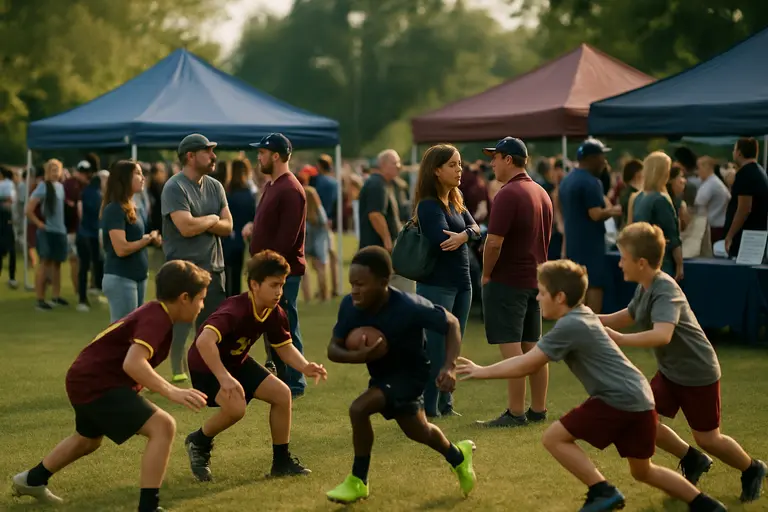
In Miami, high school football is not just a recruiting channel. It is a neighborhood signal. A standout performance can bring classmates, youth players, parents, alumni, and local coaches into the same conversation. When a player from Miami-Northwestern, West Boca Raton, or another area program signs with a major college, the story belongs partly to the athlete and partly to the people who helped build the pathway.
That is why recruiting coverage can miss the full meaning if it starts and ends with stars. A four-star label may help readers understand national value, but it does not explain the rides to practice, youth coaching, academic pressure, training bills, family sacrifices, or community pride attached to a player’s rise. South Florida’s football culture is built through those smaller commitments, then validated on game nights.
Why Development Still Decides The Story
High school performance can open the door, but development decides what happens after a player steps through it. Miami’s blue-chip numbers suggest the Hurricanes are bringing in many athletes with strong national profiles. The next measure is whether those players become reliable college contributors, stay connected to the program, and reflect well on the communities that produced them.
For local fans, that development piece creates a reason to follow more than commitment lists. The freshman who needs a year in the weight room, the local edge rusher learning college run fits, and the running back adjusting to pass protection all carry pieces of the Friday-night story with them. Their growth affects how families view Miami’s ability to turn high school production into college readiness.
- For Miami coaches, local games offer live evidence of competitiveness and fit.
- For high school programs, college attention can validate player development work.
- For families, recruiting outcomes shape trust in who truly knows the athlete.
- For fans, local signees deepen the emotional link between Saturdays and Fridays.
Why Miami Recruiting Dynamics Matter To The Canes
Miami Recruiting Dynamics matter because they sit at the center of the Hurricanes’ identity. A program can recruit nationally and still need a clear South Florida heartbeat. The 2026 class proved Miami could stack blue-chip talent, but the limited tri-county count also showed why local relationships remain a weekly job, not a signing-day speech.
The healthiest version of this system is not about claiming every local prospect should stay home. It is about building enough trust that elite South Florida players and their families believe Miami has evaluated them fully, recruited them honestly, and offered a development plan that fits. That trust is built through high school visits, live game evaluation, staff consistency, and the way former local players are treated once they reach campus.
For the community, the impact is just as clear. When a local player performs well on Friday and becomes part of Miami’s future, youth players see a path that starts on familiar fields. When that path leads elsewhere, the conversation does not stop; it becomes a measure of how competitive and crowded South Florida recruiting has become. Miami Recruiting Dynamics will keep shifting with every class, but the core truth remains steady: in this region, high school football performance still carries community weight and college football consequences.