

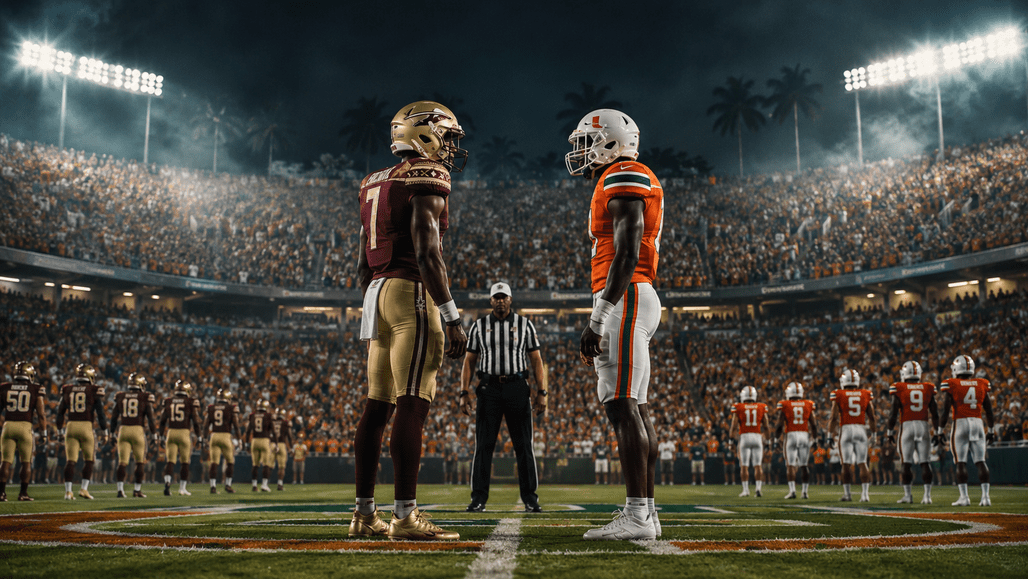
Florida State at Miami already carries enough history to stand on its own, but the October 17, 2026 meeting at Hard Rock Stadium has a sharper edge than a normal rivalry week. The Seminoles enter the season with Mike Norvell under pressure to prove that a reset in Tallahassee is more than another offseason talking point, while Mario Cristobal’s Hurricanes are trying to turn roster strength, quarterback upside, and home-field timing into another ACC push.
The official Florida State schedule places the Miami trip between a Friday night road game at Louisville on October 9 and a home game against Clemson on October 31, giving the Seminoles a bye immediately after the rivalry game. Miami’s own schedule release puts Florida State at Hard Rock Stadium after the Hurricanes’ October 10 open week, which means the Hurricanes should have extra preparation time before their first ACC home game of the season. That calendar alone explains why this matchup could become the defining in-state college football game of 2026.
Why The October 17 Timing Raises The Stakes

The timing is brutal for Florida State and useful for Miami. Florida State opens at home against New Mexico State on August 29, hosts SMU on Labor Day, travels to Alabama on September 19, then moves through Central Arkansas, Virginia, and Louisville before heading to Miami. By the time the Seminoles reach Hard Rock Stadium, they should have enough evidence to know whether the 2026 reset is working.
That is why this game will be bigger than a single rivalry result. A competitive Florida State team could arrive in Miami with a chance to reshape the season narrative before Clemson comes to Tallahassee two weeks later. A shaky Florida State team could arrive with the fan base already debating whether the program is stuck between patience and change.
Miami’s side of the calendar is different. The Hurricanes open at Stanford on September 4, host Florida A&M on September 10, travel to Wake Forest on September 18, host Central Michigan on September 26, then visit Clemson on October 3 before the open week. The school’s own schedule breakdown called Florida State a “doozy” of a first conference home game after the bye, and that framing fits the stakes. Miami gets time to recover, self-scout, and build a rivalry-specific plan before the Seminoles arrive through the Miami schedule breakdown.
That rest gap does not decide the game, but it changes the preparation environment. Florida State will be coming off a road trip to Louisville. Miami will be coming off a bye. In a rivalry built on emotion, execution, and momentum swings, that difference could matter.
Why This Game Could Define Mike Norvell’s 2026
Norvell’s 2026 season may be judged by the total record, but the Miami game could shape the public interpretation of that record. Florida State announced a schedule with a difficult mix of rivalry pressure, ACC road tests, and national attention, including Alabama, Miami, Clemson, and Florida. The Seminoles do have several winnable games, but the program’s ceiling will be questioned until it proves it can handle the games that feel like Florida State football at its highest standard.
The Miami matchup fits that test because it combines recruiting perception, ACC standing, state pride, and coaching credibility. Losing at Alabama would be damaging, but understandable depending on the margin and performance. Losing at Miami in a flat or disorganized way would hit differently. It would reinforce the idea that Florida State is still chasing the state’s top football energy rather than setting it.
This is where the rivalry connects with the structural issues FloridaFootballLive.com has already explored in Florida State roster strategy. A front-office adjustment, recruiting rebuild, or staff reshuffle only matters if it improves the product in games where the program’s identity is tested. Miami is that kind of game.
The bye week after October 17 also raises the temperature. If Florida State wins, the staff gets two weeks to build toward Clemson with renewed belief. If Florida State loses badly, the open week becomes a natural point for outside pressure to grow. Rivalry games rarely stay contained to the scoreboard. This one could become a referendum on the direction of the Seminoles’ rebuild.
Why Miami Has More To Prove Than The Favorite Label Suggests
Miami may enter the game with the stronger roster narrative, but that does not make the Hurricanes free of pressure. Cristobal has built a program that expects to compete near the top of the ACC, and the Hurricanes’ 2026 schedule gives them a clear chance to stack momentum before November. The question is whether Miami can turn talent into week-to-week control.
Quarterback Darian Mensah is central to that answer. Miami’s official roster page says Mensah arrived in Coral Gables after spending the 2025 season at Duke, where he started all 14 games, threw for 3,973 yards and 34 touchdowns, earned All-ACC Second Team honors, and became a Davey O’Brien Award semifinalist. That gives Miami a high-end quarterback story entering 2026, but it also makes the Florida State game a measuring point for how quickly the Hurricanes’ offense can settle around him through the Darian Mensah roster profile.
The Hurricanes also have a dangerous receiver headline in Malachi Toney, who has already been tied to major 2026 offensive expectations. Against Florida State, Miami’s offensive challenge will be less about proving it has playmakers and more about proving it can avoid the rivalry-game traps: forced deep shots, protection leaks, red-zone impatience, and careless turnovers.
That is why this game could define Miami, too. If the Hurricanes beat Florida State cleanly, they strengthen their ACC profile and validate the idea that Cristobal’s program has moved into a more stable tier. If they stumble at home after a bye, the conversation shifts from roster talent to game management.
The State Recruiting Signal Could Be Just As Important
Florida State vs. Miami is always a recruiting game. High school prospects in Miami-Dade, Broward, Palm Beach, Central Florida, Tampa Bay, and the Panhandle watch these matchups differently than neutral fans. They see scheme, development, sideline energy, stadium atmosphere, and which program looks like it has the clearer future.
The 2026 version matters because both programs are selling different versions of opportunity. Miami can sell quarterback production, offensive explosiveness, and a roster that looks ready to compete quickly. Florida State can sell immediate need, program tradition, and the chance to be part of a visible reset. The winner gets a stronger message for late-cycle recruiting conversations.
That does not mean one game flips every commitment. Recruiting has become too layered for that, with NIL, position relationships, depth charts, staff stability, and family preferences all carrying weight. Still, rivalry optics matter. A decisive Miami win could reinforce the idea that the Hurricanes have the state’s most stable ACC platform. A Florida State upset could give Norvell’s staff the kind of proof point that changes the tone around the program.
The Hard Rock Stadium setting adds another layer. Miami gets the game at home, after an open week, with a chance to make the building feel like a statewide recruiting stage. Florida State gets a road opportunity to show resilience in front of prospects who already understand what this rivalry means.
The Matchup Could Turn On Quarterback Pressure And Explosive Plays
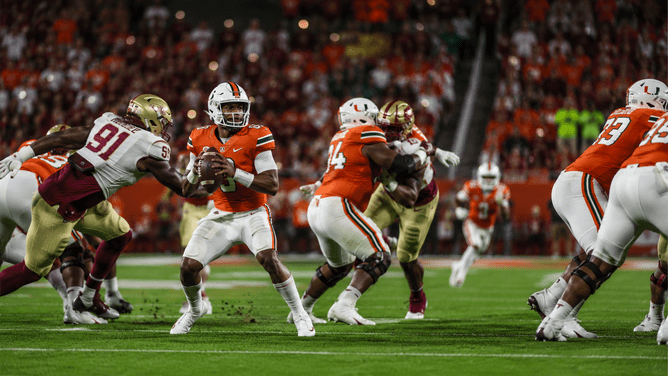
The tactical shape of the game will likely come down to whether Florida State can disrupt Miami’s offensive timing. Mensah’s 2025 production at Duke suggests he can handle volume, make efficient throws, and carry an offense. Giving him clean pockets and easy access to Toney or Miami’s other skill players would put Florida State in a bad place quickly.
For the Seminoles, defensive pressure has to be more than occasional edge flashes. It must affect down-and-distance. If Florida State can force Miami behind schedule, the Hurricanes will have fewer chances to dictate tempo. If Miami reaches second-and-medium all afternoon, Cristobal’s offense can keep the full call sheet available.
On the other side, Miami’s defense will test whether Florida State has enough offensive stability to survive a hostile road game. Rivalry underdogs often need two things: an early scoring answer and a way to avoid long stretches of three-and-outs. If the Seminoles cannot protect the quarterback or create explosive plays, the game could tilt toward Miami’s depth before halftime.
| Matchup Area | Why It Matters |
|---|---|
| Miami Quarterback Play | Darian Mensah gives the Hurricanes high-end production potential, but rivalry pressure tests timing and decision-making |
| Florida State Pass Rush | The Seminoles need disruption to keep Miami from turning the game into a rhythm offense showcase |
| Explosive Plays | Miami has the skill talent to separate, while Florida State likely needs chunk gains to control momentum |
| Red-Zone Execution | Rivalry games often tighten near the goal line, making field goals and turnovers decisive |
| Coaching Response | The bye-week setup favors Miami’s preparation, while FSU’s response after Louisville will show staff control |
The team that handles the middle eight minutes around halftime may control the game. If Miami scores late in the second quarter and opens the third quarter cleanly, Hard Rock Stadium could become difficult for Florida State. If the Seminoles steal a possession or force a turnover in that window, the pressure shifts back to Miami.
Why This Could Be The State’s Defining 2026 Game
Florida has several football storylines in 2026. The Gators have their own SEC path. UCF and USF have important identity questions. The Dolphins, Buccaneers, and Jaguars will all carry NFL intrigue. Still, Florida State vs. Miami has the clearest blend of rivalry history, ACC consequences, coaching pressure, quarterback storylines, and recruiting impact.
The game’s placement makes it even stronger. It is not a late-season rivalry played after both teams have already revealed their ceiling. It lands in mid-October, just as conference races start to harden and coaching narratives become harder to escape. Miami can use it to confirm that it belongs in the ACC title conversation. Florida State can use it to change the mood around the program before Clemson and Florida arrive later in the schedule.
That is why the 2026 meeting could carry more weight than the rankings show on game week. If Miami wins with control, the Hurricanes strengthen their claim as the more complete in-state ACC program. If Florida State wins on the road, the Seminoles gain the kind of result that can reset a season and buy credibility for every roster and staff decision made before September.
The rivalry has always been emotional. In 2026, it could be diagnostic. It will show whether Miami’s talent is turning into command, whether Florida State’s reset has substance, and which program owns the stronger football argument inside the state when the season reaches its hinge point.