

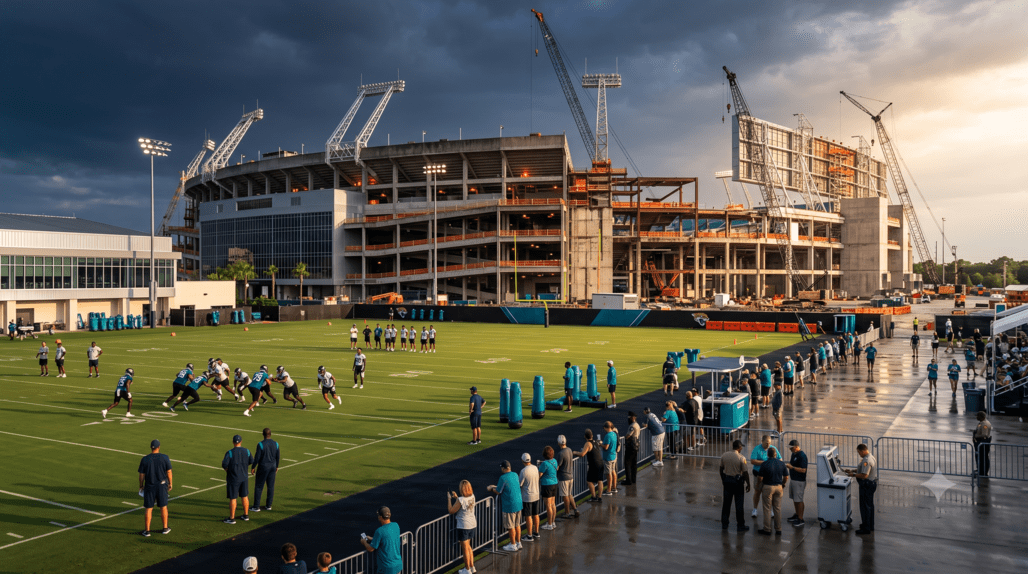
The Jacksonville Jaguars’ 2026 training camp is more than the first public look at Liam Coen’s second season. It is the first real fan-facing preview of how the franchise will operate while EverBank Stadium changes around it. Rookies are scheduled to report on July 25, the full team is due July 28, and open practices begin July 29 at the Miller Electric Center, turning camp into a rehearsal for a season played beside a major stadium construction project.
That matters because the Jaguars are entering the middle stage of a $1.4 billion stadium transformation. The team’s official Stadium of the Future timeline says construction began in February 2025, the Jaguars played in Jacksonville with 60,000-plus capacity in 2025, the 2026 season will be played in Jacksonville with reduced capacity, the 2027 home schedule will move to Camping World Stadium in Orlando, and the renovated stadium is scheduled to open in August 2028 through the Jaguars stadium timeline.
Why Training Camp Becomes A Stadium Transition Test
Training camp usually gives fans a first look at rookies, position battles, and the shape of the depth chart. For Jacksonville in 2026, it also gives the franchise a chance to train its own audience. Fans arriving at Miller Electric Center will see a different stadium environment, follow mobile-entry rules, manage new parking and access patterns, and begin adjusting to a home facility that will feel less familiar before it becomes more modern.
The Jaguars’ training camp page lists practices at the Miller Electric Center on July 29, July 30, July 31, August 2, August 3, August 7, August 9, August 19, August 23, and August 25. The team notes that July 31 is an exclusive practice date for season ticket members, and that a mobile pass is required for entry. The page also tells fans they will notice EverBank Stadium “looks a little different” as work continues toward the Stadium of the Future through the 2026 Jaguars training camp schedule.
That is the hidden value of camp. The Jaguars can test communication, signage, entry timing, fan services, crowd movement, and construction-era messaging before the regular season carries the higher pressure of game days. A smooth July and August will not guarantee a smooth September, but confusion in camp would be a warning sign that the franchise needs clearer guidance before reduced-capacity games begin.
This mirrors the broader roster-and-structure theme FloridaFootballLive.com has been tracking across Florida football. In Miami, a player like Kenneth Grant can become a measure of whether a defensive reset is functional; in Jacksonville, camp can become the first measure of whether a stadium transition is being handled with the same discipline. That is why Kenneth Grant’s Dolphins defensive reset connects naturally with the Jaguars’ summer: both stories are about whether planning turns into visible control.
What Fans Will Learn Before The Reduced-Capacity Season
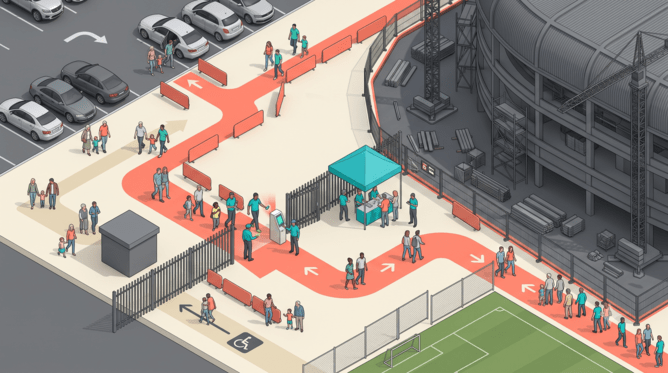
The 2026 season at EverBank Stadium will not feel like a normal home year. The Jaguars’ official stadium plan says the team will stay in Jacksonville, but at reduced capacity, before moving 2027 home games to Orlando. That means training camp becomes the first chance to set expectations for a smaller, more construction-aware home environment.
Fans will learn how the club wants them to behave in a construction-era stadium district. Mobile passes, timed arrivals, public practice reservations, and entry points may seem like minor details, but they build habits. If those habits are clean by late August, the home opener becomes less stressful. If they are unclear, every regular-season crowd becomes a larger version of the same problem.
The emotional piece matters too. The Jaguars need fans to feel included in the transition rather than inconvenienced by it. Open practices are one way to maintain that relationship. Public camp access lets supporters see Trevor Lawrence, Travis Hunter, defensive leaders, rookies, and position battles up close while the main stadium sits in a visible state of change.
The franchise is asking its audience to tolerate a strange period: fewer seats in 2026, a year away from Jacksonville in 2027, then a return in 2028. Training camp can frame that process as progress instead of disruption. It can show that the team still belongs in Jacksonville even while its home is being rebuilt.
Why The Miller Electric Center Matters More This Year
The Miller Electric Center has become an important bridge between the Jaguars’ football operation and the fan base. In a normal year, it is the practice facility. In 2026, it becomes the cleanest football-facing space in a stadium district under construction. That gives it extra importance as a controlled environment where the club can keep the focus on the team.
The practice schedule helps. Beginning July 29, the Jaguars can use several open dates to build momentum before preseason work becomes more specific. Public sessions on August 19, August 23, and August 25 keep fans engaged later in the camp calendar, including the late-August stage when roster decisions, preseason evaluations, and joint-practice lessons become more meaningful.
Joint-practice context adds another layer. Recent camp previews have pointed to Jacksonville’s joint work with the Carolina Panthers and Tampa Bay Buccaneers as part of the preseason build-up, giving the Jaguars two different measuring sticks before the regular season. Carolina brings an outside opponent into the evaluation process. Tampa Bay adds an in-state NFL connection that should matter to Florida football fans.
Those practices are useful because preseason games do not always reveal what coaches need to know. Joint sessions can test pass protection, receiver timing, red-zone calls, defensive communication, and special teams structure without exposing a full game plan. In a season where the stadium transition could create outside noise, clean football evaluation becomes even more valuable.
The Position Battles That Could Shape The Transition Year
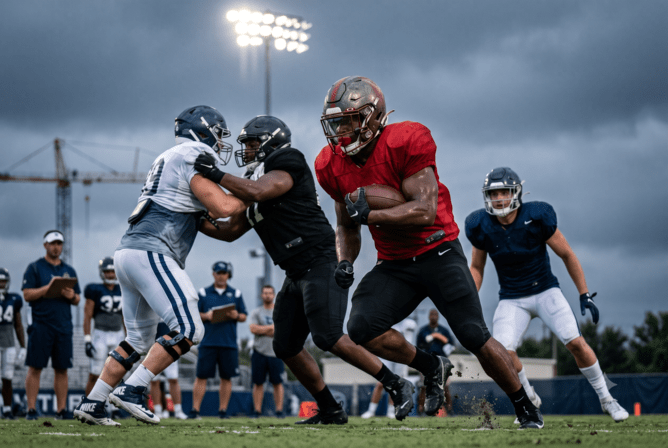
The Jaguars’ construction story will dominate facility headlines, but the team still has to win football games in 2026. That is why camp competition matters. Recent Jacksonville coverage identified several key battles before Week 1, including running back, right guard, rotational edge rusher, third safety, and kick return roles.
Running back is one of the most visible areas. Bhayshul Tuten has been discussed as a frontrunner after Travis Etienne’s departure, while Chris Rodriguez Jr. is working back from foot surgery. That battle matters because the Jaguars need a ground game that can stabilize home games during a season where stadium capacity and fan rhythm may feel different.
Right guard may be just as important. Patrick Mekari’s veteran presence is being challenged by younger linemen such as Wyatt Milum and Emmanuel Pregnon. For a team that wants Lawrence protected and the offense on schedule, interior offensive line clarity is a camp priority. A stadium transition can change atmosphere. It cannot become an excuse for protection breakdowns.
The rotational edge battle is another key piece. Danny Striggow, B.J. Green II, Wesley Williams, and Zach Durfee are among the names being discussed as Jacksonville looks for depth after offseason departures. If the Jaguars can build a deeper pass-rush rotation, the defense can travel better when the franchise eventually plays the 2027 season in Orlando.
The third safety role also fits the transition theme. Anthony Campanile’s three-safety looks require communication, versatility, and trust. Caleb Ransaw and Jalen Huskey have been framed as candidates for that role, with Ransaw’s familiarity with the system giving him a possible edge. That kind of role may not draw casual fan attention at camp, but it can affect defensive flexibility all season.
Why 2026 Is A Rehearsal For Orlando In 2027

The Jaguars’ 2027 move to Camping World Stadium is already official. NFL owners unanimously approved the temporary one-year stadium lease between the Jaguars and Florida Citrus Sports during the league’s 2026 Annual Meeting in Phoenix, with Camping World Stadium designated as Jacksonville’s home venue for the 2027 season while EverBank Stadium renovation work continues through the official 2027 Orlando approval.
That makes 2026 a rehearsal in two ways. The team has to learn how to operate around stadium disruption in Jacksonville. The fan base has to learn how to stay connected before an even bigger disruption arrives. If the Jaguars manage camp well, the franchise can carry those communication lessons into ticketing, travel guidance, fan events, and game-week routines for Orlando.
The danger is emotional distance. A temporary home can start to feel neutral if the franchise does not work hard to carry Jacksonville’s identity with it. Camp can help prevent that by reinforcing local connection before the move. Fans who feel informed and included in 2026 are more likely to follow the team through 2027.
The franchise also has to think about brand geography. Orlando gives Jacksonville access to Central Florida fans who may not regularly attend games at EverBank Stadium, but it also changes the crowd mix. A strong 2026 camp and reduced-capacity home season can build a more committed core before the team takes its home schedule down I-4.
| Transition Stage | What Training Camp Can Preview | Why It Matters |
|---|---|---|
| 2026 Reduced Capacity | Mobile entry, fan communication, construction-era access | Sets habits before regular-season crowds arrive |
| Miller Electric Center Practices | Football access beside a changing stadium | Keeps fans connected to players and coaches |
| Joint Practices | Outside tests against Carolina and Tampa Bay | Gives coaches better roster evaluation before Week 1 |
| 2027 Orlando Move | Fan loyalty, ticket messaging, travel expectations | Prepares Jacksonville supporters for a temporary home |
| 2028 Stadium Opening | Modernized fan experience and football identity | Frames the disruption as a bridge to a stronger venue |
How Camp Could Help Preserve Home-Field Edge
Home-field advantage is built before the first snap. It comes from routine, crowd identity, fan confidence, and the team’s belief that its environment supports the work. The Jaguars cannot afford to let the stadium renovation turn 2026 into a holding pattern. Training camp is the first chance to prove the season still has urgency.
That starts with access. If fans can register smoothly, find clear information, enter practices without confusion, and see a team that looks organized, the construction backdrop becomes less distracting. If practice days feel chaotic, it becomes harder to convince supporters that reduced-capacity game days will be smooth.
It continues with football clarity. The Jaguars need camp to answer real roster questions before the stadium story overwhelms the season. Who runs the ball? Who protects Lawrence inside? Who rotates off the edge? Who handles return duties? Who becomes the third safety? These questions will decide whether Jacksonville enters the 2026 season with a football identity strong enough to cut through facility noise.
The final piece is trust. The Jaguars are asking fans to move through a three-step process: reduced Jacksonville home in 2026, Orlando home in 2027, renovated EverBank Stadium in 2028. Training camp can make that process feel real, organized, and worth following.
Why This Summer May Matter More Than A Normal Camp
The Jaguars’ 2026 training camp will be judged on football, but it will reveal more than depth-chart answers. It will show whether the franchise can manage a visible transition without losing the connection that makes Jacksonville’s home field matter. The Miller Electric Center practices, mobile-entry requirements, joint-practice schedule, and construction-era fan experience all become small previews of a bigger challenge.
The best version of this summer is clear. Fans get close access to the team. Coaches settle key position battles. The franchise communicates stadium changes without confusion. The reduced-capacity season starts with supporters already prepared for a different EverBank environment. The 2027 Orlando move begins to feel like a planned bridge rather than a sudden exile.
That would make training camp a meaningful first step toward the Stadium of the Future. The finished building is scheduled for August 2028, but the football and fan-experience test begins now. If the Jaguars handle camp well, Jacksonville’s stadium transition can feel less like a disruption and more like the start of a sharper, more durable home-field identity.