

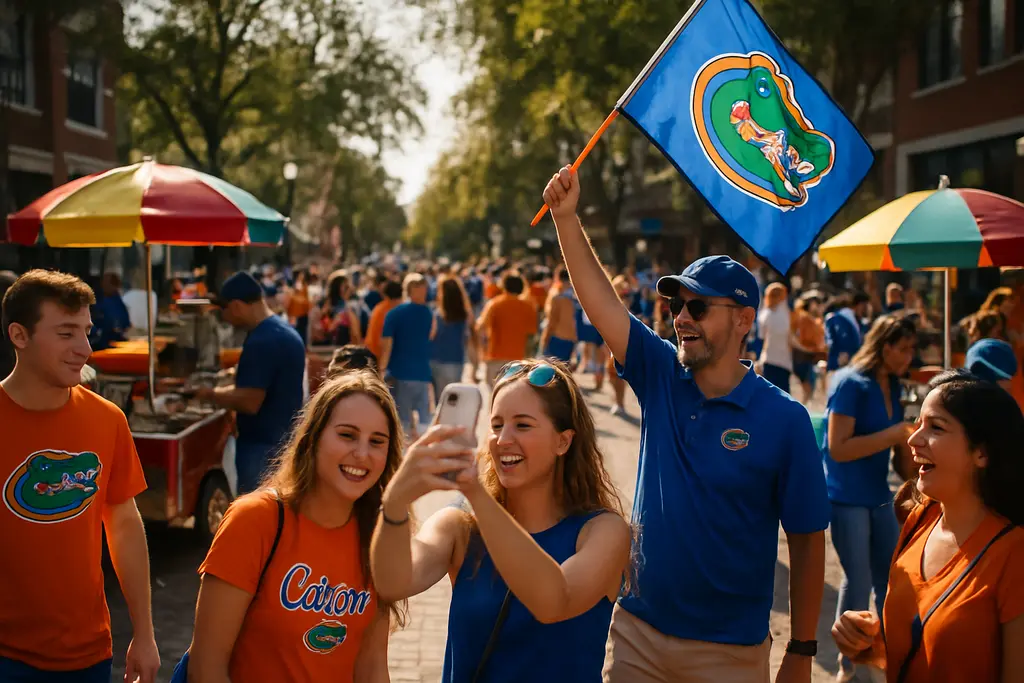
Gators Game-Day Tourism is best understood as part of a larger University of Florida attendance cycle that moves people, spending and civic energy through Gainesville. In fiscal year 2023-24, which ended on June 30, 2024, UF hosted athletic, cultural, educational and health or medical events that drew about 6.85 million total attendees, including 2.06 million nonresident visitor-days, according to UF Economic Impact. Those nonresident visitors spent an estimated $306.78 million across lodging, dining, transportation, entertainment, shopping and related categories.
For football fans, those figures give scale to something Gainesville residents see on home Saturdays: traffic tightening near campus, restaurants filling earlier than usual, hotel rooms becoming harder to find and orange-and-blue foot traffic stretching beyond Ben Hill Griffin Stadium. The numbers are not a per-game football box score. They are a broader UF event measure. Still, they help explain why Florida Gators home games sit near the center of the local sports economy.
What Gators Game-Day Tourism Means For Gainesville
Gators Game-Day Tourism As A Visitor Pattern
The value of Gators Game-Day Tourism starts with a simple sports truth: home games pull people into a compact college town in concentrated waves. Gainesville is not a neutral host city built around occasional mega-events. It is a university city where the stadium, campus streets, alumni routines and local businesses operate in close contact. That makes the home-game effect easier to feel, even when the best available data comes from a wider UF attendance report.
Nonresident visitor-days matter because they signal spending that would not necessarily happen in Alachua County without UF-related events. A fan driving in from Tampa, Jacksonville, Orlando, South Florida or out of state needs food, fuel, parking, lodging or postgame gathering spots. A family visiting for a football weekend may combine the game with campus stops, bookstore runs or meals near Midtown and downtown. Those small decisions become meaningful when repeated across home dates.
The Fan Flow Around The Stadium
Ben Hill Griffin Stadium gives Gainesville a sports rhythm that is different from larger Florida markets. The venue is woven into campus life, so game-day tourism does not sit apart from the university. It moves through student areas, alumni traditions and local streets. That is why the visitor economy tied to UF events should be read as both a spending trend and a fan-engagement trend.
On a football Saturday, team identity and local identity meet. The Gators are not just a team that happens to play in Gainesville. They are one of the main ways outsiders experience the city. That puts pressure on game-day operations, but it also gives local businesses recurring chances to connect with fans who return year after year.
How Visitor Spending Reaches Local Sports Weekends
Where Visitor Dollars Tend To Land
UF’s reported $306.78 million in nonresident visitor spending during FY 2023-24 covered several categories: lodging, dining, transportation, entertainment and shopping. For sports weekends, those categories match the practical fan checklist. People book rooms, eat before kickoff, buy supplies, pay to park, move around town and often spend again after the final whistle.
That spending pattern is why home games matter beyond the stadium gates. Ticket demand is visible, but visitor spending spreads into places that do not appear in the score recap. A restaurant server, hotel desk worker, rideshare driver, apparel clerk or campus-area business owner may feel the effect of a home opponent as much as a fan does. The sports schedule becomes part of the local business calendar.
Why Overnight Stays Carry Weight
Overnight visitors are especially valuable because they extend a game from a three-hour event into a weekend stay. Even without a verified per-game total from the approved UF sources, the logic is clear from the spending categories in the research: lodging usually brings attached spending on meals, transportation and shopping. That chain is one reason college football weekends can matter so much to smaller host communities.
For readers planning Florida Gators home weekends, this also explains why early travel decisions can affect the fan experience. Hotel supply, restaurant reservations and arrival routes are part of the game-day story. The economic trend and the practical fan experience are connected. For a closer fan-centered angle on how Saturday routines shape the city, the site’s analysis of UF football fans in Gainesville fits the same local sports thread.
Why Countywide UF Impact Matters To Game Days
The Scale Behind The Saturday Crowd
Game-day tourism does not operate on its own. It sits inside UF’s much larger economic presence. During FY 2023-24, UF contributed $19.57 billion in industry output to Florida’s economy and directly and indirectly supported 134,411 jobs statewide, according to the University of Florida news report. The same report said UF generated $12.61 billion in value added and $2.76 billion in tax revenue for local, state and federal government.
Those statewide numbers are bigger than football, but they matter for understanding why Gators home games carry such strong local weight. Athletics benefits from UF’s scale, while UF benefits from the emotional reach of athletics. A home football weekend can introduce visiting alumni, parents and out-of-town fans to a broader university economy that includes health care, research, education and cultural events.
Alachua County’s Dependence On UF Activity
The county-level figures show the local tie more clearly. In Alachua County during FY 2023-24, UF and related entities supported 100,169 jobs and contributed more than $14 billion in output. The research also states that this represented about 51% of total county employment and 44% of the county’s value-added gross regional product.
That does not mean every UF-supported job depends on football Saturdays. It does mean Gainesville’s sports economy should not be treated as a side note. Florida Gators home games are one of the public-facing points where UF’s institutional weight becomes visible to residents, visitors and businesses at the same time.
What The 2026 Timing Shows And Does Not Show
Past Dates Need Past-Tense Analysis
As of September 10, 2026, Labor Day weekend 2026 and the first Florida Gators football game referenced in the supplied research had already passed. The research included local business expectations tied to that weekend, but it did not provide verified post-weekend sales totals that can be used here. That distinction matters. Pre-game projections can show local confidence, but they should not be treated as confirmed results after the date has passed.
This is a useful reminder for statistical trends around college sports tourism. The most reliable analysis separates measured outcomes from expectations. UF’s FY 2023-24 attendance and visitor-spending figures are completed data points. Business forecasts around a single weekend are planning signals unless later reporting confirms actual receipts, occupancy or sales.
Why The Trend Still Matters
Even with that caution, the direction of the story is clear. Gainesville’s home-game economy depends on repeat visitation, regional travel and fan habits that extend beyond kickoff. Football creates the sharpest weekly surge because it brings large crowds at set times, but it also benefits from UF’s wider draw across athletics and campus life.
For local leaders, the trend points toward transportation planning, visitor services and communication with businesses. For fans, it points toward earlier planning and realistic expectations around lodging, traffic and dining. For the Gators, it reinforces why the home crowd remains a competitive and civic asset.
Why Gators Game-Day Tourism Matters In Gainesville
The Local Sports Economy Is A Fan Story
Gators Game-Day Tourism sits at the intersection of team loyalty, campus identity and measurable visitor spending. The most useful takeaway is not simply that football weekends are busy. It is that the crowd has economic value because many fans come from outside the county and spend across several local categories.
That value also carries responsibility. Gainesville’s game-day experience depends on how well the city, UF, businesses and fans handle the pressure created by concentrated visitor demand. Smooth arrivals, clear parking information, strong hospitality and reliable local service can turn a crowded weekend into a reason for fans to return.
For a local sports audience, the numbers give shape to a familiar feeling. Florida Gators home games are not only athletic events. They are recurring civic moments that bring outside dollars into Gainesville, deepen alumni ties and remind residents how closely the university and the city are linked through football Saturdays.