

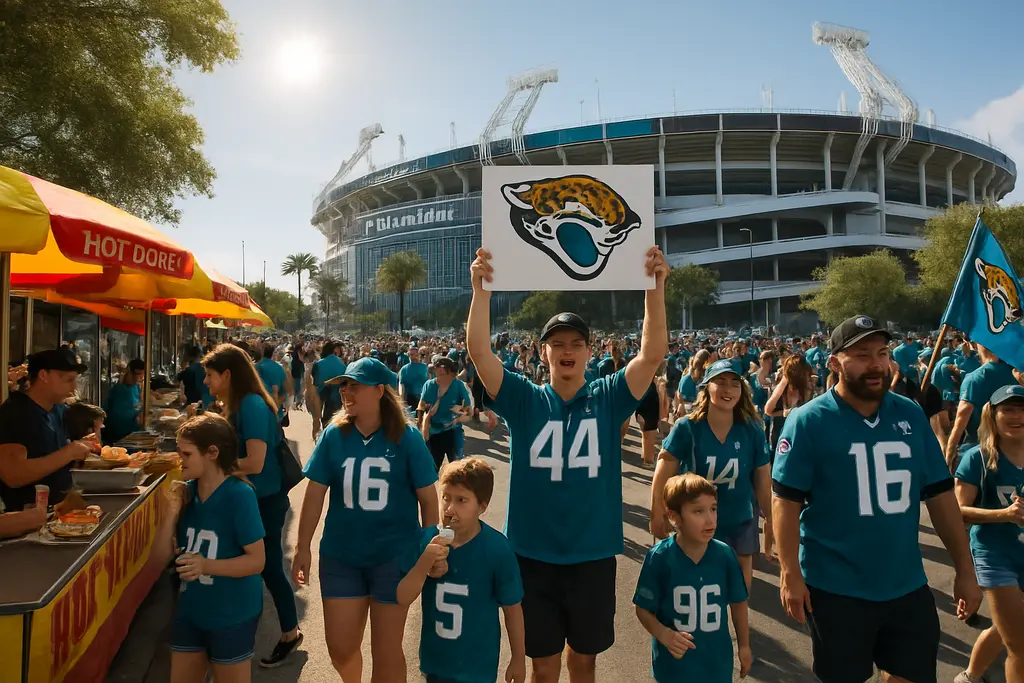
Jaguars home games have become one of Jacksonville’s biggest sports business stories because the team’s stadium plan is no longer just a construction timeline. It is a local economy story tied to fewer seats in 2026, a full temporary move to Orlando in 2027, and the promise of a reworked EverBank Stadium for the 2028 NFL season.
The numbers show why the issue reaches beyond football. The Stadium of the Future deal agreed on May 14, 2024, projected a $26 billion economic impact to the Jacksonville community over the 30-year lease, with a one-time construction impact estimated at $2.4 billion, according to the team and city stadium agreement. That forecast gives Jacksonville a long runway, but the short-term strategy asks local businesses and fans to adjust before the larger payoff can be tested.
Why Jaguars home games Now Carry Bigger Economic Weight
Home dates have always mattered in Jacksonville because NFL weekends pull together downtown parking, restaurants, bars, hotels, private events, security staffing, transportation and stadium operations. The renovation plan raises the stakes because the city is trying to protect that activity while parts of the stadium are unavailable.
The Jaguars home games Capacity Squeeze
For the 2026 NFL season, EverBank Stadium capacity was reduced to 42,507, including 1,260 standing-room tickets, down from roughly 68,300. A total of 27,637 seats went offline across the stadium, with 22,005 of those in the upper bowl. That is not a small operational tweak. It changes the number of fans who can spend money near the venue on a given game day, and it changes how local businesses judge staffing, inventory and hours around kickoff windows.
The team’s 2026 plan kept parking inventory consistent with 2025, which matters for access. If fewer seats are available but the surrounding parking system holds steady, the economic pattern shifts from pure crowd volume to fan quality, arrival timing and per-person spending. Restaurants and bars near the sports complex may see a different rhythm: fewer total ticket holders, but potentially stronger demand from fans who treat a reduced-capacity seat as a scarcer event.
Why Scarcity Changes Fan Behavior
For downtown operators, Jaguars home games can create an early-afternoon surge, a late-night spillover or a shorter, more controlled wave depending on kickoff time. Reduced capacity narrows the margin for businesses that depend on walk-up traffic. A smaller crowd can still support strong spending, but it requires sharper planning: labor scheduling, reservation pacing, ride-share timing and coordination with stadium traffic patterns.
There is also a community identity layer. A smaller stadium crowd can still sound and feel like Jacksonville if the fans who attend arrive early, stay engaged and keep pregame traditions active. From a team-dynamics view, that matters because the Jaguars are trying to preserve home-field energy during a period when the building itself is changing.
What The $1.4 Billion Stadium Plan Signals
The renovation is a $1.4 billion project, with the city and Jaguars each contributing $625 million, while Jacksonville contributes $150 million for pre-construction upgrades. NFL.com reported that no new taxes were being levied and that funding came from existing capital improvement plans and a half-penny sales tax stadium funding report. That structure matters locally because the public conversation is not only about what the stadium becomes, but how the costs sit alongside city priorities.
Construction Impact Versus Game-Day Interruption
The clearest trend is a trade-off between short-term disruption and projected long-term activity. The research attached to the stadium deal estimated a one-time construction impact of $2.4 billion. Construction spending can support jobs, contracting and related business activity, but it does not replace every lost game-day transaction for a bar, hotel or vendor that counts on full stadium weekends.
The 2027 season creates the sharpest break. The Jaguars’ plan sends all home games outside Jacksonville to Camping World Stadium in Orlando while full renovation work is underway, with the renovated stadium expected to re-open for the 2028 season. That means downtown Jacksonville loses its normal NFL home-weekend pattern for that period, while Orlando absorbs the temporary event traffic. For a city that has tied civic identity to NFL Sundays, the absence is more than a schedule note.
For a related fan-side view of this construction period, our analysis of the Jaguars stadium renovation breaks down how reduced 2026 capacity, the 2027 Orlando move and the 2028 return could reshape home-field feel.
How Local Spending Patterns Are Being Reset
The strongest single-game example in the research came from Jacksonville’s January 2023 home playoff game. Visit Jacksonville attributed $16.3 million in total economic activity in Duval County to that game, including $9.26 million in direct visitor spending. The event drew more than 70,000 attendees, included more than 21,000 overnight visitors and supported nearly 10,818 hotel room nights.
That playoff figure is not a guarantee for every regular-season date, and the 2026 capacity limit makes a direct comparison difficult. Still, it shows the scale of what an NFL event can mean when demand, travel and downtown activity align. The gap between a 70,000-plus playoff crowd and a 42,507-seat renovation-year capacity is exactly why Jacksonville businesses are watching the home schedule closely.
| Trend Point | Reported Figure | Local Economic Meaning |
|---|---|---|
| 30-year lease impact | $26 billion projected | Long-range case for keeping NFL activity tied to Jacksonville |
| Construction impact | $2.4 billion projected | Short-term buildout activity across labor and related services |
| 2026 capacity | 42,507 | Lower fan volume, higher pressure on per-person spending |
| Seats offline in 2026 | 27,637 | Fewer ticketed customers moving through downtown on game days |
| January 2023 playoff activity | $16.3 million | Benchmark for what high-demand NFL weekends can produce |
Costs Still Matter On Game Day
The research also points to the public-service side of the ledger. Local reporting cited city spending of roughly $650,000 to $700,000 per home game on public services such as police, fire, utilities and stadium operations, while ticket and parking surcharges brought in about $275,000 per game. That gap does not settle the stadium debate by itself, but it shows why the local economy conversation cannot stop at hotel rooms and restaurant tabs.
Jacksonville’s challenge is to connect the long-term stadium return with practical week-to-week management. Public costs, visitor spending, local tax revenue, construction activity and civic value all sit in the same calculation. Sports fans tend to see the scoreboard first. City planners and business owners see the crowd flow before and after the game.
Why The 2027 Orlando Shift Changes Jacksonville Planning
The 2027 Orlando season is the most sensitive part of the home-game strategy because it temporarily removes the Jaguars from their usual Jacksonville weekend economy. The team will still represent Jacksonville, but the spending attached to stadium entry, parking, nearby meals and hotel stays will move away from Duval County for those dates.
That shift should push Jacksonville businesses to treat 2026 as a retention year. Restaurants, hotels and event operators near the stadium have a chance to strengthen customer lists, private-event calendars and non-NFL programming before the temporary absence. The fans most likely to return in 2028 are the ones who still feel connected to the team during the disruption.
The club’s two home-designated London games in 2026 are part of that same broader strategy. They keep the franchise tied to international scheduling while EverBank Stadium is limited, but those dates do not fill the local spending gap in the same way a full-capacity downtown game would. For Jacksonville, the economic question is how much activity can be protected before the building fully returns.
What Jaguars home games Mean For Jacksonville
The clearest read is that Jacksonville is accepting short-term economic friction to secure a longer stadium horizon. The 2026 reduced-capacity plan limits crowd size but keeps NFL dates in the city. The 2027 Orlando move creates a real local interruption. The 2028 return is expected to test whether the renovated stadium can attract larger spending across football and other events through 2052.
For fans, the most practical takeaway is that every remaining renovation-era game carries added local value. Buying food downtown, arriving early, using local hospitality and keeping the sports district active all matter more when capacity is capped. For businesses, the task is to prepare for smaller but potentially more committed crowds in 2026, bridge the Orlando season in 2027, and be ready for the demand curve when the stadium reopens.
Jacksonville’s stadium strategy is a sports story with a civic balance sheet. The Jaguars need a competitive home environment. Downtown businesses need dependable event traffic. The city needs the long-term project to justify the short-term strain. That shared pressure is why the home schedule now functions as both a football calendar and an economic planning tool.