

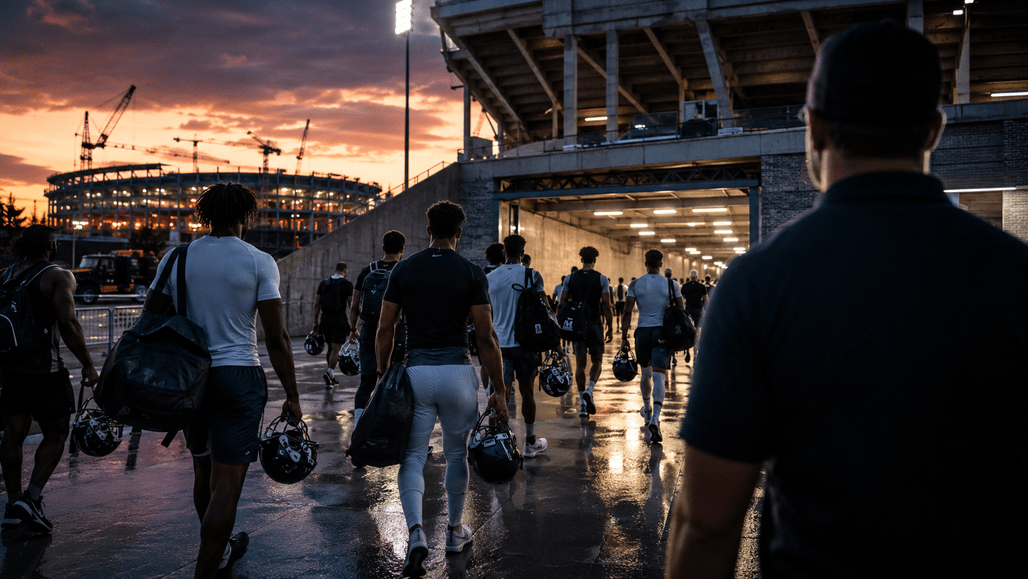
USF football is entering 2026 with two clocks running at once. One clock belongs to Brian Hartline, the first-year head coach asked to turn a heavily rebuilt roster into a contender right away. The other belongs to Raymond James Stadium, where the Bulls are scheduled to play their final season before opening a new 35,000-seat on-campus stadium in 2027. That makes the transfer class more than a roster patch. It may decide whether USF leaves its long-time NFL home with momentum or carries another transition season into the new building.
The scale of the reset is hard to ignore. USF announced on January 28, 2026, that Hartline and his staff added 41 transfer portal players, with the class ranked No. 1 in the American Conference and best among Group of 6 programs by 247Sports. The official school release said the group included 24 players from Power Four programs, 13 former four- or five-star high school prospects, four Division I all-conference players, and one NJCAA First Team All-American through the USF transfer portal class.
Why Hartline’s First Season Starts With A Roster Math Problem
Hartline did not inherit a normal first-year coaching situation. USF is coming off a 9-4 season and a third straight bowl appearance, but the departure of Alex Golesh to Auburn triggered major turnover. Several key players followed Golesh or left through the portal, including quarterback Byrum Brown, while Hartline arrived from Ohio State with a reputation built on receiver development, offensive recruiting, and high-level talent evaluation.
That is why 2026 is less about installing a slogan and more about solving roster math before September. USF lost proven production, added a massive transfer group, and now has to turn names into roles before the Bulls open at Raymond James Stadium against FIU on September 5. The school’s official 2026 schedule lists that FIU opener for 7 p.m., followed by a September 12 trip to Army and a September 19 home game against Delaware State.
The timing matters because USF does not have a long runway. The Bulls are celebrating their 30th season of football, playing seven home games for the first time since 2019, and trying to close their Raymond James Stadium era with a season that feels like a launchpad for 2027 rather than a pause between coaching staffs. USF went 6-0 at home last season, which gives Hartline a useful starting point: there is recent proof that Tampa can become a real advantage when the team gives fans something to trust.
That broader transition connects with the pressure FloridaFootballLive.com has already identified in Florida State quarterback pressure. In both cases, one position or one roster mechanism can become the visible measure of a larger program reset. For USF, the portal class is the mechanism.
Michael Van Buren Jr. Could Define The Offense Early
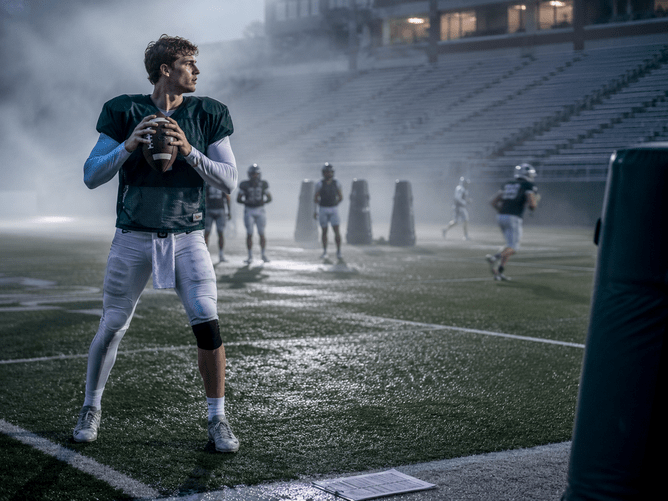
The transfer class will be judged first by the quarterback room. Byrum Brown’s exit removed the player most associated with USF’s recent offensive identity, and Hartline’s first season now depends on how quickly the new quarterback group can stabilize the offense. Underdog Dynasty identified former LSU and Mississippi State quarterback Michael Van Buren Jr. as the projected starter and noted that USF also added Luke Kromenhoek after losing Brown to Auburn.
Van Buren gives the Bulls a path toward a different kind of offense. Brown’s dual-threat production created stress with legs, improvisation, and tempo. A Hartline offense may ask for a cleaner passing structure, stronger receiver timing, and better spacing. That does not mean USF has to abandon quarterback movement, but it does mean the transfer quarterback must prove he can distribute the ball quickly enough for Hartline’s receiver background to matter.
The opening month could reveal whether USF has a real offensive identity or only a collection of new pieces. FIU, Army, Delaware State, and Bowling Green give the Bulls a schedule that can help the offense build confidence before deeper conference play. That does not make the stretch easy. Army presents its own rhythm problems, and early-season road games can expose communication issues for rebuilt offensive lines and new quarterbacks.
The key for Van Buren is not one explosive September stat line. It is whether he can make the offense look organized. Hartline’s transfer class includes receiver help and offensive line additions, but quarterbacks turn portal depth into real production. If Van Buren wins the job and plays with command, USF’s transfer class immediately looks like a targeted rebuild. If the quarterback position stays unsettled, the whole roster reset becomes harder to evaluate.
Receiver Talent Makes Hartline’s Reputation Relevant Right Away

Hartline’s reputation follows him into Tampa because of the position he knows best. At Ohio State, he coached and recruited a long list of high-end receivers, and that history changes how USF’s transfer receivers will be judged. The Bulls did not hire Hartline only to manage the roster. They hired him to make offensive talent look better.
That puts pressure on players such as Kenny Odom, Armani Winfield, and Arhmad Branch, who were among the notable portal additions discussed in national Group of 6 previews. USF lost major receiving talent after Golesh’s departure, so Hartline’s system needs new pass catchers to create separation, win contested throws, and give the quarterback easy answers when defenses test the rebuilt offense.
The most promising part of this setup is fit. A first-year head coach with receiver development credentials can turn a transfer-heavy receiver room into a strength if the quarterback play is steady. Route detail, blocking standards, option-route timing, and red-zone spacing are teachable areas. If Hartline can accelerate those pieces, USF’s offense could avoid looking like a first-year installation.
The risk is that transfer receivers often need time to mesh with quarterbacks. Spring and summer reps matter, but real timing is built under pressure. A missed third-down conversion in September can be the product of one step, one leverage read, or one protection adjustment. Hartline’s challenge is to get a new passing game ready before the schedule stops being forgiving.
Defensive Transfers May Decide Whether USF Can Stay In The American Race

The offensive names will draw attention, but the defensive transfers may determine USF’s ceiling. The Bulls lost key players from a 2025 defense that thrived on turnovers, and previews have pointed to former Ohio State linebacker C.J. Hicks and former Florida linebacker Grayson Howard as important additions in a defense with limited returning starter experience.
That is where the portal class becomes a depth test. A rebuilt offense can survive some inconsistency if the defense produces short fields or controls games against American Conference opponents. A rebuilt defense, by comparison, can make a new offense chase points too early. Hartline’s first staff needs the transfer defenders to bring maturity as much as talent.
Hicks is especially important because of his recruiting pedigree and Power Four background. If he becomes an immediate tone-setter, USF can build its defensive front and second level around a player with high-end physical ability. Howard brings a Florida connection that also fits the program’s local recruiting and development message. USF does not just need defensive transfers to fill gaps. It needs them to show that Tampa can be a destination for players who still believe they have major growth ahead.
The American Conference race makes this sharper. Tulane, Memphis, UTSA, Army, and other league opponents will test whether USF’s new defenders can handle different offensive styles. The transfer class gives Hartline options, but options become useful only when the staff establishes a clear rotation before conference games decide the season.
The Final Raymond James Season Adds A Different Kind Of Pressure
USF’s stadium transition gives the 2026 season a built-in emotional frame. The school has said this will be the Bulls’ final season at Raymond James Stadium before moving into a new on-campus stadium in 2027, and USF’s ticket announcement noted that the 2026 home schedule includes seven games for the first time since 2019. The same release listed FIU, Delaware State, and Kent State among the home nonconference games through the 2026 USF home schedule.
That creates a rare sports moment: one last season in a familiar building before the program changes its daily relationship with fans. Raymond James Stadium has given USF an NFL venue, a Tampa landmark, and major-event infrastructure. The new on-campus stadium promises something different: student proximity, campus atmosphere, and a more Bulls-specific identity.
USF broke ground on the on-campus stadium in November 2024, and the university said the 35,000-seat facility is scheduled to open in fall 2027. The project is designed to host football, women’s lacrosse, sports events, concerts, and community events through the on-campus stadium plan.
The transfer class sits between those two eras. Players who arrived in 2026 may be the group that closes Raymond James Stadium and opens the campus stadium. That gives Hartline a chance to build continuity across a major facility shift. If the Bulls win now, the new stadium opens with momentum. If 2026 becomes a rebuild with little clarity, the stadium opening carries more pressure.
The Schedule Gives USF A Path, But Not A Cushion
The schedule gives Hartline a real opportunity to make the transfer class look ahead of schedule. USF opens with FIU at home, travels to Army, hosts Delaware State, visits Bowling Green, then begins October with Temple at Raymond James Stadium. The Bulls also have high-profile conference home dates against East Carolina, Memphis, and Tulane later in the season, with the Tulane finale set for either November 27 or November 28 depending on television selection.
That layout creates a clear test pattern. September should show whether the quarterback, offensive line, and receiver timing are functional. October should show whether the defense can handle conference rhythm. November should show whether the transfer class has become a team rather than a short-term roster solution.
| 2026 USF Pressure Point | Why It Matters |
|---|---|
| Quarterback Transition | Michael Van Buren Jr. must help replace Byrum Brown’s production and give Hartline’s passing game structure |
| Receiver Development | Hartline’s strongest coaching reputation will be tested by a rebuilt pass-catching group |
| Defensive Transfer Fit | C.J. Hicks, Grayson Howard, and other additions need to stabilize a defense with major turnover |
| Raymond James Finale | Seven home games give USF a chance to close its old era with real momentum |
| 2027 Stadium Bridge | The transfer class may help shape the first roster identity that moves into the on-campus stadium |
The Bulls do not need perfection to turn this into a successful first season. They need visible progress and enough wins to keep the fan base engaged through the stadium transition. The danger is that a transfer-heavy roster can look impressive in January and disjointed in September. Hartline has to make sure the class becomes connected before the season becomes reactive.
What Would Make The Transfer Class A Success In 2026
The fairest way to judge USF’s 2026 transfer class is not by asking whether every addition becomes a star. That is unrealistic for any 41-player portal group. The better standard is whether the class solves the program’s four biggest problems: quarterback stability, offensive playmaking, defensive replacement value, and roster depth.
A strong season would include Van Buren or another quarterback taking clear control, at least two transfer receivers becoming weekly factors, Hicks or another defensive transfer emerging as a leader, and enough line-of-scrimmage depth to survive the American schedule. If that happens, Hartline’s first season can become more than a bridge year.
The ceiling is higher because of timing. USF is leaving Raymond James Stadium, celebrating its 30th football season, and preparing to move into a campus home that could change recruiting, student turnout, and game-day identity. The transfer class gives Hartline a chance to make 2026 feel like the start of that future instead of the end of an old arrangement.
That is why this season matters so much. Hartline’s first Bulls team will be judged by wins, but the larger question is whether the transfers make USF look organized, dangerous, and ready for the stadium leap. If they do, the final year at Raymond James Stadium could become the season that carried the Bulls into their new home with belief already built.