

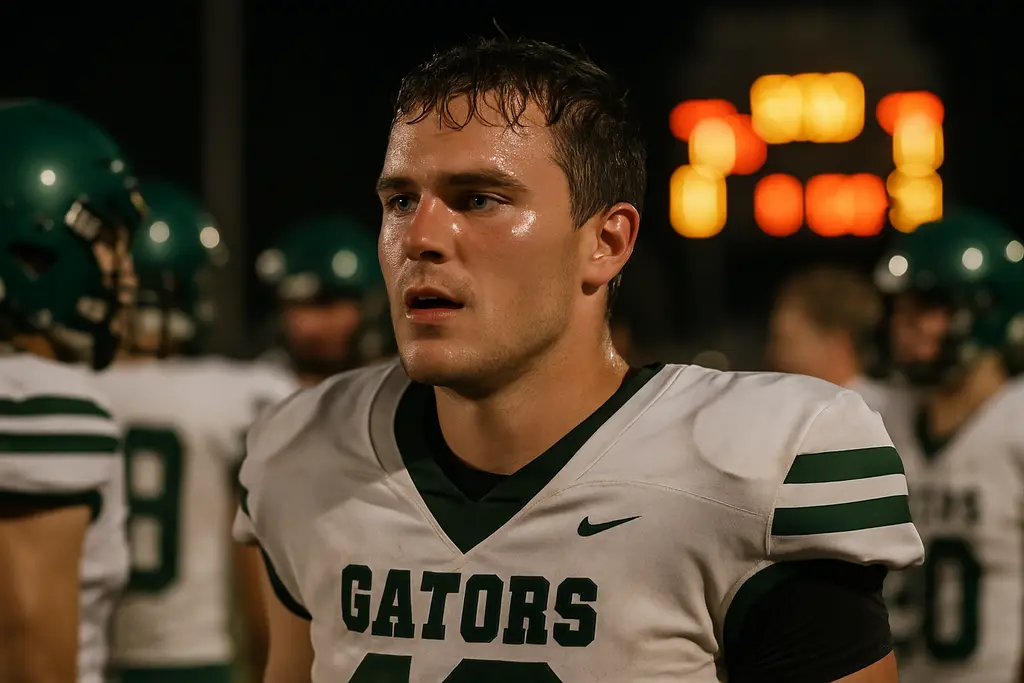
The Sumrall Gators took a major step on September 19, 2026, when Florida beat Auburn 44-39 on the road in its SEC opener. The win mattered because it gave Jon Sumrall his first SEC victory as Florida’s head coach, but the score alone did not explain the larger shift. Florida looked tougher, faster, and more willing to lean into uncomfortable moments than it had during too many uneven stretches before his arrival.
That does not mean the Auburn game was clean. Florida committed 16 penalties for 138 yards, and Sumrall’s postgame message made clear that a win did not erase the problems. The point is sharper than that: Florida’s new identity is not built around pretending flaws are gone. It is built around confronting them quickly, while still playing with enough physical force and offensive confidence to win a difficult SEC road game.
How Sumrall Gators Standards Reached Auburn
Sumrall Gators Culture Started With Earning The Logo
Sumrall’s reset began before Florida played Auburn. During his first full season in Gainesville, he pushed toughness, resiliency, accountability, and attention to detail as the foundation of the program. That approach showed up in one of his clearest early messages: players had to earn the Florida identity rather than inherit it.
ESPN reported that Sumrall took away visible Gators logos early in his tenure to reinforce that nothing had been earned yet ESPN’s report on the logo message. For a Gainesville fan base that has seen the program cycle through bursts of hope and frustration, that detail landed because it was easy to understand. Sumrall was not selling nostalgia. He was drawing a line between the old standards and the new daily habits he wanted in the building.
That matters in local terms because Florida football is not just another SEC operation. On fall weekends, the Gators shape traffic, restaurants, alumni travel, student routines, and the mood around Gainesville. When the head coach says the logo must be earned, that message reaches beyond the locker room. It asks players to carry a public standard that the community recognizes instantly.
A Roster Reset Changed The Room
The cultural shift also came with roster movement. Florida’s athletic department reported in July 2026 that Sumrall added 24 freshmen and 34 transfers, a combined group that represented more than half of the scholarship roster Florida’s SEC Media Days coverage. That scale of turnover showed that the new staff was not making cosmetic changes. It was reshaping the competition level inside the program.
Roster churn can be risky because chemistry is not automatic. Yet the Auburn game showed why Sumrall accepted that risk. Florida handled a road environment, responded with explosive offense, and leaned on players who fit the physical identity he has pushed since arriving. The Gators did not play mistake-free football, but they played like a team with a clearer sense of what it wants to become.
Why The Auburn Win Revealed Florida’s New Football Personality
The Run Game Gave Florida Control
The most telling football detail from Auburn was Florida’s rushing production. The Gators ran for 243 yards, a total that more than tripled Auburn’s average allowed rushing yards per game entering that matchup, according to the research notes. That was not just a box-score boost. It was a statement about how Sumrall wants Florida to travel in the SEC.
Road wins in this league often require more than tempo and explosive passing. They require a team to quiet a stadium, shorten emotional swings, and protect its quarterback from living in obvious passing situations. Florida did that through Jadan Baugh, who carried 26 times for 162 yards and three rushing touchdowns. His 53-yard burst in the fourth quarter became the kind of late-game run that changes how both sidelines feel the final minutes.
That piece of the Sumrall Gators identity matters because it gives Florida fans something tangible to trust. Gainesville has always appreciated speed and scoring, but SEC road credibility is often measured by whether a team can run when the other sideline knows it is coming. Against Auburn, Florida did.
Aaron Philo’s SEC Start Added Poise To The Plan
Aaron Philo’s first SEC game appearance brought another layer to Florida’s identity. He completed 15 of 22 passes for 204 yards against Auburn, showing enough control to keep the offense balanced while the run game carried major weight. That is the kind of quarterback performance that can win on the road without asking a passer to turn every drive into a rescue mission.
Philo’s outing also fits the larger staff approach. Florida’s offense opened the 2026 season with high-end production, ranking near the top nationally in scoring and total offense through the first few weeks, according to the research notes. That early efficiency did not disappear in the first SEC test. The Gators converted all three fourth-down attempts against Auburn and used explosive plays to shift momentum.
For more on how Sumrall’s staff has tried to build that sharper team profile, the site’s earlier breakdown of Jon Sumrall strategies connects the same themes of energy, takeaways, quarterback efficiency, and Gainesville standards.
Where Florida Still Has To Tighten Its Game
Penalties Are The Clearest Threat To The New Standard
The Auburn result gave Florida a first SEC road win under Sumrall, but the penalty total kept the performance from feeling settled. Sixteen penalties for 138 yards is not a small concern. It is the kind of number that can erase explosive plays, extend defensive drives, and put a young or reshaped roster under pressure it created for itself.
Sumrall’s message after the game matched the standard he has been trying to install. He said Florida would not win another game all year if it repeated that penalty performance, according to the research notes. That is not coach-speak meant to fill a press conference. It is a practical warning. If Florida wants its physical edge to hold up across SEC play, discipline has to become part of the identity, not a weekly correction.
This is where the Sumrall Gators project becomes more than a motivational story. A team can be tougher and still self-sabotage. It can run the ball well and still hand away field position. It can score 44 points and still leave its head coach frustrated. The next stage for Florida is turning emotion into cleaner execution.
Defensive Lapses Kept Auburn In The Game
The 44-39 score also showed that Florida’s defensive performance left room for concern. Auburn stayed close enough to make the fourth quarter uncomfortable, and Sumrall pointed to defensive lapses as part of a performance that was not Florida’s best football. That honesty matters because it keeps the program from treating a high-profile road win as proof that the rebuild is finished.
From a team-dynamics view, that is healthy. Coaches lose credibility when they praise everything after a win that included obvious issues. Sumrall did the opposite. He acknowledged the value of winning on the road while keeping attention on the details that could cost Florida later. That balance is especially important with a roster rebuilt through freshmen and transfers, because many players are still learning how to win together inside the same system.
What The Auburn Result Meant For Gainesville
A Road Win Changed The Local Conversation
The Auburn win carried real weight back to Gainesville. It moved Florida to 3-0 for the first time since 2019, according to the research notes, and helped push the Gators into the Top 25. For fans, that combination changed the conversation from cautious curiosity to something firmer. The program had evidence that Sumrall’s standards could survive an SEC road test.
That shift affects the local sports mood. A confident Florida team changes how fans plan weekends, how alumni talk about trips back to campus, and how local businesses feel the rhythm of game weeks. The football is still the center of the story, but the community impact is part of why identity matters at Florida. When the Gators feel relevant, Gainesville feels it.
The Sumrall Gators are not being defined only by record. They are being defined by the way they are trying to win: physical rushing, quarterback steadiness, aggressive fourth-down choices, and a coach willing to challenge his roster publicly after a victory. That mix gives supporters a clearer team personality than they had before.
Belief Now Comes With A Higher Standard
The danger after a win like Auburn is that belief can get ahead of performance. Sumrall’s best move may have been refusing to let that happen. Florida earned credit for winning a difficult game, but it also gave the staff a full teaching tape. The penalties, defensive lapses, and uneven moments gave him material to reinforce the same accountability message that started with taking away the logos.
That is how a program identity becomes real. It cannot only appear after wins. It has to show up in corrections, film sessions, practice habits, and how players respond when a coach says good was not good enough. For Florida, the Auburn game gave the fan base a reason to believe while giving the locker room a reason to keep working.
Why Sumrall Gators Identity Now Belongs To Gainesville
The Sumrall Gators story after Auburn is not about a finished product. It is about a program that looks more intentional than it did before. Sumrall rebuilt much of the roster, challenged players to earn the logo, leaned into a tougher offensive personality, and won his first SEC game at Florida in a hostile road setting.
Still, the identity will be judged by whether Florida can keep the force and reduce the waste. The Auburn win showed the ceiling: 243 rushing yards, a poised quarterback, three converted fourth downs, and enough explosive offense to win away from home. The same game showed the risk: 16 penalties, 138 penalty yards, and defensive leaks that made the finish tighter than it needed to be.
For Gainesville, that combination is compelling because it feels real. Fans do not need a perfect team to reconnect with a program. They need a team with standards, direction, and a coach who says what he means after both good and bad Saturdays. After September 19, 2026, Florida had all three. The Auburn win did not complete the rebuild, but it gave the new identity a road-tested shape.