

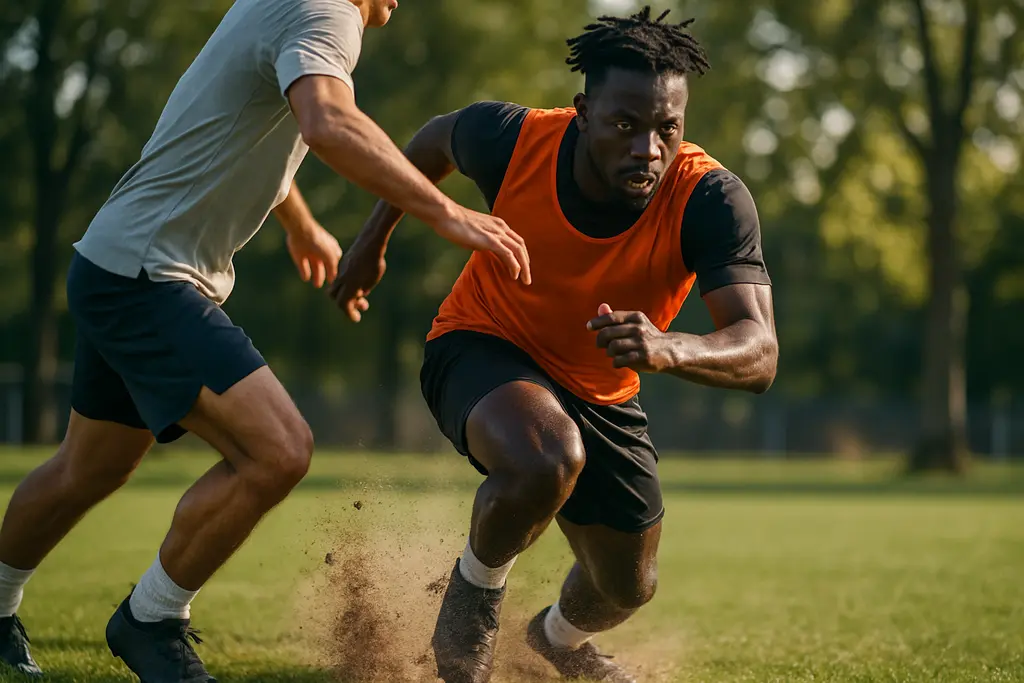
Ousmane Kromah performance has become one of the more practical ways to measure Florida State’s offensive upside early in the 2026 football calendar. Not because one running back answers every question for the Seminoles, but because Kromah has already given the offense something easy to identify: efficient carries, contact balance, receiving value, and a burst that can change field position without asking the passing game to carry every drive.
Florida State’s 34-17 win over New Mexico State on August 29, 2026, gave the local fan base a clear first look at that growth. Kromah rushed for 115 yards on 14 carries, scored a rushing touchdown, and broke a 52-yard run in the fourth quarter, while quarterback Ashton Daniels added both a touchdown pass and touchdown run in the opener Washington Post recap. For a Tallahassee crowd watching for signs of offensive rhythm, Kromah’s night offered more than a box-score bump. It showed how one back can help the Seminoles stay on schedule and still threaten the second level.
What Ousmane Kromah Performance Shows Early
Ousmane Kromah Performance And The Opener
The opener mattered because it moved Kromah from promising young back to a more central piece of Florida State’s weekly offensive conversation. His first 100-yard rushing game did not come through volume alone. Fourteen carries for 115 yards means the production carried weight on a per-touch basis, and the 52-yard fourth-quarter run showed why the coaching staff can keep him involved even when a defense is waiting for the run.
That is the first reason Ousmane Kromah performance matters for the Seminoles’ offense. A back who can create explosive gains changes how safeties fit the run, how linebackers fill interior gaps, and how patient a play caller can be on first down. Florida State does not need to force a downfield shot every series if its backfield can create second-and-short or flip a possession with one clean crease.
Why The 52-Yard Run Resonated Locally
In Tallahassee, long runs tend to carry a different kind of noise. Doak Campbell Stadium responds to pace, and a back who can turn a routine handoff into a crowd-lifting gain gives the home sideline momentum that is hard to chart. Kromah’s weaving fourth-quarter run against New Mexico State was not just a highlight. It was a reminder that Florida State’s offense can carry a physical identity while still producing big plays.
That blend matters for a fan base that measures offensive progress with more than passing totals. Seminoles supporters want balance, but they also want a run game that travels into ACC play and keeps the quarterback from living in obvious passing situations. Kromah’s opener suggested he can be part of that answer, though the fair reading after one cited 2026 game is still measured rather than absolute.
Freshman Data Behind The FSU Running Back
Efficiency Before The Touchdown Spike
The best case for Kromah is not built only on one 2026 afternoon. Florida State’s official roster lists him as a sophomore running back, 6-foot-1 and 216 pounds, from Leesburg, Georgia official FSU roster. That same official profile credits his 2025 freshman season with appearances in all 12 games, two starts, 72 rushing attempts for 408 yards, a 5.7-yard average, no rushing touchdowns, and nine receptions for 147 yards and one receiving touchdown official FSU roster.
Those numbers frame his 2026 opener well. In 2025, the efficiency was already present, even before the rushing touchdown column caught up. A freshman averaging 5.7 yards per carry on 72 attempts gave Florida State evidence that the run game had a young back capable of turning routine work into useful gains. The missing rushing touchdowns did not erase that efficiency; they pointed to a role that had not yet fully expanded near the goal line.
Receiving Work Adds Offensive Choices
Kromah’s receiving profile is just as relevant for Florida State’s offensive staff. Nine catches for 147 yards and a touchdown as a freshman showed that he was not limited to handoffs. For a modern college offense, a running back who can release into space, punish overaggressive linebackers, or serve as a safe outlet gives the quarterback a cleaner answer when protection bends.
That matters with Daniels in the middle of the offense. A productive back can reduce the number of snaps where the quarterback must solve pressure alone. It also connects to a larger question around how Florida State balances its backfield and passing structure, a theme our site has tracked through the Florida State quarterback pressure discussion. Kromah does not need to be a pass-catching specialist to affect that equation. He only needs to be credible enough that defenders cannot ignore him in the flat or on checkdowns.
How Kromah Fits Florida State’s Local Football Identity
From Georgia Production To Tallahassee Expectations
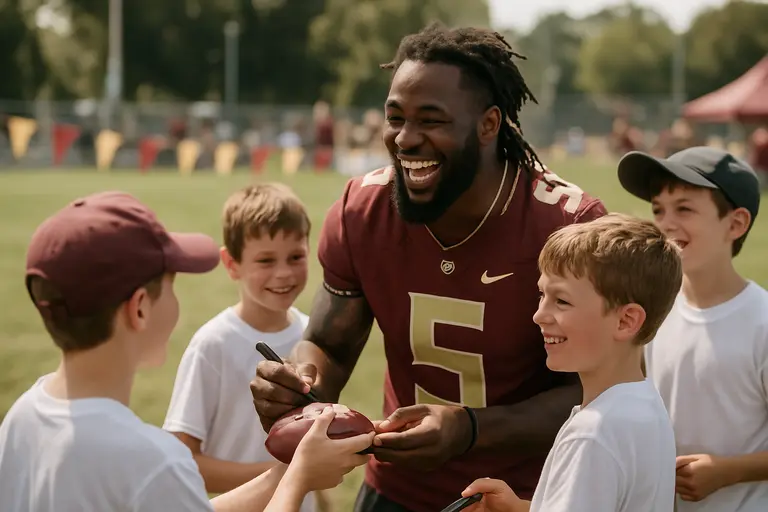
Kromah arrived with a production record that helps explain why Florida State saw offensive value beyond his frame. His official FSU profile credits his Lee County High career with 4,643 rushing yards and 55 rushing touchdowns across three seasons. As a senior, he ran 168 times for 1,356 yards and 15 touchdowns, and he also recorded 83 catches with 19 receiving touchdowns official FSU roster.
Those high school figures do not guarantee college stardom, but they do show a long record of multi-use production. For Florida State, that matters in recruiting and development terms. The Seminoles have long pulled from Georgia’s high school pipeline, and Kromah’s Leesburg background gives fans in North Florida and South Georgia another regional tie to follow on Saturdays.
Why Backfield Trust Shapes Matchday Energy
A trusted running back changes how a stadium feels. When fans believe the offense can get four or five yards without drama, the mood around a drive shifts. Third-and-short becomes a chance to lean forward instead of a reason to brace. That may sound emotional, but fan culture and play style meet every week inside Doak Campbell Stadium.
For the Seminoles, Kromah’s growth gives the offense a chance to build that kind of trust. The opener against New Mexico State did not settle every question about Florida State’s ceiling, and stronger defensive tests are part of every serious evaluation. Still, the combination of freshman efficiency, size, receiving history, and a 100-yard 2026 opener gives the coaching staff a real foundation.
Why Ousmane Kromah Performance Matters In Tallahassee
A Grounded Read On The Offensive Ceiling
The most useful reading of Ousmane Kromah performance is not hype. It is fit. He fits an offense that benefits from balance. He fits a quarterback room that needs reliable run support. He fits a fan base that responds to physical football but still wants explosive plays. He also fits a local sports story because his development is visible in the parts of the game that fans can feel from the stands: early-down rhythm, sideline energy, and the stress a productive runner puts on a defense.
As of September 14, 2026, the verified public record used here supports a clear but careful statement: Kromah has already shown enough to be treated as one of Florida State’s most important offensive pieces. His freshman year proved efficiency and receiving value. His August 29 opener proved he could turn more attention into a 100-yard night. The next step for the Seminoles is consistency, and for the local crowd, that makes every carry part of a larger weekly read on where this offense is headed.