

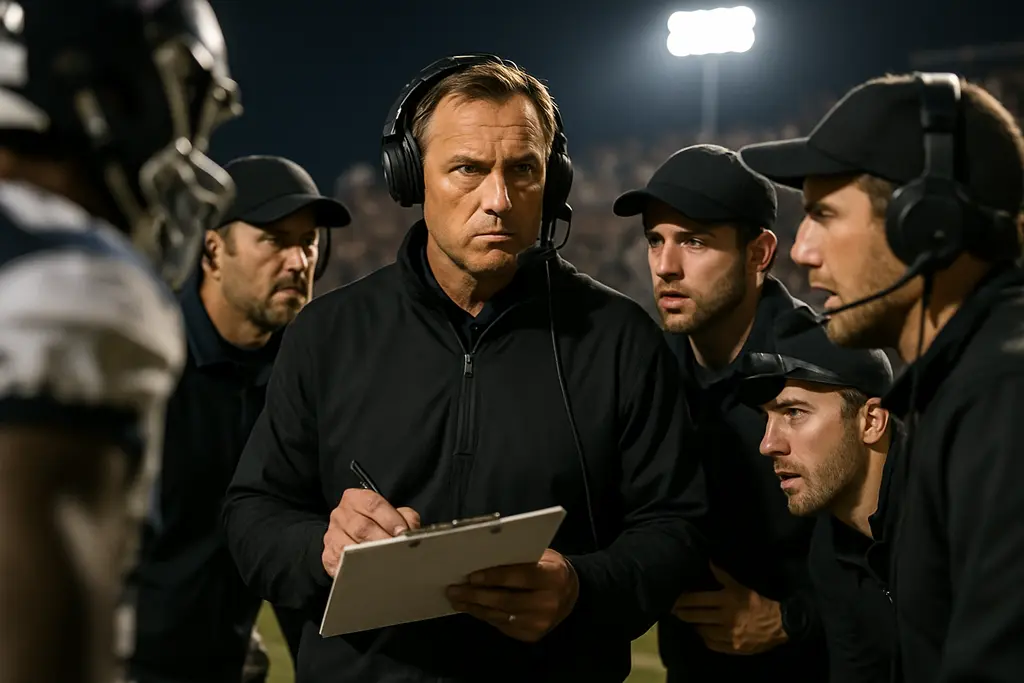
Mandarin Game Strategy on September 11, 2026, was not built around one flash play or one hot quarter. Mandarin beat Nease 32-14, moved to 3-0, and dropped the Panthers to 1-3, according to the game record posted by MaxPreps. For Jacksonville and Ponte Vedra football followers, the result was a clean example of how a physical ground plan, a timely passing counter, and late-game depth can turn a close start into a controlled road win.
Nease struck first through quarterback Aiden Phifer’s rushing touchdown, so Mandarin did not get the easy script of playing from ahead immediately. The response mattered. Mandarin answered in the opening quarter, including a 25-yard touchdown run by Chris Harrison, and the Mustangs led 13-7 after one quarter, as reported by Duval Sports. From there, the game became less about panic response and more about whether Nease could handle repeated contact, long runs, and the stress created by Mandarin’s backfield rotation.
Mandarin Game Strategy Started With A Fast Reset
The first strategic win for Mandarin came after Nease’s early score. High school games in Northeast Florida often swing on the first emotional turn, especially when one sideline gets an early touchdown and the home crowd has a reason to get loud. Mandarin’s answer kept that early Nease advantage from becoming the game’s identity.
How Mandarin Game Strategy Answered Nease
The Mustangs did not abandon their plan after falling behind. Harrison’s 25-yard touchdown run gave Mandarin a ground-based answer that fit the rest of the night. That is key: the response did not require Mandarin to become something different. It confirmed the staff could trust its run game, protect its quarterback from unnecessary pressure, and keep Nease’s defense tackling in space and between the tackles.
That opening-quarter reset also changed the pressure on Nease. Instead of building on Phifer’s rushing touchdown, the Panthers had to defend a Mandarin offense that had already shown it could respond physically. The score was still tight, but the tone had shifted toward Mandarin’s preferred pace.
Why The First Quarter Mattered Locally
For Mandarin supporters, this was the kind of road response that travels well through a season. A 3-0 start is not only a number on a standings page; it reflects whether a team can bring its identity outside its own campus environment. For Nease, the first quarter showed promise, but the inability to stack scores in the second and third quarters left the Panthers chasing a game that kept tilting toward Mandarin’s strengths.
The Run Game Set The Terms
The clearest reason Mandarin controlled the game was the rushing attack. Shaunqueze “Queze” Foster Jr. carried 26 times for 214 yards and two touchdowns, while Mandarin built enough pressure on the ground to force Nease into repeated run-defense stress. Those numbers are not cosmetic. A workload like that means an offense kept calling runs because it liked the matchup and trusted the result.
Foster’s Workload Changed The Defensive Math
Foster’s production gave Mandarin both efficiency and patience. With 26 carries, he was not just a change-of-pace runner or a one-series spark. He became the central problem for Nease. Once a defense has to account for a back who can break tackles, finish runs, and stay involved deep into the game, the rest of the field begins to open.
His 30-yard touchdown run in the third quarter carried extra weight because Nease had been held scoreless in the second quarter and needed a defensive stand to stay close. Instead, Mandarin reasserted the run after halftime. That sequence was a coaching win as much as a player win: the Mustangs came out of the break still committed to what was working, rather than trying to dress up the game unnecessarily.
A Rotation Kept The Fourth Quarter Open
Mandarin also benefited from depth. Duval Sports described the Mustangs’ running backs as a group resembling a relay team, and the fourth quarter backed up that idea. Emmanuel Cole’s 75-yard rushing touchdown late in the game showed what can happen when a defense has been forced to tackle through three quarters and another fresh runner hits a crease.
That run did more than stretch the margin. It confirmed that Nease could not simply key on one player and survive. Foster carried the main load, Harrison produced a key early touchdown, and Cole delivered the closing strike. For a local high school staff, that is the kind of backfield distribution that protects legs across a schedule while making defensive preparation harder for future opponents.
Balance Kept Nease From Selling Out
The passing game did not need to carry Mandarin, but it mattered because it punished Nease for leaning too hard toward the run. Quarterback Knox Annis finished with 163 passing yards and one touchdown, and Brysen Wright posted 155 receiving yards and a touchdown. Those totals show that Mandarin had a vertical and perimeter answer ready when the Panthers’ defense was pulled toward the line of scrimmage.
That is where Mandarin Game Strategy showed its best structure. The run was the foundation, but the passing game was not ornamental. Annis’ connection with Wright forced Nease to respect space behind the second level. Once a defense has to honor Foster inside, Harrison in the run game, and Wright outside, clean answers become harder to find.
For Jacksonville-area observers, that balance is the part worth tracking beyond the final score. A team can win a single September game by overpowering an opponent. A team that can pair a 200-yard rusher with a 150-yard receiver has a more flexible profile. Mandarin did not need to chase style points; it needed to show that its base plan had counters. Against Nease, it did.
What Nease Could Not Solve
Nease’s main problem was not the opening script. The Panthers scored first and had early energy. The issue was response after Mandarin settled in. Nease did not score in the second or third quarters, while Mandarin added a third-quarter touchdown and then closed with 13 points in the fourth. That scoring pattern made the game feel tighter early than it became late.
Second-Half Pressure Favored Mandarin
Once Mandarin continued to run after halftime, Nease had to prove it could win first down, limit explosive gains, and make the Mustangs play from longer-yardage situations. The evidence from the game points the other direction. Foster’s third-quarter touchdown and Cole’s fourth-quarter 75-yard run both came at moments when Nease needed containment, not another explosive gain allowed.
Phifer’s late passing touchdown gave Nease its second score, but by then Mandarin had already shaped the game. That late score should not be dismissed, especially for a Panthers team trying to build answers after a difficult start to the season. Still, the larger story was Mandarin’s ability to prevent Nease from creating a full second-half push.
Local Fan Takeaway From The Panthers’ Side
For Nease families and Ponte Vedra supporters, the game offered a clear diagnosis without requiring exaggeration. The Panthers showed they could start fast, but they needed more sustained offense and stronger resistance against a deep rushing rotation. Against a team like Mandarin, one early touchdown was not enough because the Mustangs kept forcing Nease to defend the same core idea with fresh bodies and better timing.
Mandarin Game Strategy And The Local Takeaway
The lasting value of Mandarin Game Strategy from the 32-14 win was its repeatable nature. Mandarin did not win because of a fluky sequence. The Mustangs won by answering the first punch, leaning on Foster’s volume, using multiple backs, and pairing that with a passing connection from Annis to Wright that kept Nease honest.
For the Mandarin community, the 3-0 start carried the feel of a team building its identity through the line of scrimmage and skill-position depth. For Nease, the 1-3 mark after September 11, 2026, reflected a team still searching for longer stretches of control after promising moments. The local football lesson was clear: in a matchup between a team that could sustain its plan and a team that could not consistently interrupt it, Mandarin’s structure won the night.