

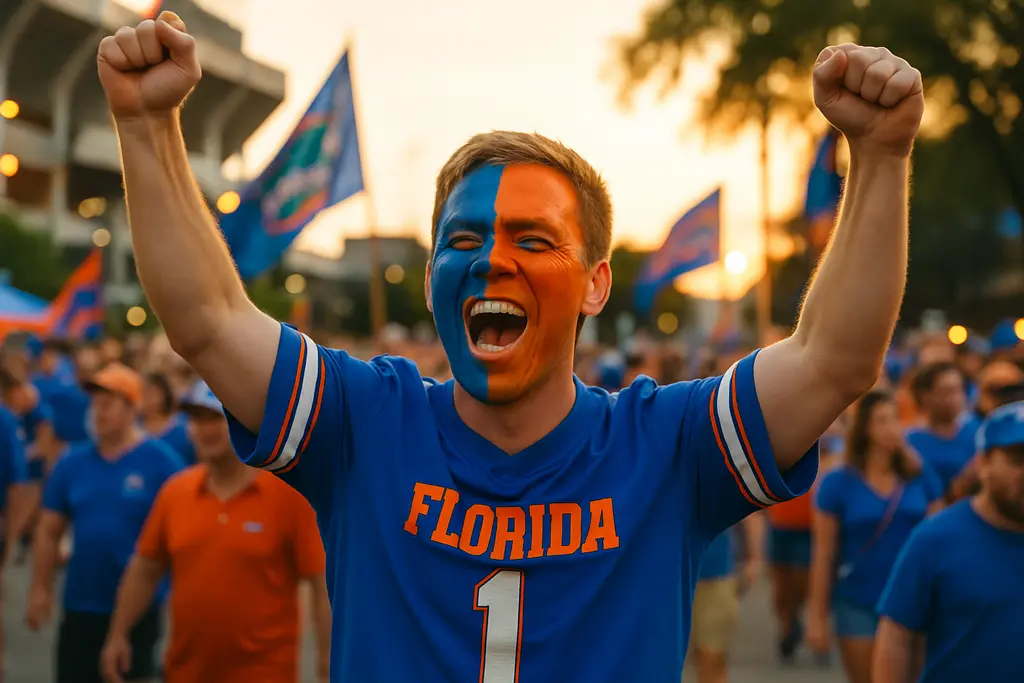
The Jon Sumrall Debut gave Gainesville more than a lopsided opener. Florida’s 66-21 win over Florida Atlantic on September 5, 2026, at Ben Hill Griffin Stadium gave local fans a first public proof point that the new head coach’s message could show up on the field. Jadan Baugh ran for 160 yards and three touchdowns, Aaron Philo passed for 275 yards and totaled four scores, and Florida produced 624 total yards in the victory, according to ABC News’ game report.
That matters in Gainesville because Florida football is not just a scoreboard habit. It shapes weekend movement around University Avenue, family routines across North Central Florida, alumni travel plans, and the emotional temperature of a fan base that had been waiting for a sharper identity. The opener did not prove everything about Sumrall’s first Florida team, but it did change the tone of the conversation.
Why Jon Sumrall Debut Hit Gainesville Differently
Jon Sumrall Debut Turned Tone Into Evidence
Florida’s fan base had heard forceful language from Sumrall before the FAU game. On December 1, 2025, he was officially introduced as Florida’s head coach, and the early response around the program included support from Steve Spurrier, Urban Meyer, and the search committee. Sumrall also offered the kind of direct line that travels quickly through a college town: “We’re going to win. Just give me a shot. Believe in me,” as reported by Florida Gators’ Carter’s Corner.
Those words set a tone, but Gainesville has heard speeches before. What made September 5 different was the way the first game connected talk to tempo. Florida did not simply escape with a comfortable win. The Gators ran, threw, scored, and created a night where the crowd could attach visible results to the staff’s stated direction.
That is why the Jon Sumrall Debut mattered beyond one opponent. Local fans often read an opener through body language: how a team comes out of the tunnel, how quickly the offense finds rhythm, how the sideline responds after a mistake, and whether the stadium energy lasts past the first wave of emotion. Against FAU, the performance gave supporters a reason to discuss identity rather than just hope.
The Swamp Heard A Familiar Standard
Sumrall’s spring message had already leaned into toughness. His first spring camp opened on March 2, 2026, and the offseason included “The Gauntlet,” a six-station, time-limited conditioning test tied to a broader strength approach. The public message was clear: the program wanted to look and feel different.
The April 11, 2026, Orange & Blue Spring Game carried that same theme. Roughly half the team was new, and Sumrall stressed playing fast and physical. After that spring game, he said championships were the standard and expectation and that Florida had to “wake this beast up.” Those words landed because they matched how many Gators fans still view the program: not as a patient rebuild project, but as a place where urgency is part of the job description.
By the time SEC Media Days arrived on July 22, 2026, the local conversation had shifted. Some fans initially viewed Sumrall as a fallback hire, but six months of direct messaging, conditioning focus, staff tone, and public confidence helped soften that first reaction. In a market like Gainesville, where former players, boosters, students, and lifelong residents constantly trade opinions, perception can move fast when a coach gives people plain language and clear standards.
How The Opener Changed The Local Conversation
Baugh And Philo Made The Message Visible
The September 5 box score gave fans names to attach to the new era. Baugh’s 160 rushing yards and three touchdowns created the night’s clearest physical statement. Philo’s 275 passing yards and four total scores gave the offense balance. Florida’s 624 total yards, its most in a season opener since the 1991 game against Samford, gave local media, alumni groups, and fans in packed restaurants a clean talking point.
That production matters because Gainesville belief often grows through shared evidence. It is one thing to say a team is tougher in March. It is another to watch a running back punish angles in September. It is one thing to say a quarterback room has command. It is another to see the starter guide scoring drives in front of a sold-out stadium.
The seventh consecutive home debut win for a new Florida head coach added historical shape to the night. That streak did not guarantee where the season would go after September 5, but it placed Sumrall’s first game inside a familiar Gators pattern: new coach, full stadium, immediate pressure, and a fan base ready to believe if the first impression holds up.
From Sold-Out Energy To Weekday Talk
The Jon Sumrall Debut also worked as a fan engagement moment because the win traveled beyond the stadium. A sold-out Swamp creates a different kind of local echo. Hotel lobbies, campus sidewalks, tailgate spots, midtown bars, alumni text threads, and Monday office conversations all become part of the same feedback loop.
In a college town, enthusiasm has practical effects. A convincing opener can affect how early families plan the next home weekend, how local businesses staff game days, how students talk about staying through the fourth quarter, and how alumni decide whether a trip back to Gainesville feels worth the cost. The opener did not answer every football question, but it gave people a reason to invest time and emotion again.
That connection between team identity and fan behavior is where Sumrall’s first win carried local weight. Florida did not need a complicated pitch after FAU. The Gators gave fans a simple one: the team looked organized, explosive, and physically assertive enough to make the next game-day plan feel meaningful.
Why Culture Became A Fan Engagement Story

Direct Coaching Fits The Gainesville Audience
Sumrall’s appeal has been built on directness. The research around his first months pointed to a preference for real work, real coaches, and fewer distractions. That kind of approach fits Gainesville because the city tends to reward authenticity faster than polish. Fans want energy, but they also want a coach who sounds like he understands the standards attached to Florida football.
That is where team dynamics and fan culture meet. A coach can change practice habits inside the building, but fans respond when those habits become visible. Conditioning tests, faster spring practices, a physical spring message, and a high-output opener all fed the same story. The program was trying to build a team that looked like its coach talked.
For a closer football-first read on how Sumrall’s approach shaped Florida’s early identity, our breakdown of Jon Sumrall strategies connects the same themes of energy, standards, and execution to the wider Gainesville mood.
Expectations Rose Because The Message Was Simple
Fans are often cautious after coaching changes because every new staff arrives with language about culture. Sumrall’s advantage after September 5 was that his message stayed simple enough for the whole community to repeat. Toughness. Speed. Physical play. Championship expectations. Wake the program up. Then Florida scored 66 points in his first game.
That sequence does not make the Gators finished. It does make the fan base more attentive. Supporters can accept that a first-year staff will still face hard Saturdays, but they are less patient with confusion than they are with growing pains. The FAU win helped because it reduced confusion. The identity looked readable.
The community response, then, was not blind celebration. It was recognition. Gainesville saw a head coach whose public standard had been high since December 1, 2025, and whose first game gave that standard a scoreboard. In a town where football Saturdays shape social calendars, that is enough to raise the volume.
What Gainesville Can Expect After Jon Sumrall Debut
The Jon Sumrall Debut should be remembered as a first marker, not a final judgment. Florida’s 66-21 win over FAU on September 5, 2026, showed offensive force, crowd connection, and a coach-player message that reached the stands. It also raised the standard for what fans will expect to see next: consistency, discipline, and a team that keeps its edge when the opponent and pressure change.
For Gainesville, the lasting effect may be emotional clarity. Fans now have a first image of the Sumrall era: a sold-out Swamp, a running back breaking loose, a quarterback producing efficiently, and a coach whose direct approach seemed to match the night. That image will shape how local supporters talk, travel, tailgate, and measure progress after September 5.
The Jon Sumrall Debut energized expectations because it gave Florida fans permission to believe without pretending the job was done. That balance matters. The Gators still had to prove durability beyond one opener, but the first public statement was strong enough to make Gainesville feel louder, more invested, and more connected to the team’s next steps.