

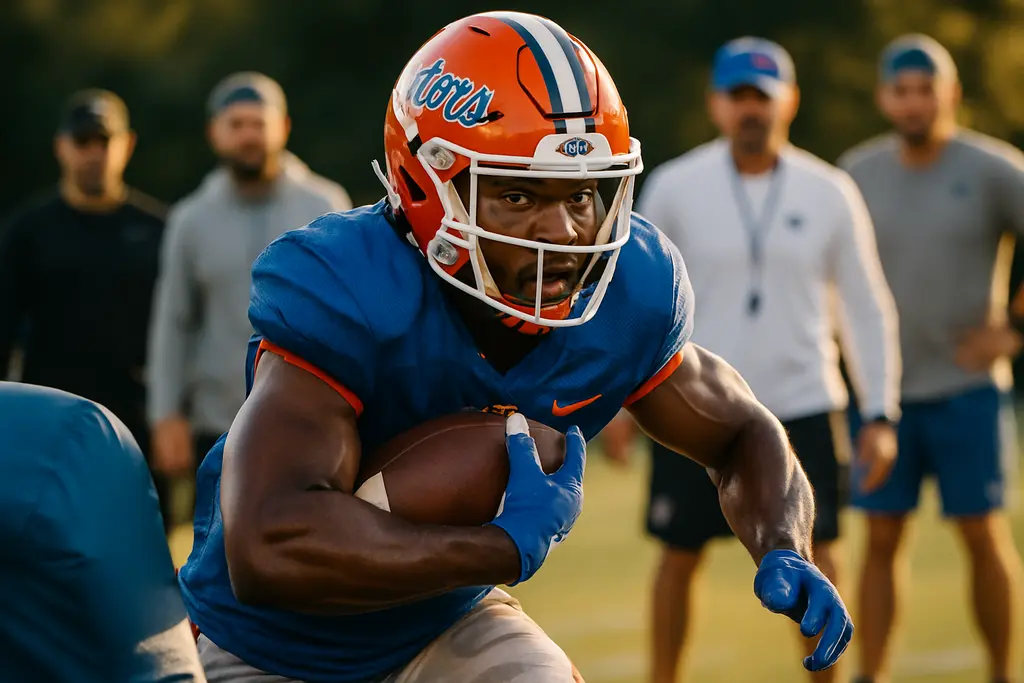
The Florida Offensive Shift was no longer a preseason talking point by October 5, 2026. Florida had already played its September 5 opener against FAU, giving Gainesville a first real look at how Jon Sumrall’s staff and offensive coordinator Buster Faulkner translated months of leadership language into game-day production. The result did not answer every question, but it did make the spring and fall messaging easier to evaluate.
Before the opener, Florida’s staff had framed the offense around structure, tempo, physicality, and player ownership. After the FAU game, the discussion changed from what the plan could become to what the first version actually showed. That distinction matters in Gainesville, where fans read offensive rhythm through more than yards. They watch substitutions, quarterback confidence, offensive line trust, sideline energy, and whether the play-calling fits the personnel on the field.
What The Florida Offensive Shift Changed
Florida Offensive Shift Started With A Clear Baseline
Florida’s offensive reset began from a difficult statistical place. The 2025 Gators averaged 21.6 points per game, 341.3 yards per game, and 5.41 yards per play, ranking 108th, 103rd, and 89th in FBS in those categories. Florida hired Buster Faulkner in early December 2025 after his Georgia Tech offense averaged 466.3 yards and 33.1 points per game in 2025, according to Florida’s official feature.
That contrast set the tone for the offseason. Faulkner was not brought to add a few cosmetic changes. He arrived with a clear assignment: give Florida an offense that could stress defenses horizontally and vertically while still holding up in short-yardage moments. The staff described a pro-style hybrid approach with Air Raid roots and spread formations, a blend that put more responsibility on the quarterback, receivers, backs, and line.
Faulkner’s Assignment Came With Local Pressure
That is why the Florida Offensive Shift carried a different weight in Alachua County than it might have on a national rundown. Gainesville had lived through offensive frustration, and the home crowd did not need a slogan. It needed evidence. Fans around Ben Hill Griffin Stadium wanted to see if the new staff could turn offseason ideas into cleaner operation, better spacing, and more reliable scoring chances.
Faulkner’s plan also affected how the community talked about the roster. The quarterback decision became the center of attention, but the larger question was whether the entire unit could absorb NFL-style terminology, different personnel groupings, and a demand for more receiver detail. The staff had emphasized motion, chunk plays, ball security, and the ability to run even when a defense expected it. Those pieces gave Florida a more defined offensive identity before the first snap.
How Faulkner Rebuilt The Starting Point
A Hybrid Plan, Not A Slogan
The most useful way to read Faulkner’s early work is to separate formation from identity. Spread looks can create space, but they do not automatically make an offense tough. Pro-style terminology can help organize protections and route concepts, but it does not guarantee explosive plays. Florida’s staff tried to connect both ideas: space the field, demand precision, and still build enough run-game force to stay balanced.
The Florida Offensive Shift did not depend on one trick. It asked receivers to play with stronger hands. It asked the quarterback to manage tempo and decision-making. It asked backs to fit inside a system that wanted explosive plays without giving away physicality. It asked the offensive line to support both pass protection and run blocking while the rotation settled.
Why The Quarterback Choice Mattered
Florida’s quarterback competition included Georgia Tech transfer Aaron Philo, Tramell Jones Jr., Aidan Warner, Will Griffin, and Aaron Williams. The staff settled on Philo as the Week 1 starter against FAU on September 5, 2026. That decision gave the offense a clear first voice, and it let the rest of the unit prepare around one set of timing, cadence, and communication habits.
The pregame questions around that decision were already central to local conversation, including in our Aaron Philo impact preview. After the opener, the discussion became more grounded. Philo’s role was not just about winning a competition. It was about whether the new system could help a first-week starter play on schedule while still giving Florida access to bigger plays.
What The Opener Against FAU Revealed
The First Result Was Clear, But Not Complete
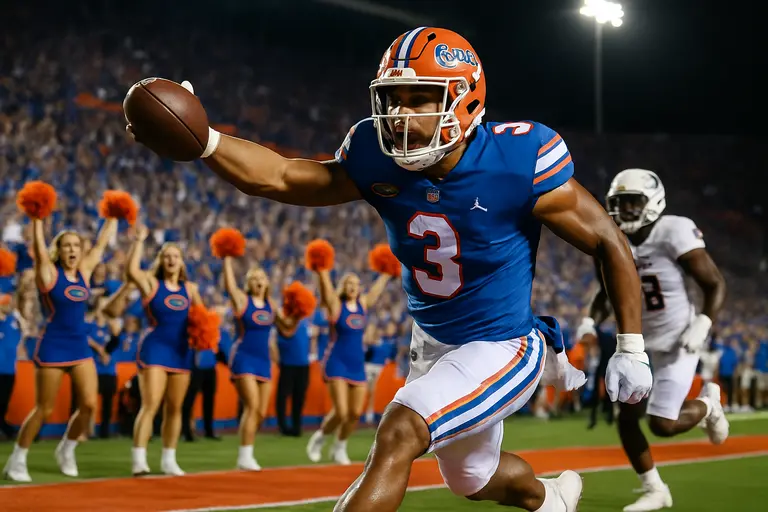
Florida’s September 5 opener against FAU gave the staff its first public proof point. The Gators scored 66 points and produced 624 total yards in the win, with Sumrall afterward describing a young team that had started to come together under the new structure in SI’s postgame transcript. For an offense coming off the 2025 numbers, that was not a minor opening statement.
Still, one opener did not settle the full evaluation. FAU offered an early measuring point, not a season-long verdict. The key takeaway was that Florida looked capable of playing with more rhythm and confidence than the prior statistical baseline suggested. The staff’s offseason language about cohesion and execution had a game result attached to it, but the harder conference tests still had to reveal whether the same structure would travel.
Leadership Clarity Showed Up In Game Rhythm
Leadership is often hard to measure from the stands, but it can show up in how an offense handles tempo, substitutions, and early-game adjustments. Against FAU, Florida’s production suggested that the staff had created enough clarity for the first version of the offense to function. The quarterback choice, the scheme direction, and the offensive goals all appeared connected rather than scattered.
That connection mattered for fans who had been tracking every practice note and every leadership comment since the staff change. The Florida Offensive Shift was not only about Faulkner’s play sheet. It was about whether Sumrall’s first Florida team could build a player-led feel around a new offensive language. The opener provided a positive first answer, even if the larger test remained the week-to-week response after opponents adjusted.
Why The Florida Offensive Shift Matters Locally
For Gainesville, offensive identity is part of the game-week economy and culture. A team that plays with pace and scores changes the conversation in restaurants, on campus, around tailgates, and across local sports radio. Families and alumni do not just react to the final score. They react to whether the team feels organized, whether the quarterback has command, and whether the offense gives The Swamp a reason to stay loud through four quarters.
The Florida Offensive Shift also gave fans a clearer way to judge progress under Sumrall. Instead of guessing what the staff valued, they could point to specific markers: explosive chances, turnover control, run-game resolve, quarterback timing, and offensive line development. Those markers are more useful than hype because they can be tracked from week to week.
The strongest takeaway from the opener was that Florida’s new offensive direction had moved from concept to evidence. Faulkner inherited a unit with clear statistical problems, installed a system built around flexibility and force, and saw the first public return arrive against FAU. That did not make Florida a finished product by October 5, 2026. It did make the early leadership messaging feel connected to what fans saw on the field, and that is the first step toward rebuilding trust in Gainesville’s offensive future.