

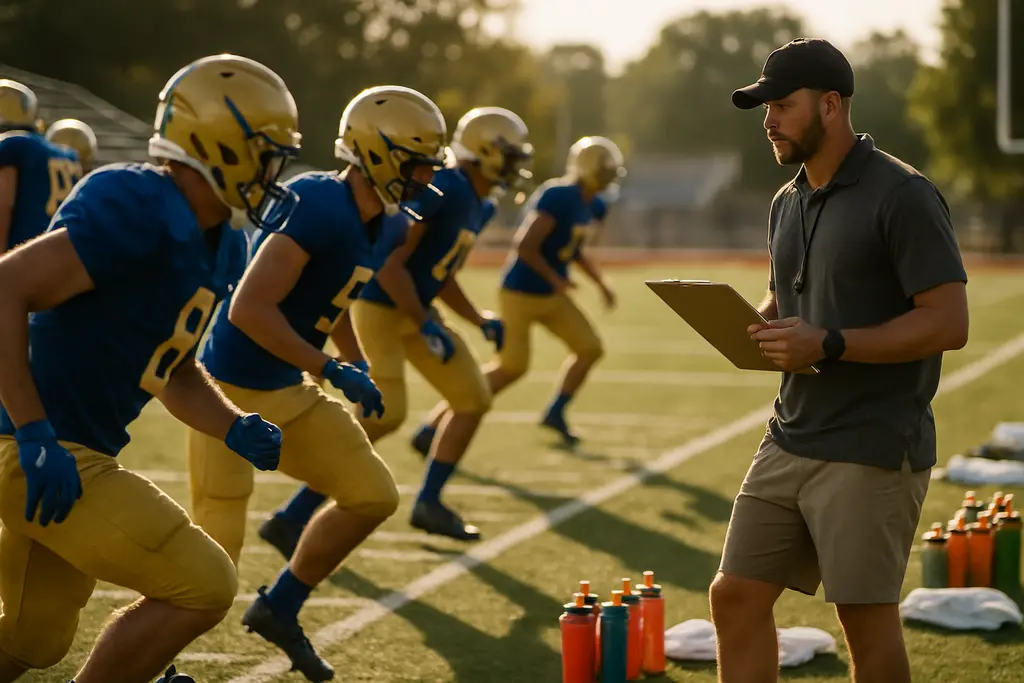
Cocoa Beach Heat Safety has become part of the football identity at Cocoa Beach High School, not as a side concern but as a daily training question for the Minutemen. Reports published on September 3 and September 4, 2026, showed a team that had opened 2-0 while also changing the way it works through late-summer conditions on the Space Coast. For a program in Brevard County, the story is not only about wins, depth charts or Friday nights. It is about how coaches keep practices useful when the heat index climbs and the safest plan may be to change the schedule before players ever take the field.
Cocoa Beach Heat Safety And Practice Changes
Cocoa Beach’s football staff had already seen how quickly a normal practice plan could become unsafe. Afternoon sessions recently reached heat index values as high as 108°F, and head coach and athletic director Ted Kimmey said 60% to 70% of practices before the first game week were delayed, canceled or modified because of heat concerns, according to Central Florida Public Media. That is a major football adjustment, especially for a high school team trying to install calls, condition players and build timing before games count.
The Minutemen’s response has been practical. The team has practiced early twice a week to avoid the worst heat of the day, a change reported by WUSF. Early practices can change the rhythm of a school week for players and families, but they also protect valuable training time. Instead of waiting through another afternoon delay, the staff gets work done when conditions are less punishing.
Cocoa Beach Heat Safety Starts With The Clock
The clock now matters almost as much as the practice script. A coach can build a strong session on paper, but on a coastal Florida afternoon, the heat index can decide whether that session gets trimmed, delayed or moved. That creates a different kind of coaching challenge: the staff has to prepare a team without assuming every planned rep will happen.
For Cocoa Beach, that means using the early window for football work that cannot be easily replaced. Timing between quarterbacks and receivers, special teams spacing, tackling progression and communication all need live field time. When heat interrupts those areas, the cost is not abstract. It shows up in missed assignments, thinner conditioning blocks and fewer chances for younger players to earn trust.
How Coaches Read The Conditions
Cocoa Beach Heat Safety is also about what coaches see and measure before they decide how hard the team can go. Athletic director Johnny Morales and the staff track environmental factors such as humidity, direct sunlight and air movement, and those readings guide decisions about when players can fully suit up in helmets and pads under Florida High School Athletic Association rules, according to WUSF. That matters because equipment adds strain during hot weather, especially during intense team periods.
This is where the local setting matters. Cocoa Beach is not an inland program with predictable shade and still air. Conditions can shift across the day, and a practice field can feel different depending on sun angle, breeze and humidity. The staff’s job is to make those judgments before discomfort turns into danger.
Player Monitoring Is Part Of Coaching
Kimmey reported monitoring players for signs of heat illness, and one player had heat exhaustion symptoms that included cramps, nausea and vomiting and required medical attention, according to WUSF. That detail gives the issue weight. Heat policy is not paperwork for coaches in Florida; it is player care during a demanding sport.
The monitoring also changes the relationship between coaches and players. A player who looks slow may not simply be tired. A player who cramps may need medical attention rather than another push through a drill. Cocoa Beach’s approach reflects the reality that high school athletes are still developing physically, and coaches have to balance toughness with responsibility.
What The 2-0 Start Says About Adaptation
The Minutemen had opened the fall 2026 season at 2-0 when the heat-related reporting was published on September 3 and September 4. That record does not erase the disruption, but it does show that Cocoa Beach had found enough structure to compete while practice plans kept changing. For a local fan, that is the part worth watching: the team was not just enduring the weather. It was adapting around it.
Practice interruptions can expose a team’s organization. If coaches lose time, they have to choose what matters most. If players lose reps, they have to stay mentally sharp. If younger athletes miss development periods, veterans may need to carry more responsibility. Cocoa Beach’s early results suggested the program had handled those tradeoffs well through the first two games, though the available reporting did not provide game-by-game details or opponent context.
Why Modified Practice Can Still Build A Team
A shorter or modified practice does not have to be a wasted practice. Coaches can sharpen walkthrough work, emphasize assignments, slow down teaching periods and protect players for game night. The key is intent. A staff that knows what it needs from each session can still build habits when full-speed work is limited.
That matters for the Minutemen because heat disruption can become a season-long pattern in Florida. Teams that treat schedule changes as chaos may lose momentum. Teams that treat them as part of the plan can still grow. Cocoa Beach’s early-morning practices fit that second approach: adjust the conditions, keep the football purpose, and avoid pretending that a 108°F heat index is just another day.
Why Families And Fans Should Notice
Cocoa Beach Heat Safety reaches beyond the sideline. Families adjust rides, meals, sleep schedules and school-day routines when practices move earlier. Fans may only see the Friday result, but the weekly preparation behind that result now includes weather checks, gear decisions and medical awareness. In a beach community where outdoor sports are part of local life, those details carry real meaning.
There is also a community trust piece. Parents want to know that coaches are paying attention. Players want to compete without feeling that their health is secondary. School leaders have to support teams while following safety rules. When a program communicates that heat decisions are part of performance, not a retreat from it, the message is stronger.
- Early practices can protect training time before the worst afternoon heat.
- Modified sessions can keep teaching on schedule while reducing risk.
- Gear decisions can change based on humidity, sunlight and air movement.
- Player monitoring helps coaches identify heat illness symptoms quickly.
For local supporters, this is another way to understand what a 2-0 start required. The scoreboard reflects game nights, but the foundation was built through adjusted practice windows and a staff willing to change plans when conditions demanded it.
Cocoa Beach Heat Safety And Local Football Identity
Cocoa Beach Heat Safety is now tied to how the Minutemen train, compete and represent their community. The program’s early 2026 story was not just that it won its first two games. It was that those wins came while coaches were changing practice times, limiting exposure and watching players closely in dangerous conditions.
That is the kind of local football story that resonates because it feels familiar to families across Brevard County. The heat is not an opponent on the schedule, but it affects preparation like one. Cocoa Beach’s staff had to make football decisions through that reality, from early-morning work to equipment calls to medical response. If the Minutemen keep building from that structure, their season will be shaped as much by adaptation as by talent.
For fans, the takeaway is simple and sports-first: a team that handles heat well gives itself a better chance to practice with purpose, keep players available and carry a stable identity into Friday nights. At Cocoa Beach, safety is not separate from football. It is now part of how the Minutemen prepare to play.