

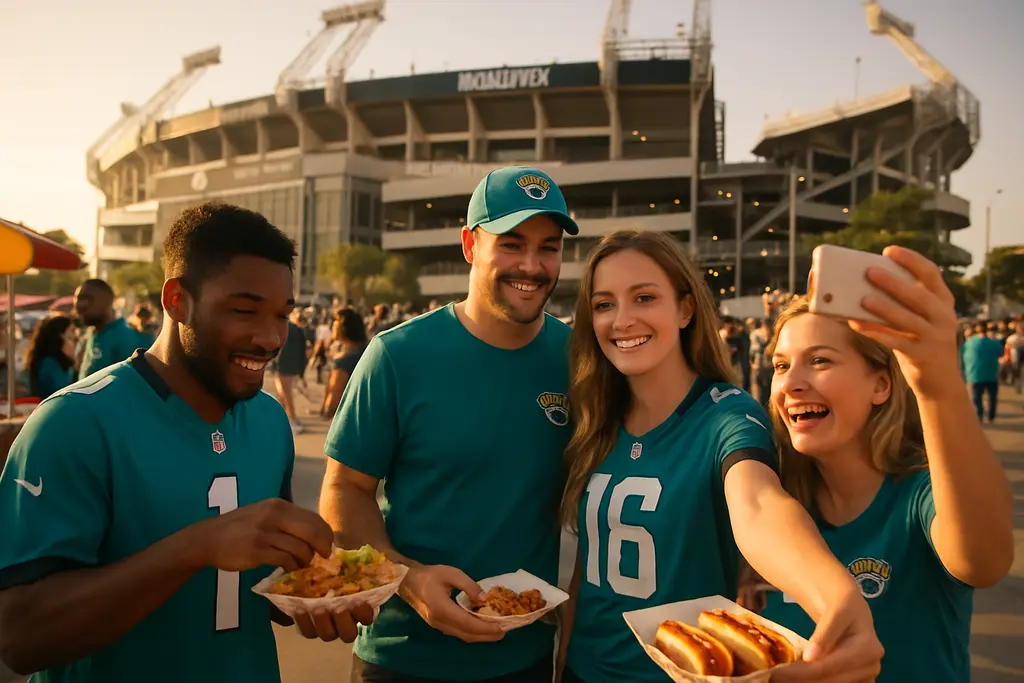
Jaguars stadium benefits are no longer just a City Hall phrase attached to a construction project. As of October 20, 2026, they sit at the center of how Jacksonville fans, Eastside residents, small businesses, youth coaches, and game-day workers judge the Stadium of the Future deal. The renovation is about football, but the public test is broader: whether a franchise anchor on the river can also send measurable value into neighborhoods that live with the traffic, crowds, and civic expectations that come with NFL Sundays.
The Community Benefits Agreement tied to the Stadium of the Future includes $300 million in citywide investment, split between $150 million from the Jacksonville Jaguars and $150 million from the City of Jacksonville, according to the team’s official Stadium of the Future FAQ. The same project timeline says renovation work began in February 2025 and is scheduled for completion in August 2028. That makes the CBA more than a side agreement. It is part of the public scoreboard for a stadium deal that Jacksonville will live with for decades.
What Jaguars stadium benefits Mean For Duval County
Jaguars stadium benefits Start With Shared Funding
The shared funding structure matters because it gives both the team and the city a stake in outcomes beyond the finished building. The CBA is designed to support countywide initiatives in workforce development, affordable housing and homelessness response, riverfront parks, and youth sports programming across Duval County. Those categories are not abstract for local sports fans. They affect who can work near the stadium, who can afford to remain near downtown, which public spaces families use before and after events, and whether youth programs can create a stronger pipeline of participation.
That is the first layer of Jaguars stadium benefits: the deal connects a professional football venue to everyday public needs. A stadium can host eight or nine regular-season home games, preseason dates, concerts, and major events, but a CBA is judged between those dates. The clearest sports-first question is whether the energy around the Jaguars can help support a healthier local sports culture from youth fields to downtown matchday routines.
Eastside Oversight Is The Local Test
The OUTEAST neighborhood, also known as the Eastside, carries special weight in the agreement. Research tied to the deal shows $40 million in public funds dedicated to affordable or workforce housing, economic development, or homelessness mitigation through a nine-member oversight board established in February 2026. That structure is important because the Eastside is not just near the stadium on a map. It is part of the cultural and logistical orbit around game days, construction traffic, downtown events, and riverfront redevelopment.
For community trust, oversight cannot feel ceremonial. Residents will want to see who benefits, where money moves, and how decisions are explained. Sports fans should care about that because long-term franchise stability depends on more than team records. It depends on whether the stadium district feels like part of Jacksonville rather than an isolated event zone used only on football weekends.
How The Deal Connects Stadium Work To Fan Life
Capacity Changes Make Communication Part Of Trust
During the 2026 season, EverBank Stadium’s capacity has been reduced to roughly 42,500 seats from about 68,300 while construction continues. That shift is not just a ticketing issue. It changes how fans plan family outings, how local businesses forecast foot traffic, and how season ticket holders experience a building they have known for years. The team has said season ticket holders displaced by seat removals, especially in upper bowls, will be offered priority to relocate to lower levels with pricing incentives.
For supporters, Jaguars stadium benefits will be judged partly by how well the franchise handles disruption. A reduced-capacity season can create scarcity, frustration, and a different sound inside the stadium. It can also create a tighter home atmosphere if communication is clear and fans know what to expect before they leave home. Readers tracking the football-side effect can pair this civic view with our analysis of the stadium renovation and home-field edge.
Lease Terms Keep The Team Story In Jacksonville
The NFL owners approved the Jaguars’ Stadium of the Future project, with the stadium set to open in 2028, and the deal includes a 30-year lease plus non-relocation terms, according to NFL.com’s report on the approval. That piece matters for fans who have lived through years of national speculation about the Jaguars’ place in Jacksonville. A long lease does not win third downs, but it does frame the team as a fixed part of the city’s sports identity through 2057.
The agreement also includes limits on the number of home games the Jaguars can play outside Jacksonville during the renovation period. For local supporters, that is a practical concern. Home games shape downtown schedules, hotel demand, restaurant traffic, tailgating habits, and family traditions. Keeping the team tied to Jacksonville is a fan issue and a business issue at the same time.
Where Jobs Parks And Youth Sports Fit

Workforce And Local Contractors
The project is expected to generate about 17,760 full- and part-time jobs over its lifecycle and produce an estimated $70.7 million in state and local tax revenue. The Jaguars have also said more than 140 local contractors and subcontractors are working on the construction site, with more than 700 local employees onsite daily, and that contract opportunities will be made available through Jacksonville Small & Emerging Business certification programs.
Those numbers matter because stadium construction can either feel like work imported into a city or work connected to the city’s own labor base. Jacksonville’s sports economy includes ushers, concession workers, maintenance crews, hospitality staff, security teams, nearby restaurant employees, transportation workers, youth coaches, and small business owners. The strongest CBA outcomes would make local participation visible across that full chain rather than only at ribbon-cutting moments.
Riverfront Parks And Youth Programming
The CBA also supports riverfront parks, including Riverfront Plaza, Shipyards West Park, Metropolitan Park, and the conversion of Flex Field. For fans, these projects can change the feel of a game day before anyone reaches a gate. Better public spaces can spread foot traffic, give families more room to gather, and make the stadium district useful outside NFL dates.
Youth sports programming may be the most direct bridge between the Jaguars and the next generation of Duval County athletes. A successful pro franchise can inspire young players, but access matters just as much as inspiration. Fields, coaching support, safe programming, and transportation realities decide whether children can participate. If the stadium deal helps strengthen those paths, its value will show up long before a young athlete ever wears a high school jersey.
- For fans: the deal affects seating, access, parks, and long-term team stability.
- For neighborhoods: the Eastside investment and oversight process will shape public trust.
- For local businesses: construction, events, and certification pathways create chances to take part.
- For youth sports: countywide programming can connect NFL visibility to local participation.
Why Jaguars stadium benefits Matter To Jacksonville
The strongest case for Jaguars stadium benefits is not that every promise will be easy to deliver. It is that the deal creates a public framework for judging more than steel, shade, seating, and scoreboards. Jacksonville can track whether Eastside funding reaches intended uses, whether local contractors keep getting real opportunities, whether youth programs expand access, and whether riverfront spaces become assets on non-game days.
For the Jaguars, this is a team dynamics story as much as a civic story. A fan base that feels respected during construction is more likely to stay engaged through temporary inconvenience. A neighborhood that sees transparent decision-making is more likely to view the stadium district as part of its future. A city that ties the NFL calendar to parks, workforce development, and youth sports gives football a broader local purpose.
The scoreboard at EverBank Stadium will still decide Sundays. The public scoreboard for the renovation deal will be different. It will be measured in housing support, local work, youth access, riverfront use, fan communication, and whether Jacksonville feels that the team’s next era belongs to the city around it.