


Game security has become part of the Friday night football conversation after a series of recent high school incidents changed how families think about attendance, entry rules, and crowd control. The clearest local example came on September 26, 2026, when the sold-out Millbrook vs. Rolesville rivalry football game in Wake County drew an estimated 6,000 spectators before multiple fights led police to evacuate the stands and the game was suspended after incidents in the stadium and off-campus, according to WRAL’s report from Raleigh.
For fans, this is not only a public safety discussion. It is also a sports culture issue. High school football relies on student sections, bands, parents, alumni, youth players, and neighborhood pride. When a rivalry night is interrupted, the effects reach the athletes, coaches, families, school staff, and the wider community that treats these games as weekly gathering points.
Why Game Security Became A Fan Zone Issue
What Happened In Wake County
The Millbrook-Rolesville game carried the kind of local energy that makes high school football matter across North Carolina. A sold-out rivalry crowd can lift players and create a memorable atmosphere. It can also test every part of a venue plan: gates, seating areas, concessions, student movement, parking lots, and postgame exits.
One detail has shaped much of the reaction since that night. Yahoo Sports reported that only five deputies were assigned for security coverage at the September 26 game, a number that drew scrutiny after the fights halted the event in front of a crowd estimated at about 6,000 people Yahoo Sports reported. That figure does not, by itself, explain everything that happened. It does show why staffing levels, crowd size, and rivalry intensity now belong in the same conversation.
Game Security Starts Before Kickoff
For Wake County families, game security now starts well before cars pull into a school lot. Fans should expect schools and districts to think harder about ticket limits, entry points, adult supervision, clear walking routes, and how student sections are monitored. Those choices can affect arrival time, seating habits, and whether fans can move freely around the stadium after kickoff.
The best high school football nights feel open and familiar, but large crowds require boundaries. That does not mean every game should feel like a closed event. It means schools have to match staffing and procedures to the size and tone of the matchup. A packed rivalry game is different from a smaller regular-season crowd, and fans should not be surprised when districts treat those nights differently.
Attendance Rules Fans May See More Often
Restricted Attendance Can Change The Atmosphere
Recent incidents reviewed for this topic showed that some schools responded to threats or disorder by limiting attendance to parents or guardians only. That type of restriction changes the whole feel of a game. Bands may be absent, students may be kept out, and general fan attendance may be blocked. For athletes, that means playing in front of a quieter, tighter crowd. For families, it can mean that siblings, classmates, alumni, and youth players who usually support the team may not be admitted.
Those limits are not ideal for community sports culture, but schools may use them when they believe a specific threat or crowd concern requires tighter control. Fans should avoid assuming that a ticket link, season pass, or normal Friday routine guarantees access. Before leaving home, families should check district messages, school athletic pages, and direct communication from the host school.
Screening And Gate Controls Take Time
Other recent cases in the research included clear-bag policies, metal detector screening, stricter entrance and exit procedures, and closer coordination between school staff, law enforcement, and medical personnel. Fans may see more of those measures at rivalry games, homecoming games, playoff games, and contests where previous incidents have raised concern.
That means the fan experience may slow down at the gate. A family that used to arrive 10 minutes before kickoff may need to arrive earlier. A bag that was fine in August may be turned away in October. A student who leaves the stadium after halftime may not be allowed back in. These details can frustrate fans if they are surprised by them, but they are easier to handle when families plan for them.
- Check whether the host school has a clear-bag rule before packing for the game.
- Arrive early enough for screening, parking, and stadium entry.
- Follow seating instructions, especially if student sections or concessions areas are being cleared.
- Expect stricter postgame traffic and exit plans after high-attendance matchups.
- Do not rely on past routines if the school has announced new procedures.
What Families Should Do Before Leaving Home
Read School And District Updates First
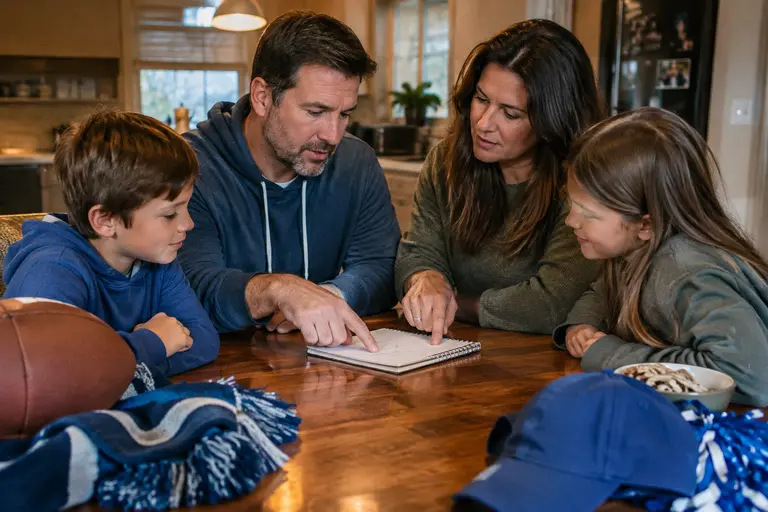
The most useful fan habit is also the simplest: read the latest update before heading to the stadium. Schools may change attendance rules during the week of a game if a safety concern appears. In some cases, that may mean a parent-only crowd. In others, it may mean a new bag rule, added screening, a changed entrance, or limits on where spectators can stand.
Families should also talk through a meeting point before the game. Large high school crowds often include younger siblings, middle school students, and groups of teenagers moving together. If a game is delayed, suspended, or cleared, a preset plan helps reduce confusion. Parents should know where their children are seated, how they will leave the stadium, and who is driving home.
Respect The Officials Running The Event
Security staff, school administrators, and law enforcement often have to make fast decisions during crowded events. Fans may not hear every reason behind a gate closure, seating instruction, or evacuation order. Arguments at an entry point or in a concession line slow down the process and can increase tension around people who are already uneasy.
That matters because crowd behavior is part of the safety plan. A venue can add officers, screening, and better lighting, but the night still depends on fans following instructions. Parents and alumni set the tone as much as student sections do. If adults treat the event as a shared school function rather than a free-for-all, the atmosphere is better for players and safer for families.
Game Security Lessons For Local Rivalry Nights
The Millbrook-Rolesville incident showed how quickly a strong rivalry crowd can shift from a football celebration to an operational challenge. That does not mean schools should pull back from rivalry traditions. It means game security has to be scaled to the crowd, the matchup, and the known risks around the event.
For teams, the stakes are real. A suspended game disrupts preparation, momentum, and the experience players work toward all week. For coaches, it can turn a competitive night into a communication problem. For families, it can leave younger fans shaken and older fans questioning whether they want to return the next week.
Wake County and other school communities now have a clear task: protect the local football experience without stripping away everything that makes it meaningful. That balance starts with honest planning. Big rivalry games need enough trained personnel, clear gate procedures, visible supervision, and a plan for what happens after the final whistle. Fans can help by arriving early, following posted rules, and treating every instruction as part of the event rather than an inconvenience.
High school football still belongs to the community. The path forward is not fear, and it is not business as usual. It is a more prepared version of Friday night, where the crowd, the schools, and the teams all understand that a safe stadium is part of the sport’s foundation.