

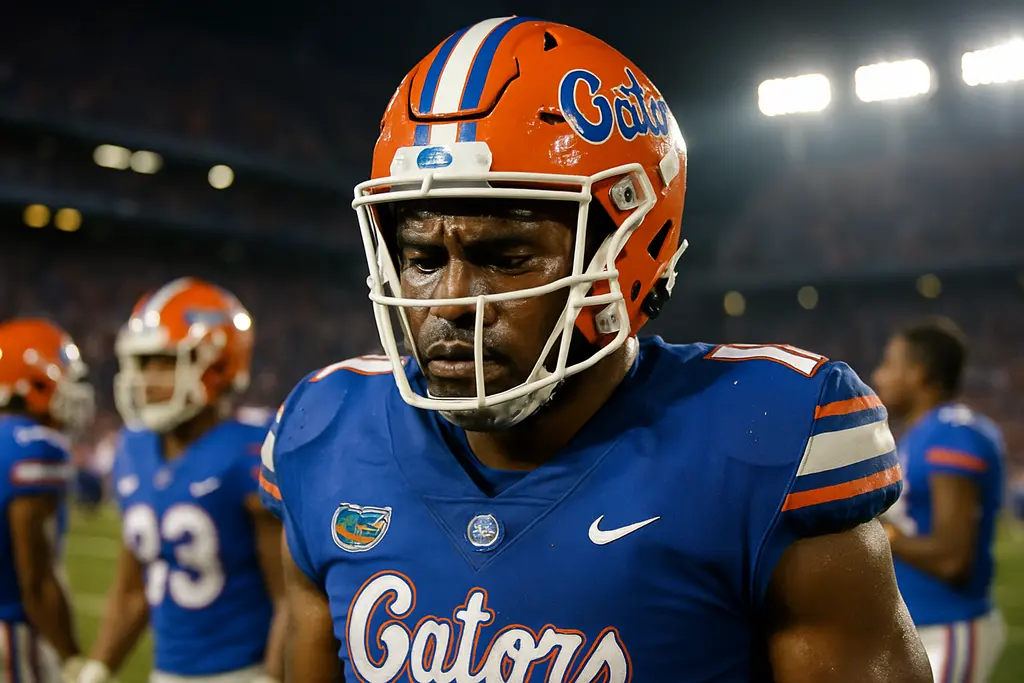
Gators Rankings became one of Gainesville’s loudest football conversations after Florida beat Ole Miss on September 26, 2026. The win mattered because it was not a narrow escape or a single-quarter surge. Florida defeated then-No. 4 Ole Miss 52-28 at home, moved to 4-0 and 2-0 in SEC play, and did it with a ground game that produced 302 rushing yards inside a 498-yard offensive day, according to the Florida-Ole Miss recap.
That September 26 result immediately changed how Florida was discussed beyond Alachua County. A team picked in the middle of the SEC conversation before the 2026 schedule began suddenly had a top-10 profile, a run-first identity, and a home crowd that had fresh proof to bring into every tailgate argument. By October 10, 2026, though, the story had already gained a second chapter: the October 3 road loss at Missouri knocked Florida back to No. 16 in the AP Top 25. That does not erase the Ole Miss win. It reframes it as a measuring stick rather than a coronation.
Why Gators Rankings Shifted After Ole Miss
Gators Rankings Reflected A Physical SEC Win
The first reason the ranking jump made sense was style. Florida did not merely beat Ole Miss; it controlled the part of the game that tends to travel across SEC Saturdays. The Gators ran for 302 yards, leaned on Jadan Baugh and Duke Clark, and turned the game into a local identity moment for The Swamp. Baugh rushed for 142 yards and three touchdowns, while Clark added 126 yards on 12 carries. That kind of balance gave the polls a reason to treat Florida as more than a fast September story.
For Gainesville, the ranking rise also carried a neighborhood feel. Florida matched its 2025 win total in just four games, which meant the conversation around campus, alumni circles, and game-week business traffic changed quickly. Instead of debating whether the rebuild had traction, fans were debating how much of the jump could hold once the road schedule pushed back.
The Numbers Behind The Local Mood
Through the first four games, Florida outscored opponents 214-91, and national coverage soon described Florida as back in the SEC championship contender conversation through USA TODAY Sports via Yahoo Sports. That framing matters because rankings shape more than poll graphics. They influence kickoff attention, recruiting conversations, student demand, alumni travel, and how opposing fan bases treat a trip to Gainesville.
The SEC production was especially hard to ignore before the Missouri setback. Florida averaged 48.0 points, 466.5 yards of offense, and 272.5 rushing yards in SEC games across that early sample. Small samples can mislead, but the film and the box score lined up against Ole Miss: Florida had line-of-scrimmage control, explosive rushing output, and enough scoring margin to force national voters to adjust.
What The Missouri Setback Changed
A Ranking Jump Is Not A Finished Identity
The October 3, 2026 loss at Missouri changed the tone around Gators Rankings because it separated excitement from evidence. Florida had earned the No. 8 moment after Ole Miss, but a road SEC loss one week later showed why poll movement in September can be unstable. A program can be improved, dangerous, and nationally relevant without being complete.
That distinction is useful for fans. The Ole Miss result showed Florida’s ceiling when the offensive front, backs, crowd energy, and game flow align. The Missouri result showed that the SEC still tests depth, composure, and week-to-week recovery. In a conference that placed heavy pressure on ranked teams during this stretch, one road performance could change the public read almost overnight.
Why Gainesville Should Not Treat The Drop As Proof Of Collapse
A fall from No. 8 to No. 16 is sharp, but it does not send Florida back to the preseason mood. The preseason SEC media projection placed the Gators ninth in the league, and the first month of the 2026 schedule gave fans more substance than that forecast suggested. The question now is not whether the Ole Miss game was real. It is whether Florida can make that version of itself repeatable when the setting is less friendly.
This is where local expectations need discipline. The Swamp can amplify a physical team, but the top of the SEC is decided by how often that identity survives away from Gainesville. For more on how that Ole Miss performance created a new working model for Florida, the Gators Ole Miss win blueprint remains the best companion read.
How Rankings Affect Fans, Players, And The City

Poll Position Changes The Gainesville Week
Rankings carry a practical weight in a college town. A top-10 Florida team changes hotel searches, restaurant traffic, campus conversation, and the way visiting supporters plan a weekend in Gainesville. Even after the Missouri loss, a No. 16 team is still part of the national conversation. That keeps Florida Saturdays bigger than the game itself, especially for local businesses that depend on football weekends.
For players, the ranking attention can be both reward and stress. Baugh’s fifth straight 100-yard rushing game streak, which began late in 2025, gave Florida a clear face for its offensive rise. His early 2026 production also gave opposing defenses a simple starting point: stop the run, or risk letting Florida dictate pace. That changes how every future SEC opponent prepares.
The Fan Conversation Needs Context
The healthiest way to read Gators Rankings is to separate three ideas: proof, projection, and pressure. The Ole Miss win supplied proof that Florida can play at a high SEC level. The No. 8 ranking projected that performance onto the national stage. The Missouri loss added pressure by reminding everyone that one major win cannot carry an entire campaign.
- Proof: Florida’s 52-28 win over Ole Miss showed real rushing power and scoring punch.
- Projection: the jump to No. 8 reflected how quickly national voters reacted to that SEC result.
- Pressure: the Missouri loss forced Florida to show whether the response can match the rise.
That is not a betting angle or a poll obsession for its own sake. It is a team dynamics story. Rankings influence locker-room noise, fan patience, recruiting energy, and how a city talks about its Saturdays. The best programs handle that attention without letting it rewrite their habits.
Why Gators Rankings Still Matter In Gainesville
As of October 10, 2026, the most honest reading is that Florida’s ranking tells a layered story. The Gators were good enough to overwhelm a top-five Ole Miss team in Gainesville on September 26. They were also vulnerable enough to lose heavily on the road at Missouri on October 3. Both facts belong in the same conversation.
For Gainesville, that means Gators Rankings still matter, but not because a number beside the name settles anything. They matter because they show how quickly belief returned, how much the running game changed public expectations, and how unforgiving the SEC remains once a team becomes a target. The Ole Miss win gave Florida a blueprint. The Missouri loss made the next response feel like a character check.
The local lesson is clear: rankings can reward a surge, but they cannot protect a team from the next Saturday. Florida’s path now depends on whether the physical identity that lifted the Gators after Ole Miss becomes a weekly standard rather than a single Gainesville celebration.