

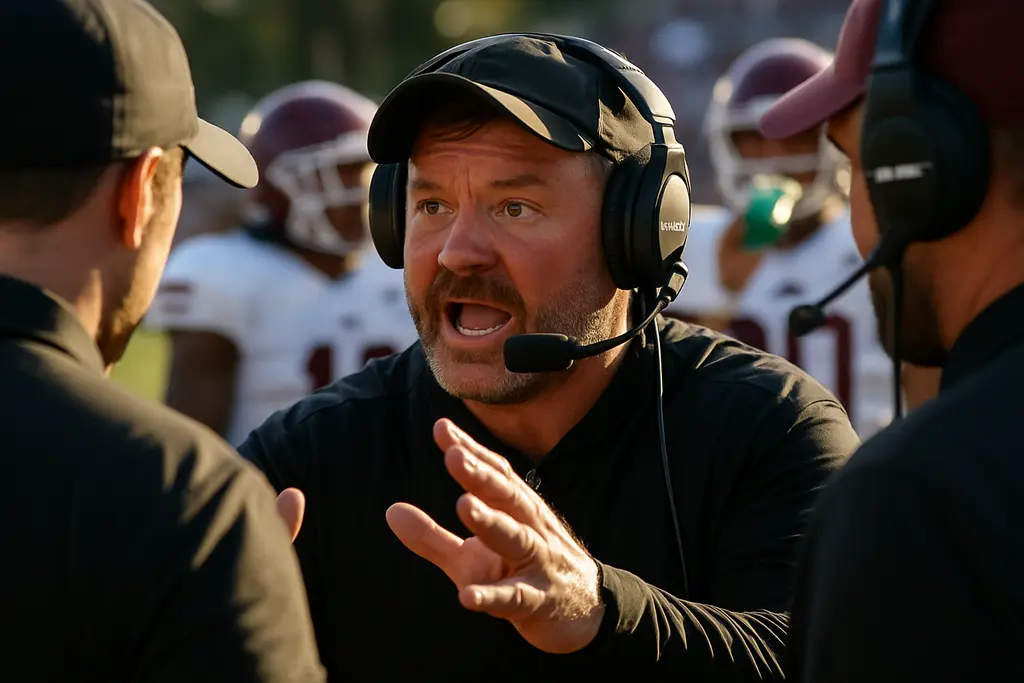
Jon Sumrall Standards became the real story after Florida’s 52-3 win over Campbell on September 12, 2026. The score was lopsided, the Gators moved to 2-0, and the special teams produced the loudest moments of the afternoon. Yet the coaching takeaway was not built around celebration alone. Sumrall’s message after the game centered on how Florida played once the first wave of starters had already set the tone.
That is the mark of a coach trying to build more than a Saturday result. Florida had enough talent and early control to bury Campbell before halftime, but the game still gave the staff teaching points. The first half showed how sharp Florida can look when offense, defense, and special teams stack plays together. The second half showed why the staff kept talking about standards for every player, not just the familiar names.
Jon Sumrall Standards In The Campbell Recap
Where Jon Sumrall Standards Showed Early
Florida led 45-3 at halftime and finished with a 52-3 win that pushed the Gators to 2-0 on September 12, 2026, according to the official Florida recap from Florida Gators. That kind of margin can hide details, but it can also reveal a staff’s priorities. The Gators were not just bigger or faster; they were decisive in the parts of the game that usually swing field position and crowd energy.
The official numbers made the separation clear. Florida finished with 514 total yards, split between 300 passing yards and 214 rushing yards. Campbell had 210 total yards, with 148 passing and 62 rushing. Those numbers tell a basic competitive story, but the coaching story was sharper: Florida controlled the game in enough phases to give the staff a full roster evaluation before SEC pressure gets heavier.
That is why the score alone should not be the only memory for local fans. For Gainesville, a game like this is a check on identity. Does Florida play with edge after building a lead? Do reserves protect the same habits as starters? Can special teams become a weekly asset rather than a bonus? Sumrall’s comments after the game pointed toward those questions.
The Standard Was Bigger Than The Starters
Sumrall’s postgame theme was that freshmen, backups, and starters all have to meet the same Florida standard. That message matters because games against overmatched opponents can create two different teams inside one box score. The first unit can look clean and physical, while later snaps can expose penalties, communication gaps, or loose technique.
That is not a minor coaching detail. The Southeastern Conference schedule punishes teams that rely only on frontline talent. Depth has to function before injuries, heat, travel, and tempo create stress. If Florida wants to carry early-season momentum into tougher Saturdays, the staff needs second-team reps to look like part of the same program standard, not a separate exercise.
Special Teams Set The Local Tone
Vernell Brown III Changed The Game’s Energy
The loudest performance came from sophomore Vernell Brown III, who returned two punts for touchdowns, one from 64 yards and one from 70 yards. He totaled 173 punt-return yards on four attempts, a Florida single-game program record listed in the official recap from Florida. That is not just an explosive stat. It is a coaching statement about field position, blocking detail, and trust in a returner’s timing.
For Jon Sumrall Standards, special teams cannot be treated like filler between offensive and defensive possessions. The Campbell game supported that view. Brown’s returns changed the rhythm, gave the sideline a jolt, and allowed Florida to separate without needing long offensive drives every time. For fans in the stadium and those following locally, those plays feel different because they turn a routine punt into a sudden scoreboard swing.
The staff’s special teams work also reflects the kind of week-to-week identity Florida is trying to build. A return touchdown can look like one player’s burst, but punt return success depends on spacing, decisions, blocking angles, and the returner reading traffic without hesitation. Brown supplied the finish. The preparation created the runway.
Penalties And Depth Kept The Staff Busy
The Second Half Gave Florida Real Teaching Tape
The part of the Campbell game that should stay on the staff’s whiteboard was the penalty count. Florida was flagged eight times for 95 yards, with seven penalties coming in the second half, and WRUF described it as the program’s worst penalty yardage since Week 2 of 2025 against South Florida in its Florida-Campbell numbers breakdown. Five of those second-half penalties were on offense, with several tied to offensive linemen.
That is the kind of detail that makes a 49-point win more useful than it first appears. A clean first half showed what the Gators can be. A messier second half showed what still needs to be corrected. Penalties from depth players are not just individual mistakes; they can stall drives, erase field position, and create bad habits if the staff accepts them because the game was already decided.
Florida scored only one touchdown after halftime. That did not threaten the result, but it did give Sumrall a clear teaching point. When the first group is done, the standard still has to travel down the sideline. That is the gap the staff will want to close because late-game reps often become meaningful later in the season. A backup who jumps early in September may be the same player asked to handle a key third quarter in October.
- Florida’s first half showed control across multiple phases.
- The second half exposed penalties and depth consistency issues.
- Special teams gave the Gators a field-position and scoring weapon.
- The coaching staff gained usable tape beyond the final margin.
Defense Answered A Week-One Coaching Point
The Front Played With More Force
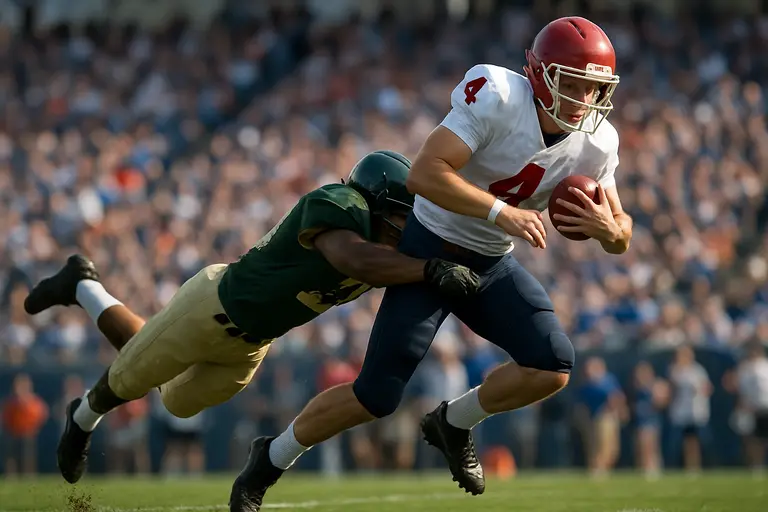
After Florida’s 66-21 win over FAU on September 5, 2026, Sumrall had pointed to defensive issues involving caution, tempo, communication, and situational awareness. Against Campbell, the defensive numbers were better. Holding Campbell to 62 rushing yards gave the staff a cleaner read on trench play, especially after the defense had been challenged to play with more force.
The key coaching phrase around the line was that Florida played bigger. In practical terms, that means more knock-back at the point of attack, better disruption, and fewer snaps where the offense controls the defender’s movement. Campbell still completed enough passes to finish with 148 passing yards, but Florida’s front helped keep the game from becoming loose or extended.
That defensive response connects to a broader staff pattern. Sumrall’s early Florida tenure has been framed around urgency, takeaways, quarterback efficiency, and a sharper daily identity, themes we also examined in our piece on Florida’s sharper identity. The Campbell game fit that same thread because the staff did not grade the afternoon only by scoreboard comfort.
What Jon Sumrall Standards Mean After Campbell
What stood out most after the Campbell win was the balance between satisfaction and correction. Florida had the explosive plays, the yardage edge, and the halftime control expected from a team with a clear talent advantage. Aaron Philo’s early-season efficiency also stayed part of the positive story, with WRUF noting that he completed 16 of 21 passes in each of the first two games and ranked near the national top 15 in yards per completion through that point.
Still, Jon Sumrall Standards were never going to be judged only by Philo’s accuracy or Brown’s return touchdowns. The broader test was whether Florida could play the same brand of football across units and roster groups. The first half answered yes. The second half made that answer less complete.
For the local fan base, that is a useful place to be after two games. A 2-0 start gives Gainesville something to build around, but the penalty issues keep the conversation grounded. Florida did not need perfection against Campbell to win big. It will need cleaner detail when the opponent can punish second-and-long, short fields, and late-drive mistakes.
The Campbell game should be remembered as both a showcase and a warning. Brown’s punt returns showed how special teams can tilt a Saturday. The yardage margin showed Florida’s offensive balance. The defensive front showed a response from Week 1 coaching points. The penalties and second-half dropoff showed why Sumrall kept pressing the same message after a 52-3 win.
That is the practical meaning of Jon Sumrall Standards after September 12, 2026: Florida can enjoy the result, but the staff still has to coach the habits. The Gators looked powerful early, uneven late, and talented enough to make every correction worth tracking. For a program trying to sharpen its identity, that may be the most useful kind of blowout.