

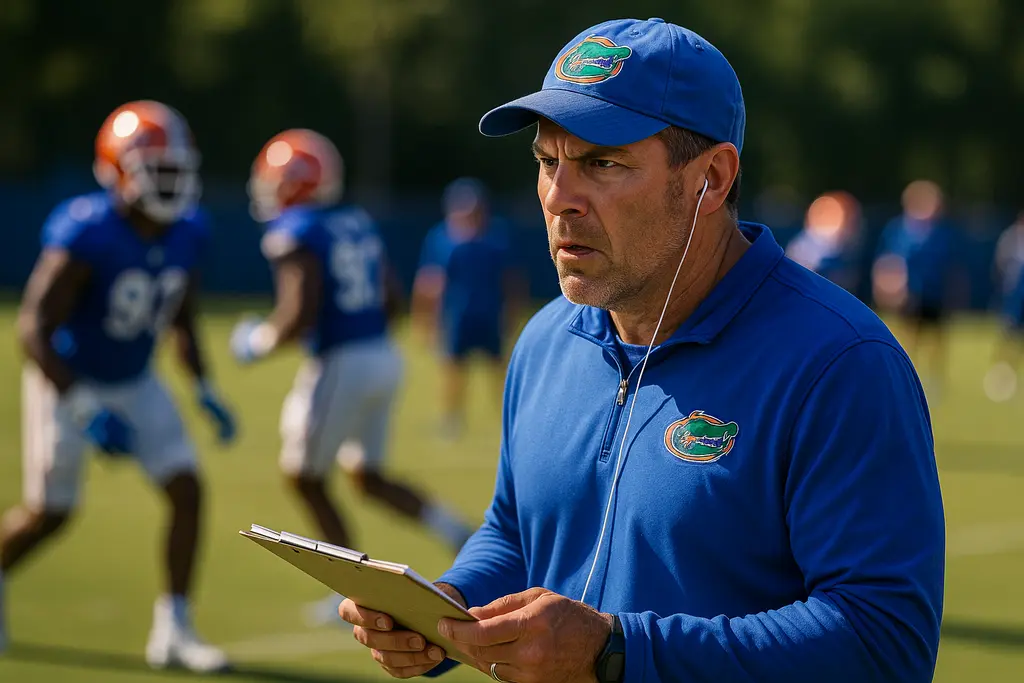
Florida Gators Special Teams became a sharper Gainesville storyline in late July 2026, when Greg McMahon joined head coach Jon Sumrall’s staff as a special teams analyst, according to Sports Illustrated’s report. For a program where field position, return discipline, and place-kicking operation can swing SEC Saturdays, the move gives Florida an experienced voice with college and NFL background.
McMahon’s arrival is not a headline built around a new coordinator title or a public play-calling change. It is a staff-building move, and that distinction matters. Analysts can shape preparation, self-scouting, weekly teaching points, opponent study, and practice organization without always becoming the most visible name on game day. For fans at Ben Hill Griffin Stadium, the payoff would show up in details: cleaner coverage lanes, more confident return decisions, fewer hidden-yardage losses, and a steadier kicking operation.
Florida’s local football culture tends to measure success through quarterbacks, recruiting wins, rivalry results, and SEC standings. Special teams rarely own the conversation for long unless something goes wrong. That is why McMahon’s hire deserves a closer read. His résumé offers a clear theme: he has spent decades around the small margins that decide field position and momentum.
Why Florida Gators Special Teams Needed Another Veteran Voice
The Analyst Role Fits A Detail-First Unit
Special teams are different from offense and defense because they pull from the full roster. Young defensive backs, reserve linebackers, receivers, tight ends, specialists, and core return players all have to understand one shared job in limited snaps. That creates a teaching challenge. A single missed lane on kickoff coverage or a poorly timed block on a return can erase a strong possession from the offense or defense.
That is where an analyst with McMahon’s background can carry value for Florida. The Gators are not just adding a name from outside the program. They are adding someone who has worked in college football, the NFL, and spring professional leagues, based on his Tulane athletics biography. The same bio says McMahon has more than 40 years of coaching experience, including a recent stretch as Tulane’s special teams coordinator during the 2023 and 2024 seasons per Tulane Athletics.
For Florida Gators Special Teams, the most immediate value may be in structure. Special teams work is often about repetition under pressure: snap timing, hold placement, kickoff landmarks, punt protection calls, return depth, and substitution speed. Gainesville fans may never see those meetings, but they often see the results in the fourth quarter when a close SEC game turns on whether the operation stays calm.
Why This Staff Connection Matters In Gainesville
McMahon also brings a prior working relationship with Sumrall. Sports Illustrated reported that McMahon worked under Sumrall at Tulane in 2024 before the connection continued at Florida. That matters because staff hires are not only about résumés. They are about trust, teaching language, and how quickly a coach or analyst can fit into an existing routine.
Sumrall’s Florida staff is still being shaped in public view, and this hire gives the Gators a familiar support piece from his Tulane period. In a city like Gainesville, where fans track practice reports, staff movement, and every edge before SEC play, continuity inside the building can be just as important as a splashier outside hire. McMahon already knows at least part of the way Sumrall wants a program to operate.
What McMahon’s Tulane Work Says About His Approach
Production That Shows Up In Field Position
McMahon’s recent Tulane tenure gives Florida fans a concrete college example. In 2023, Tulane’s special teams ranked first in the American Athletic Conference and 10th nationally in kick return average at 24.81 yards per return, according to Tulane Athletics. That number does not automatically transfer to Florida, and it should not be treated as a guarantee. Personnel, league opponents, returners, blockers, and weekly matchups all change.
Still, the number is useful because it points to an area that every fan understands: starting field position. A return unit that consistently avoids mistakes and creates manageable field position can reduce pressure on an offense. In SEC games, where defensive speed and crowd noise can punish long-field drives, those yards matter. The best special teams units do not need a touchdown every week to help the team. They help by making the next offensive series less difficult.
That is the kind of subtle value that can resonate in the Swamp. Florida fans remember big plays, but they also feel the shift when a drive starts near midfield instead of backed up. If McMahon’s teaching helps Florida create even a few cleaner possessions during the 2026 schedule, his influence could be felt without needing a weekly spotlight.
From Tulane To The SEC Standard
The move from Tulane to Florida changes the setting. Tulane gave McMahon a recent coordinator platform. Florida gives him an SEC environment with different roster depth, weekly scouting demands, stadium noise, and fan scrutiny. The title also changes, since he is arriving as an analyst rather than being identified in the research as Florida’s special teams coordinator.
That distinction should guide expectations. McMahon is not being presented as the sole public face of every special teams choice. His value is more likely to come through preparation and staff collaboration. For readers who want a closer look at the same hire from a program angle, our earlier piece on Greg McMahon’s special teams edge connects the move to Florida’s wider football setup.
How NFL Experience Shapes The Gators’ Margin Game
The Saints Connection Carries Real Weight
McMahon’s NFL background is the part of the résumé that many Florida fans will recognize first. Tulane Athletics lists him as the New Orleans Saints’ special teams coordinator from 2008 through 2016, a span that included the Saints’ Super Bowl XLIV victory. Sports Illustrated also reported that McMahon orchestrated the successful onside kick to open the second half of that Super Bowl, one of the most famous special teams calls in modern football.
That does not mean Florida will suddenly become a trick-play team. It means McMahon has worked in environments where special teams were treated as a decisive phase, not an afterthought. The onside kick example is memorable because it required timing, conviction, player execution, and staff alignment. Those same traits matter on far less dramatic snaps: punt protection, fair-catch communication, kickoff placement, and rush-lane discipline.
College players also benefit from coaches and analysts who can explain why a detail matters beyond the practice field. A freshman covering kicks may see a special teams rep as a path to more playing time. A veteran may see it as a way to protect the team in close games. An analyst with NFL and college stops can help connect those motivations to the daily work.
LSU Years Add SEC Familiarity
McMahon’s Louisiana background extends beyond the Saints. Tulane Athletics notes that he was on LSU’s staff from 2017 to 2021, first as a special teams consultant and later as special teams coordinator. During that period, LSU led the SEC in points scored via kicking in both 2018 and 2019, according to the same Tulane biography.
That SEC context matters for Florida because league games often compress margins. A red-zone drive that ends in three points is still a successful possession if the kicking operation is steady. A punt that pins an opponent deep can change defensive play-calling. A return unit that protects the ball can keep the stadium from swinging into frustration.
The Gainesville crowd understands those emotional turns. A special teams mistake can silence a home section fast. A clean return, a deep punt, or a reliable field goal can reset the building. That local fan reaction is part of the job, even if it does not appear in a stat sheet.
What Fans Should Watch When Florida Opens On September 5, 2026
Early Clues Against Florida Atlantic
Florida is scheduled to open on September 5, 2026, against Florida Atlantic, according to the research provided for this story. That game will be the first public chance for many fans to look for signs of how the staff has organized the special teams phase with McMahon in the building.
The clearest clues may not be dramatic. Watch how returners handle decision points. Watch whether coverage players stay in lanes. Watch whether the field-goal unit gets aligned without visible stress. Watch whether punt protection looks settled before the snap. Those details matter more than one isolated big play because they show whether the weekly process is taking hold.
Florida Gators Special Teams will also affect the fan experience inside Ben Hill Griffin Stadium. A cleaner special teams operation can keep the crowd engaged during possession changes and help the defense play with longer fields behind it. In Gainesville, that can feed the stadium’s energy, especially during early-season games when supporters are still learning the identity of a new staff.
Why Hidden Yardage Matters To Local Fans
Hidden yardage is not a slogan. It is the difference between an offense needing one first down to reach scoring range and needing a full-field drive. It is the difference between a defense defending grass behind midfield and attacking an opponent pinned near its own goal line. Special teams create those differences across a full game.
For local fans, that means the McMahon hire is worth tracking even if his role stays mostly behind the scenes. The Swamp has always been loudest when Florida combines pressure defense, efficient offense, and special teams confidence. If the Gators want to build early trust under Sumrall, reducing avoidable mistakes in the third phase is one clear path.
- Kick return choices: depth, ball security, and blocking timing.
- Punt operation: protection, coverage spacing, and field-position results.
- Place-kicking rhythm: snap, hold, timing, and composure after stalled drives.
- Penalty control: avoiding blocks in the back, holds, and substitution errors.
The Local Stakes For Florida Gators Special Teams
Florida Gators Special Teams now have an analyst whose résumé touches Tulane, LSU, the Saints, and a Super Bowl-defining special teams call. The job in Gainesville is different from every stop before it, but the central assignment is familiar: help a football team protect field position, teach the details, and turn overlooked snaps into useful advantages.
For the Gators’ fan base, McMahon’s arrival should be viewed through that practical lens. This is not about treating special teams as a side story. It is about recognizing how often the third phase shapes the mood of a Saturday in Gainesville. A clean punt, a smart fair catch, a confident field goal, or a disciplined coverage rep can change how a crowd feels and how a sideline responds.
That is why this hire matters locally. Florida’s 2026 season will bring bigger storylines around Sumrall, roster development, rivalry pressure, and SEC standards. McMahon’s work may sit beneath those headlines, but if the Gators are sharper in the small moments, fans at the Swamp will notice long before the stat sheet explains why.