

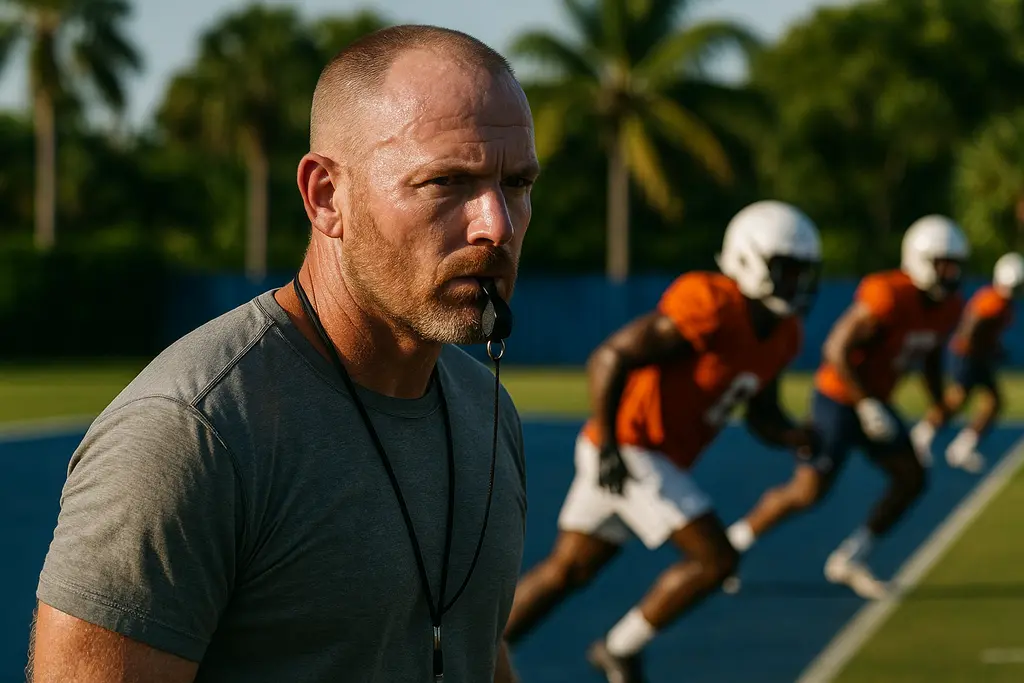
Rusty Whitt Gators work is already one of the most practical team-development stories around Florida football because it sits where player growth, staff trust, and Gainesville expectations meet. Florida hired Whitt as Director of Football Performance in December 2025, bringing in a coach with more than 30 years of strength and conditioning experience, according to his Florida Gators bio. For fans, that hire is not just a staff listing. It changes the daily environment players live in long before Saturdays arrive at Ben Hill Griffin Stadium.
Strength and conditioning can be hard for outsiders to measure because most of the work happens away from cameras. Still, the clues matter. Which standards are repeated? Which details are enforced? How does the team respond before spring practice, summer heat, and SEC game weeks? Whitt’s background gives Florida a clear personality in that part of the building: direct, demanding, and built around year-round accountability.
Why Rusty Whitt Gators Training Fits Gainesville
Rusty Whitt Gators Standards Start Before Kickoff
The Florida fan base often judges a team by Saturday body language: finishing tackles, holding blocks late, communicating when the Swamp gets loud, and staying composed when momentum swings. Those moments are not created during pregame. They are built in winter workouts, team lifts, conditioning periods, and daily routines that ask players to repeat hard things when there is no public scoreboard.
That is where Whitt’s appointment carries weight. His title, Director of Football Performance, places him in one of the most consistent contact points with players. Position coaches shape technique and scheme. The head coach sets the program direction. The performance staff sees players through the physical rhythm of the year, from offseason development to recovery work and in-season maintenance.
Why The Weight Room Becomes A Team Room
For Gainesville, the training story also has a community angle. Fans who pack the Swamp want to see effort that looks connected to the region’s sports identity: heat, toughness, and no wasted reps. The weight room is where that identity can become more than a slogan. It is where younger players learn the habits of older players, where transfers adapt to Florida expectations, and where the roster starts to share the same language before game week.
Whitt’s résumé suggests he has lived inside different types of football programs. At Tulane, he served as Director of Strength and Conditioning during the 2024 and 2025 seasons. Florida’s official bio credits that two-year stretch with a 20-7 record, the 2025 American Athletic Conference Championship, and a College Football Playoff appearance. At Troy, he was head strength and conditioning coach from 2020 through 2023, with the program winning Sun Belt Conference titles in 2022 and 2023 and posting a combined 23-5 record across those championship seasons.
The Background Behind Florida Football Performance
Conference Stops Built A Broad Coaching Profile
Whitt’s path did not start in Gainesville, and that matters. The official Florida bio lists stops at Texas Tech, where he oversaw the strength and conditioning program as head coach from 2016 to 2018, and at Louisiana, where he led the strength and conditioning program from 2010 to 2015. That Louisiana period included four consecutive New Orleans Bowl victories and the 2013 Sun Belt Conference title.
Those stops do not guarantee anything at Florida, and it would be unfair to pretend that a performance coach alone explains wins and losses. Football success depends on recruiting, quarterback play, staff alignment, health, player retention, and weekly execution. But a strength coach can influence the floor of a program. He can shape how players train, how they recover, how they respond to hard coaching, and how freshmen learn what college football asks from them.
Military Service Adds A Different Voice
Whitt’s military service is also part of his public profile. Florida’s bio says he served as a Senior Special Forces Communication Sergeant in the 10th Special Forces Group from August 2003 to January 2009, with deployments during Operation Iraqi Freedom V and VI. The bio also lists honors including the Combat Infantryman’s Badge, two Iraq Campaign Medals, and the Army Commendation Medal with Valor.
That background should be discussed with care. Football is not military service, and sports should not borrow that weight too casually. Still, experience in high-pressure, team-dependent environments can shape a coach’s language around trust, accountability, and preparation. For players, the value is not in slogans. It is in whether expectations are clear, consistent, and connected to the football work they must perform.
Accountability And The Gators Logo Standard
What The Logo Rule Says About Trust
One of the clearest public examples of the Rusty Whitt Gators approach came through Florida’s offseason workout standard tied to the Gators logo. Sports Illustrated reported that Florida players were not wearing the Gators logo during offseason workouts because they had to earn that right, a policy connected to accountability and team unity Gators logo standard.
That detail matters because symbols carry force in college football towns. In Gainesville, the Gators mark is not just gear. It belongs to alumni, students, families in the stands, former players, and local businesses that build fall weekends around Florida football. Asking players to earn that symbol during workouts sends a simple message: the identity comes with responsibility.
For fans, the policy also gives shape to an offseason that can otherwise feel vague. Supporters may not see every rep, but they can understand the standard. A logo rule is visible. It tells the roster that small privileges are tied to shared behavior. That kind of structure can help a team trying to strengthen internal trust before the pressure of SEC play.
Player Development Is More Than Adding Size
Strength work is often reduced to bench press numbers or before-and-after photos. Florida’s needs are broader. Player development includes movement quality, durability habits, speed work, nutrition discipline, recovery routines, and the mental ability to repeat effort across a long season. The Rusty Whitt Gators story is meaningful because it pushes the conversation beyond weight-room totals and into daily standards.
That approach can be especially valuable for a roster with different timelines. Veterans need maintenance and leadership responsibility. Younger players need technical instruction and physical maturity. Transfers need to adjust quickly to a new staff, new terminology, and a new locker room. A performance director touches all of those groups, often before fans have learned every jersey number.
- Veterans can set the workout tempo and model how Florida expects players to prepare.
- Newcomers can learn team standards before they are asked to handle SEC speed.
- Coaches can use the offseason to evaluate discipline, consistency, and readiness.
How Fans Should Read Offseason Progress
Spring Clues Without Overstating Them
Florida fans are right to pay attention to workout reports, but they should avoid turning every offseason clip into a forecast. A strong training block does not reveal a depth chart. A demanding conditioning period does not name a starter. A logo policy does not settle how the team will perform in the fourth quarter of a conference game.
What it can reveal is tone. If players consistently speak and act within the same standard, that tells fans something about staff alignment. If the roster appears bought into the performance plan, that can help create a steadier base before practices become more football-specific. If leaders emerge through daily work, the coaching staff gains useful information that may not show up in a spring box score.
Why Gainesville Pays Attention To Work Behind Closed Doors
Local fans understand that Florida football is not contained by Saturdays. Hotels, restaurants, campus traffic, student traditions, and family weekends all rise around the program. A team that projects discipline during the offseason can help keep the community connected even when there is no game to attend. That connection is part of Gainesville’s sports rhythm.
The performance staff also affects how supporters talk about the team in the months between games. Fans may debate quarterbacks and coordinators first, but strength and conditioning becomes part of the conversation when teams look prepared, physical, and connected. Whitt’s public profile gives that conversation a specific focus: standards, accountability, and repeated work.
Why Rusty Whitt Gators Work Matters In Gainesville
The Rusty Whitt Gators fit will be judged over time by how Florida players develop, how the roster handles strain, and how well daily standards show up under game pressure. The early story is not about hype. It is about structure. Florida added a performance leader with long experience across college football and a military background that gives him a distinct voice inside the building.
For the local fan base, that makes the offseason easier to understand. The work is not only about getting bigger or faster. It is about earning trust, sharing a standard, and building a team identity that can survive the heat of Gainesville and the weekly stress of SEC football. If Florida’s players carry that standard from the weight room into practice and then into the Swamp, Whitt’s influence will be visible in the details fans notice most: effort, discipline, and finish.