


Coral Springs Football has become a story about more than a difficult box score. In a city where high school sports help families gather, students build routines, and campuses measure pride in public, the recent struggles at Coral Springs High have landed as a civic signal. The Colts did not simply enter fall 2026 trying to improve. They entered it after a late coaching change, early forfeits, and a recent competitive record that forced the community to ask what stability should look like in local football.
Coral Springs Football At A Turning Point
Why Coral Springs Football Lost Early Ground
Coral Springs High hired Kevin Smith as head football coach on August 21, 2026, after former coach Travis Shelton left in August 2026, according to a Coral Springs Talk report. That date matters because high school football teams are usually deep into conditioning, installation, team roles, and game-week habits by late August. A coaching hire that close to the first kickoff does not leave much room for a staff to reset schemes, build trust, or repair turnout questions.
The immediate cost was visible. The Colts forfeited their first two games of the 2026 season, against Pembroke Pines Charter and Forest Hill, before their first scheduled game on September 3, 2026, against Marjory Stoneman Douglas. For a program already trying to regain its footing, forfeits can do damage that does not show up only in a standings table. They interrupt player development, reduce live-game reps, and make it harder for students, parents, alumni, and campus groups to feel that a season has started with shared purpose.
For a sports historian, the timing is the key detail. Programs often recover from losing seasons when the offseason is used to create a shared language: what the offense wants to be, how the defense communicates, who leads workouts, and how younger players enter the varsity group. Coral Springs High lost part of that calendar. The community saw the result before it saw the rebuild.
The Colts Rebuild Became A Civic Story
The Meaning Behind A One-Win Season
The Colts’ recent struggle did not begin with the August 2026 transition. Coral Springs Daily reported that Coral Springs High finished the previous football season with one win, a 40-7 victory over J.P. Taravella in the final game of the regular season, and scored more than 20 points only once during that season in its local football roundup. Those numbers point to a program that had trouble sustaining offense, not just a team that lost a few close games.
Low scoring changes the feel of a season. It affects how a defense plays when it knows there may be little margin for error. It affects whether younger skill players see a clear path to growth. It affects whether families remain patient while the team tries to form an identity. At the high school level, that patience is a community resource. It is built through clear communication, steady coaching, and signs that players are learning even when the scoreboard is not kind.
The late August 2026 coaching move made that resource more important. Kevin Smith inherited a situation in which the first job was not selling grand promises. It was restoring ordinary football habits: getting players to practice, teaching assignments, protecting morale, and making each game week feel organized. In many towns, those tasks might sound small. In high school football, they are the foundation of public trust.
Other Programs Changed The Local Conversation
Charter And Taravella Show Different Paths
The broader city picture also matters. Coral Springs Charter finished the 2025 season at 6-5 and ended spring play on a more positive note, according to Coral Springs Daily. That record gave the city a contrast: one local program had shown it could reach winning ground, while Coral Springs High was still trying to rebuild its base. For Coral Springs Football, that comparison matters because local attention is not unlimited. Student turnout, family interest, sponsor energy, and neighborhood conversation tend to gather around programs that give people a sense of progress.
J.P. Taravella offered a different example. The Trojans ended an 18-game losing streak in the 2025 season with a narrow win over Pompano Beach High School, and they entered fall 2026 as an independent program seeking more consistency. That move toward independence is not just a scheduling detail. It reflects a program trying to find a competitive structure that helps players grow instead of being buried by mismatches.
Taken together, these local stories show a city in motion. Charter’s 6-5 season suggested what stability can look like. Taravella’s independent path suggested that structure can be part of recovery. Coral Springs High’s late coaching change showed how fragile a season can become when the staff calendar breaks down. None of those stories should be treated as permanent. High school football turns on class cycles, coaching continuity, and whether freshmen and sophomores stay engaged long enough to become varsity contributors.
What The Next Step Requires
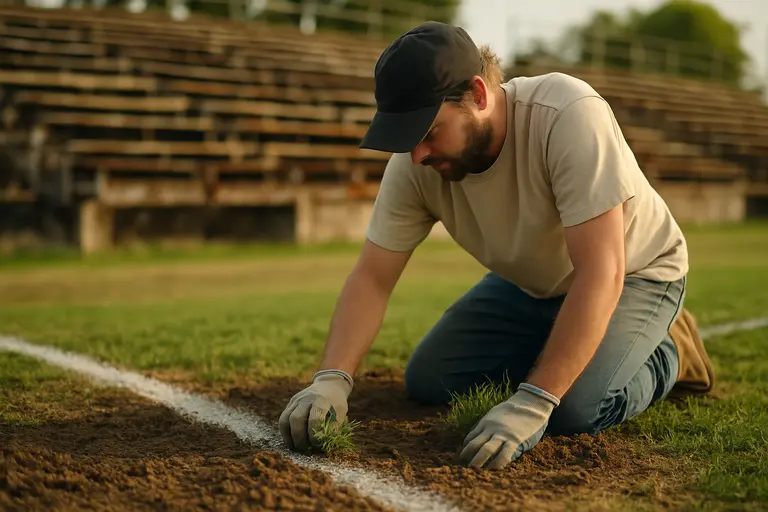
Rebuilding Starts Before Friday Night
The future for the Colts will depend less on one dramatic result than on whether the program can stack repeatable habits. A late hire can explain the first shock of fall 2026, but it cannot become the only story. Coral Springs High now needs a visible plan that reaches beyond game night.
- Consistent offseason attendance, so players know who is committed before the schedule begins.
- Clear staff roles, so athletes hear the same teaching points from week to week.
- Freshman and junior varsity development, so the varsity roster is not rebuilt from scratch each August.
- Family communication, so parents understand travel, practice expectations, and academic standards.
- Campus connection, so band, cheer, student sections, and alumni feel part of the same football night.
Those items may not draw the same attention as a rivalry win, but they are how a program rebuilds credibility. In Coral Springs, the football field sits inside a wider civic network. A home game can help concession volunteers, nearby food stops, student performers, and school clubs. A struggling program does not remove that network, but it can weaken the pull that brings people together.
That is why the Colts’ situation should not be read only as a coaching problem or only as a talent problem. The harder question is whether the program can turn football back into a dependable weekly gathering. Once that happens, wins become easier to chase because players are no longer carrying the rebuild alone.
Why Coral Springs Football Still Matters
The story of high school football in Coral Springs is still being written through ordinary choices: who shows up for practice, who stays patient after forfeits, who supports a new coach, and who sees value in a program before the record improves. The Colts’ August 2026 reset was a difficult public moment, but it also clarified what the community needs from the program: stability, development, and a reason for students to believe their work is connected to something larger than one season.
The next chapter of Coral Springs Football will not be measured only by whether the Colts quickly catch Charter or separate from Taravella. It will be measured by whether Coral Springs High can rebuild the habits that make a team feel present on campus again. For a city with multiple football stories unfolding at once, that presence still carries weight. It gives families a place to gather, students a team to claim, and the school a public identity worth repairing.