

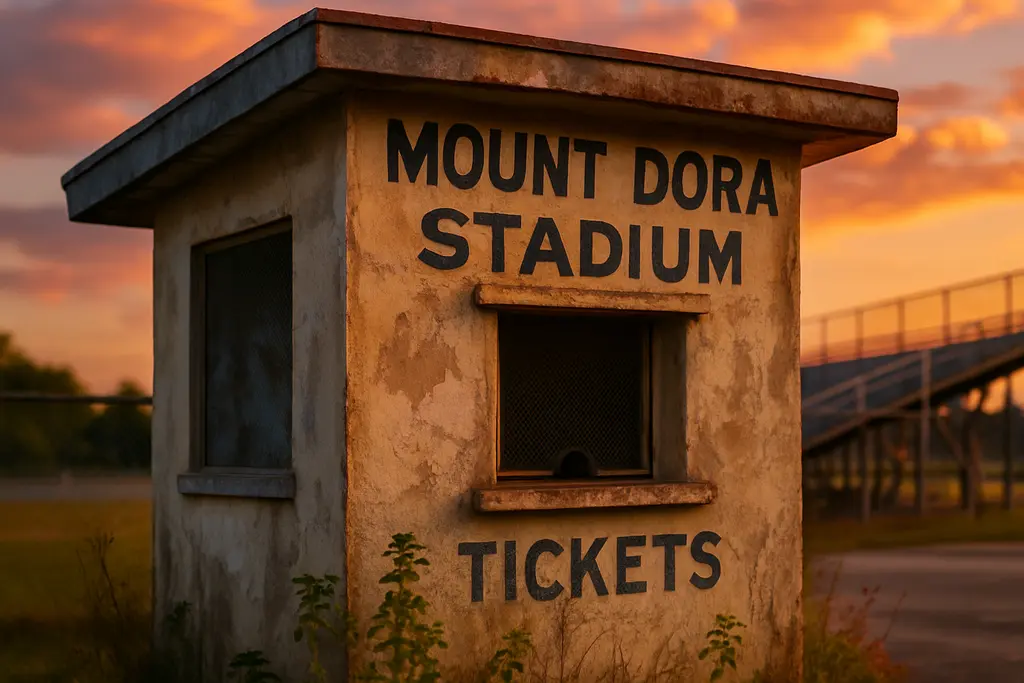
The Mount Dora stadium renovation matters because high school sports facilities carry more than scoreboards and seats. They hold local memory, Friday night routines, marching bands, senior nights, family habits, and the school identity that follows athletes long after graduation. At Mount Dora High School, the renovated W.T. Bland Jr. Stadium at Mount Dora Community Trust Field brought a 1961 venue into a new chapter after a five-year, $6.1 million project that was completed in 2026, according to Spectrum News 13 coverage.
For a sports historian, this is the kind of local project that explains how communities preserve their athletic roots without freezing them in place. Mount Dora did not replace the meaning of the old stadium. It reworked the setting so students, families, alumni, coaches, band members, and visiting supporters could gather around a safer and more functional field.
How Mount Dora stadium Became A Local Sports Project
How The Mount Dora stadium Project Began
The project began in 2021, the same period tied to Mount Dora High School’s centennial anniversary. That timing gave the campaign a historical frame: the school was marking 100 years, while its football home needed major attention. Local reporting from Mount Dora Buzz described the early phase as a community-backed effort that moved into field reconstruction, drainage fixes, new concession stands, paint, and landscaping.
The first phase launched in early 2022 with a budget of about $1.25 million. Lake County Schools contributed $250,000. The local community raised $500,000, which led to a $500,000 matching grant from Mount Dora Community Trust. Those numbers tell a direct story: this was not only a school-district facilities line item. It was a civic sports project, with residents and local partners treating the stadium as a shared asset.
Why The 1961 Stadium Needed A New Chapter
The original stadium was built in 1961. By the time the renovation campaign gained steam, generations of Mount Dora athletes had run onto that field, but age and field conditions had become part of the conversation. The renovation work addressed long-running drainage problems and modern access needs while keeping the venue’s place in the community sports calendar intact.
The Mount Dora stadium story also fits a wider pattern in Florida high school athletics. Smaller-city stadiums often serve more than one team or event group. Football may be the most visible Friday night tenant, but these facilities touch cheer, band, track, school ceremonies, alumni gatherings, and youth sports identity. When the field cannot handle rain or access is difficult for families, the effects reach beyond the varsity roster.
From Flooded Fridays To A Rebuilt Home Field
The Drainage Fix Changed More Than Turf
One of the clearest competitive and safety issues centered on drainage. The research record notes that water problems were tied to a natural subterranean spring under the field, which contributed to flooding after rain. For a football program, that is not a minor inconvenience. A soaked field affects footing, practice plans, marching-band movement, pregame setup, and whether a game-night surface is safe enough for teenagers competing at full speed.
Fixing drainage gives coaches a better chance to build weekly rhythm. It gives athletic staff fewer crisis decisions after storms. It gives families more confidence that a scheduled home date can actually feel like a home date. In Central Florida, where rain can reshape a sports week quickly, that kind of practical improvement carries real value.
A Field That Reopened With Rivalry Energy
The first home football game under the completed upgrades came against rival Eustis High School, and Mount Dora won 19-14. That result moved the Hurricanes to 1-1 in the 2026 season. In local history terms, the opponent mattered. Rivalry games are how many communities measure a stadium’s pulse. A renovated home field does not truly feel alive until the band, student section, families, and sideline noise return together.
Because the ribbon-cutting and first home game had already taken place by September 3, 2026, the renovation should be discussed in the past tense. This was not a future promise by that date. It had already shifted from construction campaign to game-night reality.
What Changed For Game Nights At W.T. Bland Jr. Stadium
Access, Seating, And The Home-Side Experience
The new facility includes ADA-compliant access, including switchbacks for wheelchair users, along with a new press box, modernized concession stands, a redesigned home side for students and families, and the resolved drainage issues. Those details may sound like facilities talk, but each one affects how a Friday night works.
Accessible paths mean more family members can take part in the school sports experience. A press box supports game operations, public-address work, media coverage, coaches’ needs, and record keeping. Concession improvements help the booster and game-night economy. A redesigned home side shapes where students gather and how families experience the field from kickoff through the final whistle.
The Track Work Still Stands Apart
The stadium itself is operational, while the research record says resurfacing and re-striping of the track remained pending after the main stadium renovation. That distinction matters for readers following the full athletic facility rather than football alone. A high school stadium can be open for football while track-related finishing work remains on a separate timeline.
For Mount Dora, that means the football return marked a major milestone, but the broader campus sports setting still had one known item left to finish. That should not reduce the scale of what was completed. It simply keeps the record accurate for track athletes, families, and local sports followers who use the venue in more than one way.
The Community Funding Model Behind The Renovation

Local Donors And School Support Shared The Load
Major donors included Mount Dora Community Trust and the W.T. Bland Jr. Foundation, which contributed more than $1 million combined. Other funding came from the Lake County School Board and local community sources. That blend explains why the project reads differently from a standard facility repair. It was part school investment, part philanthropic backing, and part hometown fundraising.
High school sports depend on that mix more often than outsiders realize. Public school athletic departments carry broad needs across many programs. Stadium work, especially at this scale, can require partners who see the field as a civic gathering place. Mount Dora’s model shows how donors, school leaders, and residents can align around a place that serves athletes and spectators across generations.
Why Naming Carries Local Meaning
The renovated venue is now referred to as W.T. Bland Jr. Stadium at Mount Dora Community Trust Field. Stadium names can be more than labels. In a school setting, they preserve the connection between the facility and the people or institutions that helped keep it viable.
For current Hurricanes athletes, the name may become part of ordinary game-week language. For alumni, it links the old venue to the renovated version. For donors and community supporters, it records the fact that local sports infrastructure rarely gets renewed by accident. Someone has to organize, fund, approve, and follow through.
Why Mount Dora stadium Matters To Local Sports Memory
The Mount Dora stadium now carries two timelines at once. The first began in 1961, when the original venue opened and started collecting decades of school sports memory. The second moved from the 2021 centennial-period campaign through the 2026 completion of the $6.1 million renovation. Those timelines meet every time the Hurricanes run onto the field.
That is why this renovation deserves attention beyond the construction price. It changed access for families, improved game-night operations, addressed the field’s drainage trouble, and gave Mount Dora High School a renewed home for local competition. The 19-14 win over Eustis in the first upgraded home setting gave the project a clean sports marker: rivalry opponent, close score, home crowd, new facility.
In Florida high school history, stadiums like this often become community diaries. They record who played, who coached, who cheered, who volunteered at concessions, and who brought children back years later to see the same colors under better lights. Mount Dora’s renovated home field now has the structure to keep doing that work for the next wave of Hurricanes.